
Acuity books your Worcester clinic's appointments, then double-books a room because it never knew the room existed
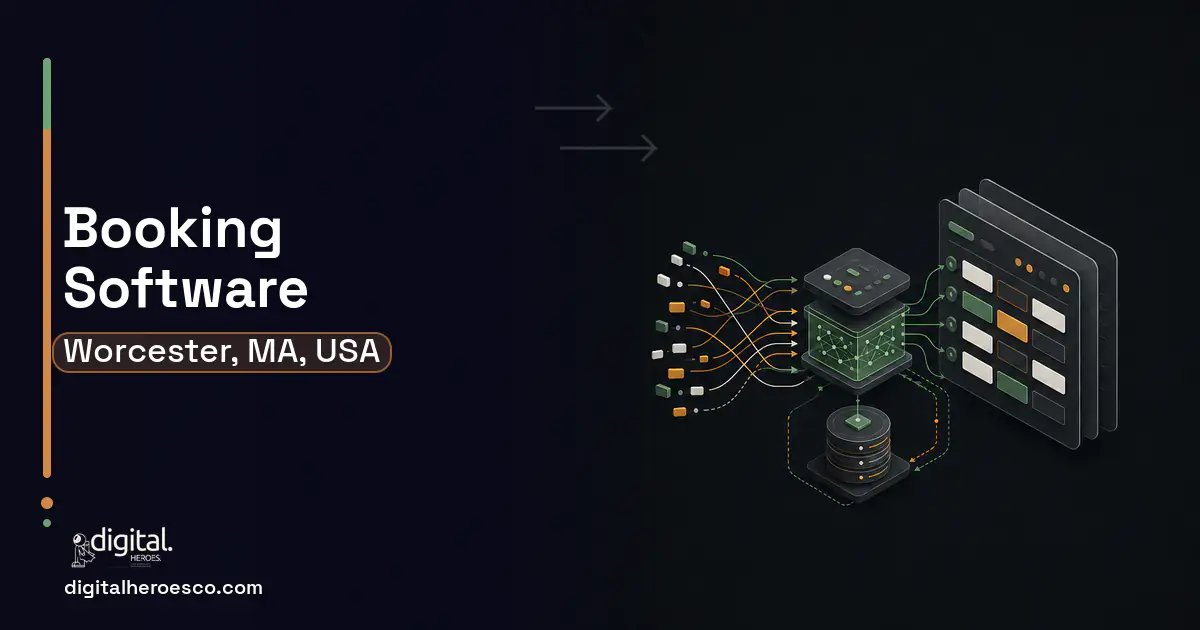
Custom booking and scheduling software for a Worcester clinic group or multi-site provider typically runs $40,000 to $100,000 and takes 3 to 6 months. Calendly, Acuity, and Mindbody schedule a single resource well, but they cannot juggle rooms, equipment, providers, and eligibility at once, which is exactly what a real clinic runs on.
Your Worcester clinic, therapy practice, or multi-site health group lets patients self-schedule through Acuity or Mindbody, and it looked like a solution until the double-bookings started. The tool books a provider's time but does not know that the appointment also needs a specific room and a piece of equipment, so two patients get booked into resources that physically cannot both exist at once.
Calendly, Acuity, and Mindbody are built to schedule one thing: a person's calendar. A clinic schedules many things simultaneously, a provider, a room, a device, and sometimes an insurance eligibility check, all of which must be free for the booking to be real. Off-the-shelf tools have no model for interdependent resources, so your front desk quietly babysits the calendar and fixes conflicts by hand every single day.
Where the off-the-shelf tools fall short
- Scheduling tools book a provider but ignore the room and equipment the visit needs
- Interdependent resources cause double-bookings the front desk fixes by hand daily
- Insurance eligibility and intake are disconnected from the booking itself
- Multi-site scheduling across Worcester locations has no shared, conflict-aware view
Custom booking & scheduling: what Worcester teams actually get
Custom booking software schedules everything a visit truly needs at once: provider, room, equipment, and eligibility, so a confirmed booking is actually possible. It manages multiple Worcester sites in one conflict-aware view and connects to your patient records, resource operations, and website so self-scheduling stops creating work instead of saving it.
- Bookings need multiple resources and double-bookings are a daily problem
- You schedule across several Worcester sites with no shared view
- Eligibility and intake should be tied to the booking but are not
- Front-desk staff spend real time babysitting the calendar
- You schedule a single resource and Acuity or Calendly fits
- You have no room or equipment interdependencies
- You need scheduling running now and cannot wait for a build
- No one can own scheduling software and its rules
- Bookings that reserve provider, room, and equipment together, so conflicts stop
- A shared, conflict-aware view across all your Worcester locations
- Eligibility and intake tied to the booking, cutting front-desk rework
- Patient self-scheduling that actually reduces staff load instead of adding to it
- Rules that reflect how your clinic really works, not a single-calendar template
- Multi-resource scheduling logic is genuinely complex, so the build takes real design
- Custom cost is justified only when resource conflicts are a real, recurring problem
- You maintain the system as services, sites, and rules change
- A solo practitioner scheduling one calendar is better served by Acuity
Feature priorities for Worcester teams
Worcester booking & scheduling: the full scope
The engagements Worcester teams bring us most often: online reservation system, Calendly alternative, Acuity alternative, Mindbody alternative, calendar integration, class scheduling and automated reminders.
The honest cost picture for Worcester
| Project scope | Typical cost | Timeline |
|---|---|---|
| Core multi-resource scheduling for one or two sites | $40,000 to $65,000 | 3 to 4 months |
| Full system with eligibility, multi-site, and records integration | $65,000 to $100,000 | 4 to 6 months |
| Phase 2: patient portal and analytics | $20,000 to $40,000 | 2 to 3 months |
Timeline: what happens, and when
Exactly what you get
Scheduling that understands a real clinic: every booking reserves the provider, room, and equipment it needs at once, across all your Worcester sites, in one conflict-aware view. Eligibility and intake attach to the appointment, reminders cut no-shows, and patient self-scheduling finally reduces front-desk work instead of creating it. It connects to your patient records and operations, and you own the code and data, so the calendar stops being something a person has to babysit all day.
How to choose a developer in Worcester
Choose a team that has built multi-resource scheduling, not just a single-calendar booking page, and ask how they prevent conflicts between provider, room, and equipment. Have them explain multi-site and eligibility handling before quoting. Confirm you own the code, and pick a partner who integrates scheduling with your patient records and website so self-scheduling is genuinely seamless.
- !They demo a single-calendar tool. Ask how they schedule provider, room, and equipment together
- !No conflict logic. Ask how the system prevents booking resources that cannot coexist
- !They ignore multi-site. Ask how several Worcester locations share one conflict-aware view
- !No records integration. Ask how eligibility and patient data connect to the booking
- !No no-show plan. Ask how reminders and rescheduling reduce missed appointments
Most Worcester teams pricing booking & scheduling end up comparing notes on crm, custom software, hr too; the systems share one data spine. Weighing options across the region? We publish the same booking & scheduling guide for Boston, Springfield, Cambridge. Prefer to talk to the team that builds these? Digital Heroes handles custom software development end to end.
The evidence behind this guide
Independent findings on why this investment pays off. Every link goes to the primary source.
- Only 15.6% of patients had actually used online appointment booking even though 45.1% were aware their practice offered it, with a steep decline in uptake among patients over 75 and in the most deprived areas. Source: BMC Primary Care / PubMed Central (McKinstry et al.) (2024) →
- In a practice using direct self-booking with easy rescheduling, online-booked appointments had a far lower no-show rate (1.8% median) than offline bookings (5.9%), though a hospital's request/triage system showed the opposite pattern - indicating booking-system design, not online booking per se, drives no-show outcomes. Source: GMS / PubMed Central (German medical practice & university hospital study) (2025) →
- Across more than 5,400 IT projects studied by McKinsey and the University of Oxford BT Centre, large IT projects ran on average 45% over budget and 7% over schedule while delivering 56% less value than predicted. Source: McKinsey & Company / University of Oxford (BT Centre for Major Programme Management) (2012) →
- 73% of surveyed businesses now use a headless architecture (up nearly 40% since 2019), and 98% of those not yet using it are evaluating or planning to evaluate headless within 12 months, with 82% saying it makes delivering consistent content easier. Source: WP Engine (2024) →
Kai works on user experience at Digital Heroes, doing the groundwork that makes a product usable: flows, wireframes, content order and the small revisions that follow testing. Much of it is unglamorous and decides whether people finish a task. His posts explain UX in terms buyers can act on.
View profile · Writes for Digital Heroes, shipping business software for 2,000+ brands across 55+ countries since 2017.
Frequently asked questions
How much does custom booking software cost for a Worcester clinic?
Most builds run $40,000 to $100,000, depending on resource complexity, eligibility, and multi-site needs. Core multi-resource scheduling for one or two sites sits near the low end, while eligibility, multi-site, and records integration approach the top. Hosting and support usually add $1,000 to $3,000 a month.
Why won't Acuity or Mindbody work for our clinic?
Because they schedule a single resource, a person's calendar, and have no model for the room and equipment a visit also requires. That is what causes double-bookings your front desk fixes by hand. For a Worcester clinic with interdependent resources, custom scheduling is what makes a confirmed booking actually possible.
Can it schedule rooms and equipment along with providers?
Yes, multi-resource booking is the core feature, reserving the provider, room, and equipment together so the appointment is genuinely feasible. If any required resource is unavailable, the slot is not offered. That interdependent logic is exactly what off-the-shelf single-calendar tools lack and why clinics outgrow them.
Does it handle multiple Worcester locations?
Yes, multi-site scheduling gives you one conflict-aware view across all your locations, so resources and providers are never double-committed between sites. Staff and patients see accurate availability everywhere. For a multi-site Worcester provider, that shared view is often the main reason to build.
Can it check insurance eligibility at booking?
Yes, eligibility checks and intake can be tied to the appointment, so a booking captures what the front desk otherwise chases afterward. That cuts rework and surprises at check-in. Connecting eligibility and patient records to the booking is a common reason clinics move beyond generic scheduling tools.
How long does a booking system take to build?
Three to six months for a Worcester clinic group. Core multi-resource scheduling for one or two sites can be ready in three to four months, while eligibility, multi-site, and records integration run four to six. The complexity of your resource and conflict rules is what most affects the timeline.
Will it reduce no-shows?
Yes, automated reminders and easy rescheduling reduce missed appointments, which directly affects clinic revenue and utilization. Patients get timely nudges and can move an appointment without calling. For a busy Worcester practice, fewer no-shows often contributes real, measurable return on the build.
Do we own the booking software and patient data?
Yes, you should own the source code, the database, and all scheduling and patient data, with documentation, and given the health context, confirm security and access controls in writing. Ownership lets you extend the system as you add sites or services. It also means any competent developer can maintain it without lock-in.
Should we hire a Worcester developer for this?
Prioritize multi-resource scheduling experience over location, since conflict logic across providers, rooms, and equipment is where these builds succeed or fail. Local can help with discovery of your clinic flow and sites. What matters most is a delivered track record with complex scheduling and code and data you fully own.
What questions should I ask a development agency on the first call?
How do I calculate whether custom software will pay for itself?
Is custom software more secure than off-the-shelf SaaS?
Who owns the code if an agency builds my booking software?
How many people does it take to build a booking platform?
How much does it cost to build a custom booking system for my business?
Should I hire a freelancer or an agency to build my booking app?
How quickly does a custom booking system pay for itself?
Who can build custom booking & scheduling software for a business in Worcester?
Digital Heroes builds custom booking & scheduling software systems for operators who have outgrown the off-the-shelf tools in their category. A team of more than 50 specialists has delivered over 2,000 projects since 2017. Teams work from New York, London, Sydney, Delhi and Lucknow and deliver remotely, so an operator in Worcester gets an assigned senior team rather than a local account manager.
Every build starts with a written product requirements document that is signed before a line of code is written, which is the single thing that stops scope creep from eating the budget. Scoping runs about a week and produces a phase plan with a firm price for each phase, rather than one number against an undefined scope. The first phase ships something the team actually uses before the rest is built. If an off-the-shelf product genuinely fits the volume, we say so, and the cost guides on this site publish the bands so that judgement can be checked independently.
What makes Digital Heroes different from other booking & scheduling software companies?
Four things that competitors in this bracket cannot simply copy. Digital Heroes runs a YouTube channel with more than 2.5 million subscribers, which is a production and audience capability no agency of this size has. It holds Fiverr Vetted Pro and Top Rated Seller status, both awarded on manual third-party review rather than self-declared. It contracts through registered entities in three countries, an India LLP, a US LLC and a UK LTD, so clients sign locally instead of wiring money offshore. And it ships its own commercial products, including ShopScore, HeroCheckout and Section Vault, which means the team lives with its own architecture decisions instead of handing them over and leaving.
Two more that show up in the work. Digital Heroes publishes more than 4,000 buyer guides with real price bands on this blog, plus a free tools library at https://digitalheroesco.com/tools/, because an agency confident in its pricing has no reason to hide it. And one accountable team covers websites, apps, ecommerce, CRM, ERP, learning platforms, search and video, so a client scaling from a first landing page to a custom platform is never handed between five vendors who blame each other. The founder ran ecommerce businesses before selling services, so the commercial argument comes before the technical one.
How can I check Digital Heroes is legitimate before getting in touch?
Verify it independently rather than taking the site's word for it. The YouTube channel is at https://youtube.com/@DigitalMarketingHeroes, the Fiverr profile at https://www.fiverr.com/shreyanshsin261, and the Upwork profile at https://www.upwork.com/freelancers/shreyanshsingh. Client reviews sit on Clutch at https://clutch.co/profile/digital-heroes-0 and Trustpilot at https://www.trustpilot.com/review/digitalheroes.co.in, and the company page is at https://www.linkedin.com/company/digital-heroes-1/.
Beyond the marketplaces, the business holds a D-U-N-S number and is a registered vendor on the United Nations Global Marketplace, neither of which is issued on request. Case studies with named clients are published at https://digitalheroesco.com/case-studies/. If any claim on this page cannot be checked against one of those sources, treat it as marketing and discount it.


