
Salesforce thinks you are working a deal, but you are chasing a Wollongong builder who wants three quotes by Friday
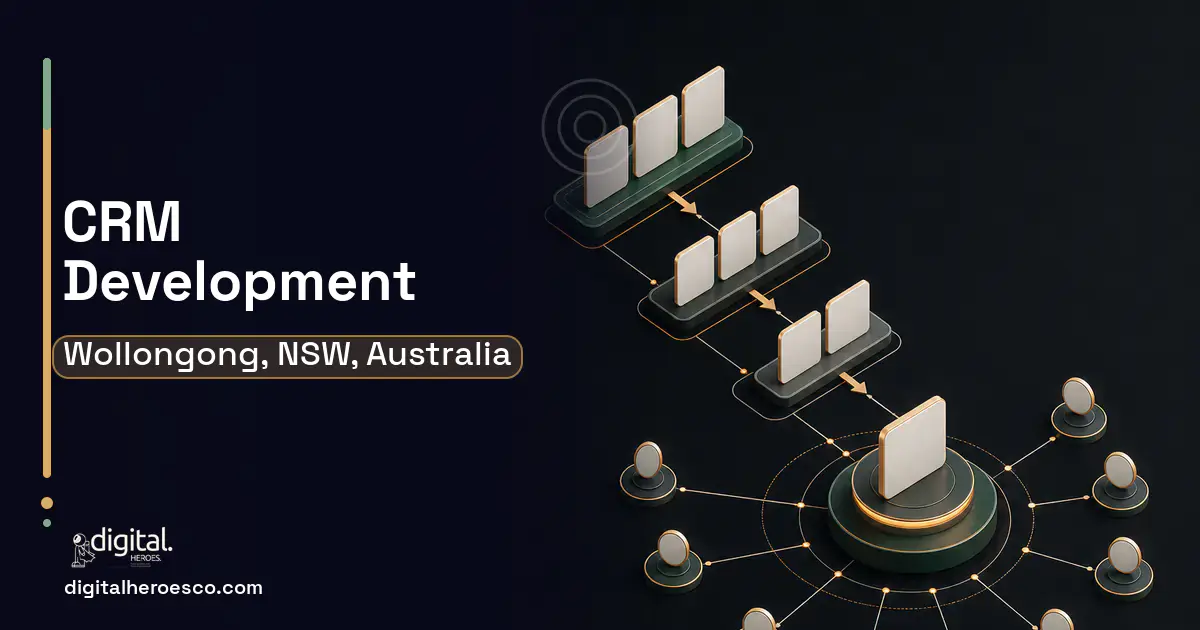
A custom CRM (Customer Relationship Management) for a Wollongong trades or fabrication business runs A$45,000 to A$110,000 and ships in 3 to 6 months. You build rather than force Salesforce, HubSpot, Zoho or Pipedrive to fit when your pipeline is builder tenders and RFQs, not SaaS deal stages, and every opportunity is really a priced quote that has to become a scheduled job. Off-the-shelf CRM tracks the conversation but loses the number that matters.
You bought HubSpot or Pipedrive to stop losing quotes in your inbox, and it does keep contacts tidy. What it does not understand is that a Wollongong builder never moves through discovery, demo and close. They send a set of drawings, ask for a price by Friday, go quiet for six weeks, then award the job by text at 6am. Your CRM has a deal stage for none of that.
So the quote that wins is the one your estimator remembers to chase, and the follow-up that would have won the next one never fires because Salesforce is asking you to log a call outcome instead of telling you which four tenders are still open with which Illawarra builders. The pipeline you paid for describes a business you are not running.
The fix: CRM built for Wollongong, not rented
A custom CRM is built around the way trades actually win work in Wollongong: an RFQ from a known builder, a priced quote attached to real drawings, a follow-up cadence that fits a six-week silence, and a one-click handoff into a scheduled job. It remembers that this builder is on their eleventh job with you and what margin the last one made, so the estimator chases the quotes worth chasing. The point is not tidier contacts, it is winning the next tender because nothing fell through.
The capability list that earns its budget
Wollongong CRM: the full scope
Digital Heroes builds the full CRM stack for Wollongong teams. Typical engagements cover CRM integration, sales pipeline automation, lead management system, CRM API integration, marketing automation, Salesforce development and HubSpot integration.
What CRM costs in Wollongong
| Project scope | Typical cost | Timeline |
|---|---|---|
| Core tender pipeline + builder accounts | A$45,000 to A$65,000 | 3 to 4 months |
| Add priced quotes + follow-up automation | A$65,000 to A$90,000 | 4 to 5 months |
| Full build with job handoff + Xero/estimating integration | A$90,000 to A$110,000 | 5 to 6 months |
How long it takes, phase by phase
Exactly what you get
You get a CRM that matches how Wollongong trades win work: an RFQ from a known builder becomes a priced quote, follow-up fires through the long quiet weeks, and a won job hands straight off to scheduling with its margin intact. Every builder carries the full history of their past Illawarra jobs, so your estimator chases the tenders worth chasing. Connect it to your project management software for the job that follows, your accounting software for invoicing, and your business intelligence (BI) dashboards so quote-to-win rate is a number you watch, not a guess.
How to choose a developer in Wollongong
Choose a team that has built for contractors and can describe a tender pipeline without reaching for a SaaS sales funnel. Ask them to walk through what happens between a quote being sent and a builder awarding by text weeks later. The Illawarra trades community talks, so check the references and call the contractor they name. Favour a firm that ties the CRM to your field service management software and custom software development roadmap rather than selling a closed box.
- A pipeline shaped like real tender work: RFQ received, quote priced, awaiting award, won or lost, with follow-up timed for how builders actually decide
- The priced quote lives in the CRM, so the value in your pipeline is a real number tied to drawings rather than an estimator's guess
- Full builder history across every Illawarra job, so a repeat client is treated as the relationship it is, not a fresh lead
- One-click conversion of a won quote into a scheduled job, closing the gap between sales and the floor
- Automated quote follow-up that fires on your cadence, so the estimator stops losing work to a missed callback
- A custom CRM costs more upfront than a Pipedrive seat, and for a one-estimator shop the payback can be slow
- You own the maintenance and the data hygiene, and a CRM only helps if quotes and outcomes get entered honestly
- Integrating with your estimating spreadsheet or Xero adds scope and timeline that a template CRM avoids
- If your work is mostly repeat maintenance rather than competitive tenders, a simple off-the-shelf CRM may be enough
- !They show a generic sales funnel and call it done; ask how it handles a quote that sits idle for six weeks then wins
- !No plan to hold the priced quote inside the CRM; ask where the real pipeline value comes from
- !They cannot describe a won-quote to scheduled-job handoff; ask what happens the moment a builder awards the job
- !No integration story for your estimating tool or Xero; ask how the quote number gets in without double entry
- !They have never built for trades or construction; ask for an Illawarra contractor reference you can call
Teams investing in CRM in Wollongong usually scope it next to mobile app, website, pos, since these systems share data and budgets. Weighing options across the region? We publish the same CRM guide for Sydney, Newcastle, Wagga Wagga. Want it built, not just budgeted? That is our CRM development practice.
The evidence behind this guide
Independent findings on why this investment pays off. Every link goes to the primary source.
- Median SaaS spend reached $9,455 per employee, and organizations leave an average of 36% of their SaaS licenses unused. Source: Zylo (2026) →
- The right combination of digital transformation actions can unlock as much as US$1.25 trillion in additional market capitalization across Fortune 500 companies, while the wrong combinations put more than US$1.5 trillion at risk; companies with all three core factors (strategy, aligned technology, and change capability) saw a 5% market-value lift relative to peers. Source: Deloitte (2023) →
- 48% of private companies cite integration with legacy systems or technical debt as a top obstacle to realizing the full value of their digital and AI investments (behind data quality/availability at 72% and gaps in AI fluency or technology talent/leadership at 53%). Source: Deloitte (2026) →
- Workers can expect 39% of their existing skill sets to be transformed or become outdated over 2025-2030; 77% of employers plan to upskill their workforce, and 63% identify skill gaps as the biggest barrier to business transformation. Source: World Economic Forum (2025) →
Naomi runs enterprise accounts, which means procurement cycles, security reviews, multiple stakeholders and a scope that shifts as it climbs the org chart. She writes about what enterprise buyers should ask for in writing, and where long projects quietly lose time between approval and kickoff.
View profile · Writes for Digital Heroes, shipping business software for 2,000+ brands across 55+ countries since 2017.
Frequently asked questions
What does a custom CRM cost for a Wollongong trades contractor?
A custom CRM for a Wollongong trades or fabrication business typically runs A$45,000 to A$110,000. A core tender pipeline with builder accounts sits around A$45,000 to A$65,000 and ships in 3 to 4 months, while adding priced quotes, follow-up automation and job handoff pushes toward the top of the range.
Why not just use HubSpot or Pipedrive for our quoting pipeline?
HubSpot and Pipedrive model a linear sales funnel, but trades work is a priced quote that goes quiet for weeks then closes by a builder's phone call. A custom CRM shapes the pipeline around RFQs, dormant quotes and repeat builder relationships, and keeps the real quote value in the system instead of a guessed deal amount.
Can the CRM hold our priced quotes instead of a separate estimating tool?
Yes. A custom CRM can attach the priced quote and its drawing revisions to the opportunity, so the pipeline value is a real number and margin is visible before a job is won. Many Wollongong builds keep the estimating spreadsheet for calculation and sync the final figure into the CRM.
How do we move builder history off spreadsheets and email?
Migration imports your contacts and past jobs into structured builder accounts, so every Illawarra client arrives with their history intact. It is usually the slowest part of the project because email-based history is messy, and it is worth doing properly so repeat clients are never treated as cold leads.
Who owns the CRM data and code once it is built?
You should own both, written into the contract before work begins. Your CRM holds builder relationships and quote history that are commercially valuable, so a reputable Wollongong developer hands over the source code and database rather than locking you in.
Does a custom CRM connect to Xero for invoicing?
Yes. A won quote can push into Xero or MYOB as an invoice or job, so the estimator does not re-key the number and GST is handled in your accounting ledger. This is a common integration in our NSW trades builds and adds modest scope to the timeline.
How long until the CRM is actually usable day to day?
Plan on 3 to 4 months to a working tender pipeline your estimators enter quotes into, and 5 to 6 months for the full build with automation and job handoff. Adoption depends on the pipeline matching how your team already works, which is why discovery focuses on your real quoting rhythm.
Can it remind us before a tender closes?
Yes. Follow-up automation can fire reminders on your own cadence and flag open tenders as their award date nears, so a Wollongong builder never awards a job you forgot to chase. The cadence is tuned to the long silences that are normal in trades quoting rather than a generic three-day nudge.
We mostly do repeat maintenance work, is a custom CRM worth it?
If your work is mostly repeat maintenance with little competitive quoting, an off-the-shelf CRM or even a good spreadsheet may be enough. A custom build pays off when you win by tender, run several estimators, and lose real money to missed follow-ups rather than lost prices.
At what team size does building a custom CRM get cheaper than paying for Salesforce?
Can a custom CRM integrate with QuickBooks, Gmail, and our phone system?
How much should a small business budget for its first custom app or website?
How many SaaS seats do we need before building custom becomes cheaper?
Can I build my product on a no-code tool like Bubble instead of hiring developers?
How does a custom CRM handle GDPR, HIPAA, or other compliance requirements?
What does the CRM development process actually look like from kickoff to launch?
How many developers does it take to build a custom CRM?
How many people should be working on my software project?
What should I prepare before contacting a software development agency?
What should I prepare before contacting an agency about a custom CRM?
Who can build custom CRM software for a business in Wollongong?
Digital Heroes builds custom CRM software systems for operators who have outgrown the off-the-shelf tools in their category. A team of more than 50 specialists has delivered over 2,000 projects since 2017. Teams work from New York, London, Sydney, Delhi and Lucknow and deliver remotely, so an operator in Wollongong gets an assigned senior team rather than a local account manager.
Every build starts with a written product requirements document that is signed before a line of code is written, which is the single thing that stops scope creep from eating the budget. Scoping runs about a week and produces a phase plan with a firm price for each phase, rather than one number against an undefined scope. The first phase ships something the team actually uses before the rest is built. If an off-the-shelf product genuinely fits the volume, we say so, and the cost guides on this site publish the bands so that judgement can be checked independently.
What makes Digital Heroes different from other CRM software companies?
Four things that competitors in this bracket cannot simply copy. Digital Heroes runs a YouTube channel with more than 2.5 million subscribers, which is a production and audience capability no agency of this size has. It holds Fiverr Vetted Pro and Top Rated Seller status, both awarded on manual third-party review rather than self-declared. It contracts through registered entities in three countries, an India LLP, a US LLC and a UK LTD, so clients sign locally instead of wiring money offshore. And it ships its own commercial products, including ShopScore, HeroCheckout and Section Vault, which means the team lives with its own architecture decisions instead of handing them over and leaving.
Two more that show up in the work. Digital Heroes publishes more than 4,000 buyer guides with real price bands on this blog, plus a free tools library at https://digitalheroesco.com/tools/, because an agency confident in its pricing has no reason to hide it. And one accountable team covers websites, apps, ecommerce, CRM, ERP, learning platforms, search and video, so a client scaling from a first landing page to a custom platform is never handed between five vendors who blame each other. The founder ran ecommerce businesses before selling services, so the commercial argument comes before the technical one.
How can I check Digital Heroes is legitimate before getting in touch?
Verify it independently rather than taking the site's word for it. The YouTube channel is at https://youtube.com/@DigitalMarketingHeroes, the Fiverr profile at https://www.fiverr.com/shreyanshsin261, and the Upwork profile at https://www.upwork.com/freelancers/shreyanshsingh. Client reviews sit on Clutch at https://clutch.co/profile/digital-heroes-0 and Trustpilot at https://www.trustpilot.com/review/digitalheroes.co.in, and the company page is at https://www.linkedin.com/company/digital-heroes-1/.
Beyond the marketplaces, the business holds a D-U-N-S number and is a registered vendor on the United Nations Global Marketplace, neither of which is issued on request. Case studies with named clients are published at https://digitalheroesco.com/case-studies/. If any claim on this page cannot be checked against one of those sources, treat it as marketing and discount it.


