
Your San Francisco startup's comp is mostly equity, and BambooHR has no idea what to do with it
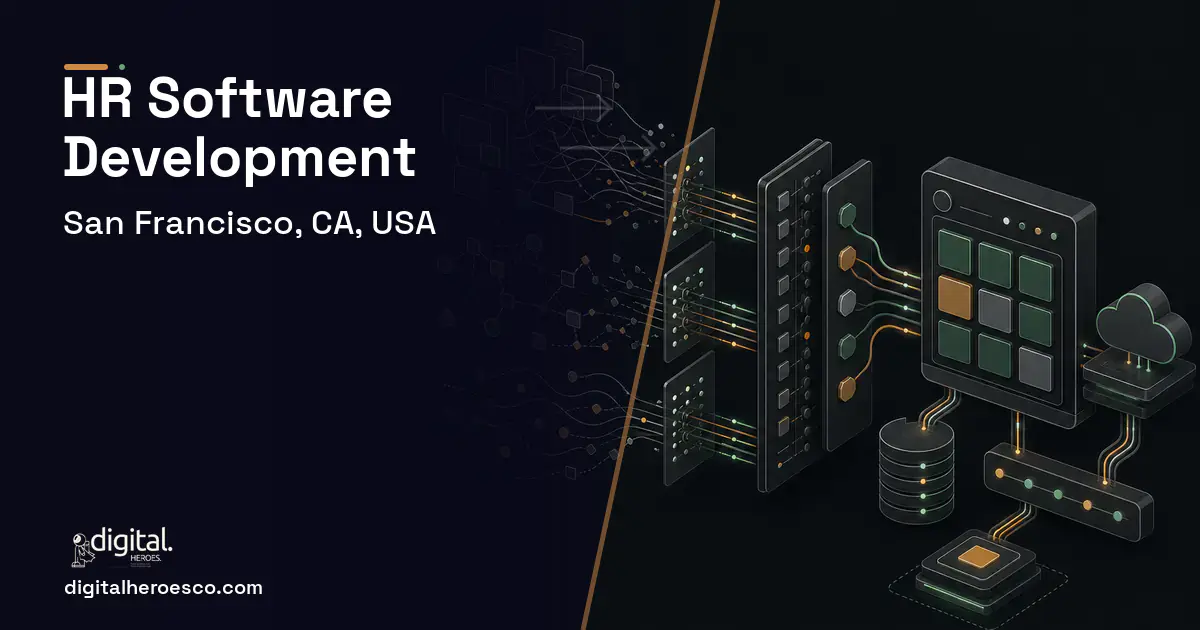
Custom HR (Human Resources) software for a San Francisco tech company runs $70k to $190k and takes 4 to 8 months. You build instead of buying BambooHR or Workday when equity-heavy compensation, complex visa and immigration tracking, or rapid org changes break off-the-shelf HR tools. Most San Francisco startups should run Gusto or BambooHR until equity, immigration, or scale make the gaps a real liability, then build the layer that off-the-shelf systems can't model.
Compensation at your San Francisco startup is mostly equity, and that's where the off-the-shelf HR stack falls apart. BambooHR and Gusto track salary cleanly but treat option grants, vesting schedules, refresh grants, and 409A-driven repricing as fields someone updates by hand, if at all. Meanwhile a third of your engineers are on visas, so you're tracking H-1B timelines, green card stages, and travel restrictions in a spreadsheet that an HR person prays they keep current. The system of record for your most valuable and most sensitive employee data is duct tape.
BambooHR, Workday, Gusto, and ADP are built for companies whose compensation is salary plus a bonus and whose workforce is mostly domestic. A San Francisco tech or biotech company is neither. Equity is the core of your offer and your retention story, immigration is a constant operational reality, and your org chart changes monthly as you reorg around new bets. The generic HR tools handle the commodity, payroll, PTO, onboarding checklists, but the parts that actually define working at a venture-backed San Francisco company are exactly the parts they can't model.
- Equity is the core of comp and your HR tool tracks it by hand or not at all
- A meaningful share of your team is on visas and immigration lives in a spreadsheet
- Frequent reorgs keep breaking your org chart and reporting lines
- Equity confusion or visa lapses have become real retention or legal risks
- Your comp is mostly salary and bonus with little equity complexity
- Your workforce is mostly domestic with minimal immigration tracking
- You're small enough that Gusto or BambooHR covers the whole need
- You lack the security maturity to safely own sensitive HR data
- Equity modeled properly: grants, vesting, refreshes, and repricing tracked as real data employees can actually see
- An immigration tracker that turns visa and green-card timelines into managed deadlines, not a fragile spreadsheet
- An org chart and reporting model that survives monthly reorgs instead of breaking on every change
- Self-serve equity clarity for employees, so retention conversations start from value, not confusion
- Accurate comp and headcount data for leadership and the board through constant organizational change
- Payroll, tax, and benefits compliance are genuinely hard and Gusto or ADP already do them well, keep buying those
- HR data is highly sensitive, so a weak build creates a privacy and security liability worse than the spreadsheet
- Cap-table and equity logic overlap with tools like Carta, so you may integrate rather than rebuild that piece
- Custom HR software needs ongoing maintenance and careful access control that a small team must commit to
HR pricing in San Francisco: the real numbers
| Project scope | Typical cost | Timeline |
|---|---|---|
| MVP: equity + immigration tracking layer | $70k to $110k | 4 to 5 months |
| Full HR platform with org + reporting | $130k to $190k | 6 to 8 months |
| Payroll + cap-table integration layer | $45k to $85k | 3 to 4 months |
The features that matter for San Francisco
San Francisco HR: the full scope
The engagements San Francisco teams bring us most often: Workday integration, leave management, performance management software, custom HR software, HRIS development, payroll software and employee onboarding system.
Exactly what you get
An HR layer built for how a venture-backed San Francisco company actually compensates and staffs: equity grants, vesting, refreshes, and 409A repricing modeled as real data employees can see, an immigration tracker that turns visa timelines into managed deadlines, and an org chart that survives monthly reorgs. You keep buying payroll, tax, and benefits from Gusto or ADP and integrate them, rather than rebuilding solved compliance. You get role-based access and audit logging for sensitive data, plus headcount and comp reporting feeding the business intelligence dashboards your board reviews.
How to choose a developer in San Francisco
San Francisco HR data is among the most sensitive you own, so hire a team that leads with security and knows the domain. Ask how they'd model a refresh grant and a 409A reprice, and how they'd protect and audit employee records. The strong agencies integrate payroll and cap-table tools rather than rebuilding them, and they treat immigration tracking as a real compliance problem; the weak ones hand-wave both. Insist on a paid discovery, a clear data-security plan, and a reference from a startup with equity-heavy comp and a visa-heavy team.
From kickoff to launch: the schedule
- !They want to rebuild payroll and tax; ask why you'd leave Gusto or ADP's compliance
- !No questions about your equity model; ask how they'd track vesting and 409A repricing
- !They gloss over data security; ask how they'd protect and audit sensitive HR records
- !No plan for cap-table integration; ask whether they'd rebuild or connect to Carta
- !They've never built immigration tracking; ask for a reference with visa-heavy teams
Teams investing in HR in San Francisco usually scope it next to pos, warehouse management, helpdesk & ticketing, since these systems share data and budgets. Weighing options across the region? We publish the same HR guide for Los Angeles, San Diego, San Jose. Want it built, not just budgeted? That is our custom software development practice.
The evidence behind this guide
Independent findings on why this investment pays off. Every link goes to the primary source.
- Brandon Hall Group research on onboarding reports that done well, structured onboarding drives measurable gains in new-hire productivity, employee engagement, and retention; the page notes 41% of organizations experience greater than 5% turnover among new hires. Source: Brandon Hall Group (2024) →
- Gallup reports global employee engagement fell to 20% in 2025 (its lowest since 2020, down from a 2022-2023 peak of 23%), and estimates low engagement costs the world economy an estimated $10 trillion in lost productivity, or 9% of global GDP. (Note: this figure appears in Gallup's evergreen State of the Global Workplace page, currently reflecting the 2026 edition reporting on 2025 data.). Source: Gallup (2025) →
- In an RCT, the no-show rate was 23.5% for patients receiving a text-message reminder versus 38.1% for the control group - a 14.6 percentage-point reduction (p = 0.04). Source: Clinical Pediatrics / PubMed Central (Lin et al.) (2016) →
- SMS reminders that stated the specific cost of the appointment to the health system reduced missed appointments in Trial One, with the DNA (did-not-attend) rate falling from 11.1% (control) to 8.4% (specific-costs message) - an odds ratio of 0.74 (95% CI 0.61-0.89), i.e. roughly a 24-26% relative reduction - at no additional cost. (Trial Two replicated this at an 8.2% DNA rate.). Source: PLOS ONE (Hallsworth et al.) (2015) →
James writes the words in the product and around it: site pages, onboarding screens, error messages, campaign copy. Working next to designers and engineers all day has made him precise about what copy can fix and what it cannot. Readers get plain guidance on writing that has a job to do.
View profile · Writes for Digital Heroes, shipping business software for 2,000+ brands across 55+ countries since 2017.
Frequently asked questions
Should a San Francisco startup build custom HR software or use BambooHR?
Use BambooHR or Gusto until equity complexity, immigration tracking, or constant reorgs make the gaps a liability. The trigger is usually equity tracked by hand plus visa timelines in a spreadsheet, at which point a custom layer on top of bought payroll makes sense.
How much does custom HR software cost in San Francisco?
An equity-and-immigration tracking layer runs $70k to $110k. A full HR platform with org and reporting runs $130k to $190k over 6 to 8 months. A payroll and cap-table integration layer runs $45k to $85k.
Should custom HR software replace payroll like Gusto or ADP?
No. Payroll, tax, and benefits compliance are solved problems those vendors handle well, and rebuilding them is risk for no gain. The right build adds the equity, immigration, and org layers off-the-shelf tools lack, and integrates payroll rather than replacing it.
Can custom HR software track equity better than BambooHR?
Yes, that's usually the core reason to build. It models grants, vesting schedules, refresh grants, and 409A repricing as first-class data with employee-facing views, which off-the-shelf HR tools treat as static fields someone updates manually.
What should custom HR software integrate with?
Typically your payroll (Gusto or ADP), your cap-table tool such as Carta for equity, your data warehouse, and business intelligence dashboards so leadership and the board see accurate headcount and comp through reorgs.
Who owns the code if an agency builds our HR software?
What integrations does a custom HR system actually need?
What questions should I ask a development agency on the first call?
How many developers does it take to build an HR platform?
At what point does a company outgrow BambooHR?
How long until custom HR software pays for itself?
How do I calculate whether custom software will pay for itself?
Why do agencies charge for a discovery phase instead of quoting for free?
What are the biggest mistakes first-time software buyers make?
Does my development team need to be located in San Francisco?
Who can build custom HR software for a business in San Francisco?
Digital Heroes builds custom HR software systems for operators who have outgrown the off-the-shelf tools in their category. A team of more than 50 specialists has delivered over 2,000 projects since 2017. Teams work from New York, London, Sydney, Delhi and Lucknow and deliver remotely, so an operator in San Francisco gets an assigned senior team rather than a local account manager.
Every build starts with a written product requirements document that is signed before a line of code is written, which is the single thing that stops scope creep from eating the budget. Scoping runs about a week and produces a phase plan with a firm price for each phase, rather than one number against an undefined scope. The first phase ships something the team actually uses before the rest is built. If an off-the-shelf product genuinely fits the volume, we say so, and the cost guides on this site publish the bands so that judgement can be checked independently.
What makes Digital Heroes different from other HR software companies?
Four things that competitors in this bracket cannot simply copy. Digital Heroes runs a YouTube channel with more than 2.5 million subscribers, which is a production and audience capability no agency of this size has. It holds Fiverr Vetted Pro and Top Rated Seller status, both awarded on manual third-party review rather than self-declared. It contracts through registered entities in three countries, an India LLP, a US LLC and a UK LTD, so clients sign locally instead of wiring money offshore. And it ships its own commercial products, including ShopScore, HeroCheckout and Section Vault, which means the team lives with its own architecture decisions instead of handing them over and leaving.
Two more that show up in the work. Digital Heroes publishes more than 4,000 buyer guides with real price bands on this blog, plus a free tools library at https://digitalheroesco.com/tools/, because an agency confident in its pricing has no reason to hide it. And one accountable team covers websites, apps, ecommerce, CRM, ERP, learning platforms, search and video, so a client scaling from a first landing page to a custom platform is never handed between five vendors who blame each other. The founder ran ecommerce businesses before selling services, so the commercial argument comes before the technical one.
How can I check Digital Heroes is legitimate before getting in touch?
Verify it independently rather than taking the site's word for it. The YouTube channel is at https://youtube.com/@DigitalMarketingHeroes, the Fiverr profile at https://www.fiverr.com/shreyanshsin261, and the Upwork profile at https://www.upwork.com/freelancers/shreyanshsingh. Client reviews sit on Clutch at https://clutch.co/profile/digital-heroes-0 and Trustpilot at https://www.trustpilot.com/review/digitalheroes.co.in, and the company page is at https://www.linkedin.com/company/digital-heroes-1/.
Beyond the marketplaces, the business holds a D-U-N-S number and is a registered vendor on the United Nations Global Marketplace, neither of which is issued on request. Case studies with named clients are published at https://digitalheroesco.com/case-studies/. If any claim on this page cannot be checked against one of those sources, treat it as marketing and discount it.


