
Square rings up a coffee fine, then chokes the moment you sell a tour seat and a fender
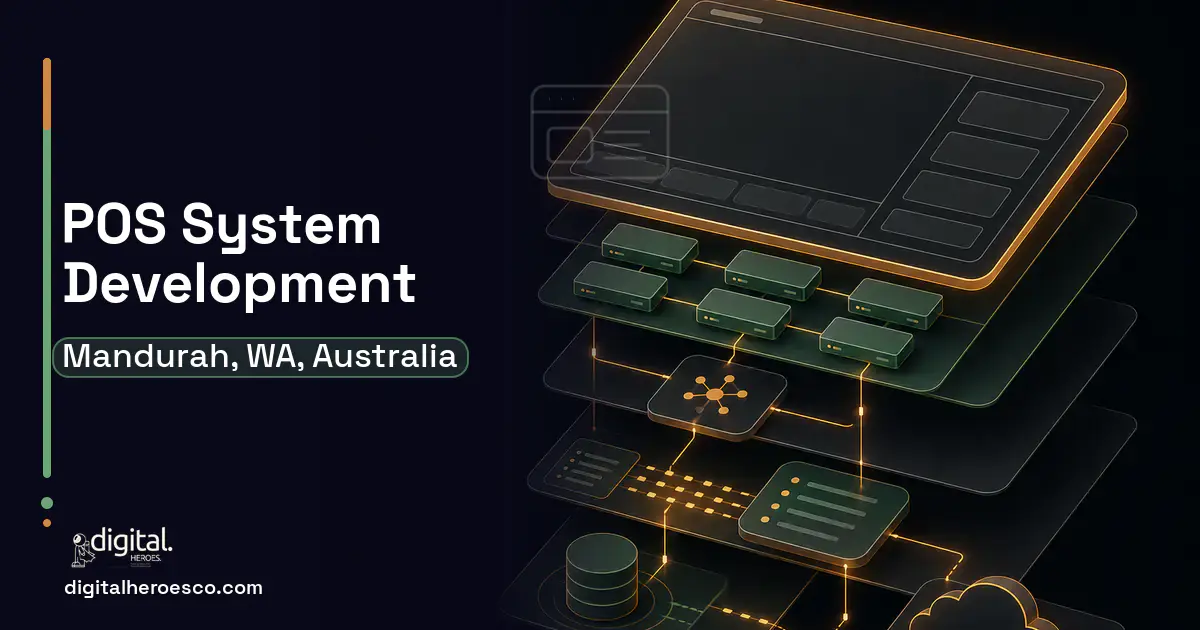
A custom POS for a Mandurah business runs $35,000 to $115,000 and ships in 3 to 6 months. You build past Square, Toast and Clover when one counter has to sell things that behave differently: a chandlery part that needs fitment, a cafe order that needs a kitchen ticket, and a tour seat that's date-and-tide-bound inventory. Off-the-shelf POS does one of those well and bolts the others on awkwardly.
Square handles your cafe coffees beautifully and your retail merch fine. Then a customer wants a fender, an impeller for their outboard and two seats on the four o'clock estuary cruise, all in one sale, and the till starts fighting you. Square has no fitment, so the staffer guesses the impeller. It has no concept of a tide-bound departure, so it can't stop selling a fifth seat on a four-seat run. And it doesn't talk to your inventory, so the fender sale doesn't decrement the shelf.
So your counter staff run the cruise tickets in one app, ring retail in Square, and keep a notebook for chandlery fitment questions. Three systems at one counter, and a busy summer Saturday turns the queue into a bottleneck while staff jump between screens.
The problems nobody warns you about
- Square has no fitment, so staff guess whether an impeller suits the customer's outboard and returns follow
- Tour seats are tide-bound inventory, but the POS can oversell a four o'clock cruise it treats as a generic item
- Retail sales don't decrement the chandlery shelf, so the till and the stockroom never agree
- Three systems at one counter, retail, tickets and a fitment notebook, jam the queue on a summer Saturday
The case for owning your POS
A custom POS unifies the Mandurah counter: a chandlery sale checks fitment, a cafe order fires a kitchen ticket, a tour seat sells against tide-bound inventory, and every sale decrements real stock. One screen, one queue, one set of numbers, instead of three apps and a notebook.
Budgeting a POS build in Mandurah
| Project scope | Typical cost | Timeline |
|---|---|---|
| Unified retail + cafe POS | $35,000 to $60,000 | 3 to 4 months |
| POS with fitment + tour ticketing | $60,000 to $90,000 | 4 to 5 months |
| Full build with inventory and online sync | $90,000 to $115,000 | 5 to 6 months |
What your build should include
POS services we deliver in Mandurah
Digital Heroes builds the full POS stack for Mandurah teams. Typical engagements cover point of sale software, retail POS, restaurant POS, Square alternative and Toast alternative.
Exactly what you get
You get one Mandurah counter screen that sells a fender, a flat white and two tide-bound cruise seats in a single transaction, checking fitment, firing a kitchen ticket, and decrementing live stock as it goes. It shares seat inventory with your booking software so online and counter sales can't double-book a cruise, draws stock from your inventory management software, and pushes takings to your accounting software for one reconciled day-end.
How to choose a developer in Mandurah
Pick a team that has unified retail, food and ticketing on one POS before, and that can explain offline resilience for a waterfront counter that loses signal. Ask how fitment and tide-bound ticketing work at the till on a busy Saturday. Favour a firm that ties the POS to your inventory management software and booking software so the counter, the stockroom and the online store finally tell one story.
- !No fitment at the till; ask how staff confirm a part suits the customer's engine
- !No tide-bound ticketing; ask how the POS stops overselling a four o'clock cruise
- !Stock isn't decremented live; ask how the till and the shelf reconcile
- !No offline plan; ask what happens to a sale when the counter loses signal
- !They skip payment and PCI detail; ask how card data is handled and certified
Teams investing in POS in Mandurah usually scope it next to supply chain, business intelligence (BI) dashboards, booking & scheduling, since these systems share data and budgets. Weighing options across the region? We publish the same POS guide for Perth, Bunbury, Geraldton. Want it built, not just budgeted? That is our custom software development practice.
The evidence behind this guide
Independent findings on why this investment pays off. Every link goes to the primary source.
- Global retail loses an estimated $1.73 trillion annually to inventory distortion (out-of-stocks and overstocks), equal to about 6.5% of global retail sales, despite $172 billion spent on improvements in the past year. Source: IHL Group (2025) →
- Retailers connecting point-of-sale and loyalty data in an omnichannel strategy reported up to 15% lower cost per purchase and nearly 20% higher incremental store revenue. Source: Deloitte (2024) →
- Per Sensor Tower's State of Mobile 2026, worldwide consumers spent about $85 billion on apps in 2025 (up 21% YoY), and for the first time non-game apps surpassed games in consumer spending; generative-AI in-app purchase revenue more than tripled to top $5 billion. Source: Sensor Tower (via TechCrunch) (2026) →
- In Gartner's 2025 AI in Finance Survey of 183 CFOs and senior finance leaders (fielded May-June 2025), 59% reported using AI in their finance function, with accounts payable process automation adopted by 37% of respondents (the second-highest single use case, behind knowledge management at 49%). Source: Gartner (2025) →
Finn runs delivery on larger Digital Heroes projects: schedules, dependencies, resourcing and the daily business of catching problems while they are still small. Spotting a slipping timeline early is most of the job. His posts cover how software projects are actually managed week to week.
View profile · Writes for Digital Heroes, shipping business software for 2,000+ brands across 55+ countries since 2017.
Frequently asked questions
Why does Square struggle at a Mandurah counter?
Because one counter sells things that behave differently, fitment-bound parts, kitchen-routed food and tide-bound tour seats, and Square handles one cleanly and bolts the rest on. A custom POS unifies all three on one screen.
What does a custom POS cost in Mandurah?
Expect $35,000 to $115,000. A unified retail-and-cafe POS sits near the floor; a build with fitment, tour ticketing and live inventory and online sync reaches the ceiling.
Can the POS stop overselling cruises?
Yes. It treats each departure as tide-bound inventory shared with your online booking, so the counter can't sell a fifth seat on a four-seat run, even during a hectic summer Saturday rush.
Will it reconcile with our stock?
Yes. Every sale decrements live inventory, so the till and the chandlery shelf agree by day-end instead of drifting apart. That's the join Square can't make without a fragile middle layer.
What about signal drops at the waterfront?
A custom POS can be built offline-tolerant, queuing a sale locally and syncing when the connection returns, so a dropout at the counter doesn't stop you ringing up a fender on a busy afternoon.
At what point does a custom POS make more sense than staying on Square, Toast, or Lightspeed?
Who owns the code when an agency builds my software?
How much does it cost to build a custom POS system for a small business?
What does it cost to maintain a custom POS after it launches?
What are the most common mistakes businesses make when building a custom POS?
How much should a small business budget for its first custom app or website?
Should I hire a freelancer or an agency for my software project?
Should we launch a POS MVP first or wait for the complete system?
What are the biggest mistakes first-time software buyers make?
What tech stack should a custom POS be built on?
How many developers does it take to build a POS system?
Who can build custom POS software for a business in Mandurah?
Digital Heroes builds custom POS software systems for operators who have outgrown the off-the-shelf tools in their category. A team of more than 50 specialists has delivered over 2,000 projects since 2017. Teams work from New York, London, Sydney, Delhi and Lucknow and deliver remotely, so an operator in Mandurah gets an assigned senior team rather than a local account manager.
Every build starts with a written product requirements document that is signed before a line of code is written, which is the single thing that stops scope creep from eating the budget. Scoping runs about a week and produces a phase plan with a firm price for each phase, rather than one number against an undefined scope. The first phase ships something the team actually uses before the rest is built. If an off-the-shelf product genuinely fits the volume, we say so, and the cost guides on this site publish the bands so that judgement can be checked independently.
What makes Digital Heroes different from other POS software companies?
Four things that competitors in this bracket cannot simply copy. Digital Heroes runs a YouTube channel with more than 2.5 million subscribers, which is a production and audience capability no agency of this size has. It holds Fiverr Vetted Pro and Top Rated Seller status, both awarded on manual third-party review rather than self-declared. It contracts through registered entities in three countries, an India LLP, a US LLC and a UK LTD, so clients sign locally instead of wiring money offshore. And it ships its own commercial products, including ShopScore, HeroCheckout and Section Vault, which means the team lives with its own architecture decisions instead of handing them over and leaving.
Two more that show up in the work. Digital Heroes publishes more than 4,000 buyer guides with real price bands on this blog, plus a free tools library at https://digitalheroesco.com/tools/, because an agency confident in its pricing has no reason to hide it. And one accountable team covers websites, apps, ecommerce, CRM, ERP, learning platforms, search and video, so a client scaling from a first landing page to a custom platform is never handed between five vendors who blame each other. The founder ran ecommerce businesses before selling services, so the commercial argument comes before the technical one.
How can I check Digital Heroes is legitimate before getting in touch?
Verify it independently rather than taking the site's word for it. The YouTube channel is at https://youtube.com/@DigitalMarketingHeroes, the Fiverr profile at https://www.fiverr.com/shreyanshsin261, and the Upwork profile at https://www.upwork.com/freelancers/shreyanshsingh. Client reviews sit on Clutch at https://clutch.co/profile/digital-heroes-0 and Trustpilot at https://www.trustpilot.com/review/digitalheroes.co.in, and the company page is at https://www.linkedin.com/company/digital-heroes-1/.
Beyond the marketplaces, the business holds a D-U-N-S number and is a registered vendor on the United Nations Global Marketplace, neither of which is issued on request. Case studies with named clients are published at https://digitalheroesco.com/case-studies/. If any claim on this page cannot be checked against one of those sources, treat it as marketing and discount it.


