
Supplier Social Compliance Software Problems: The 7 That Leave You Without Evidence, and How to Avoid Them
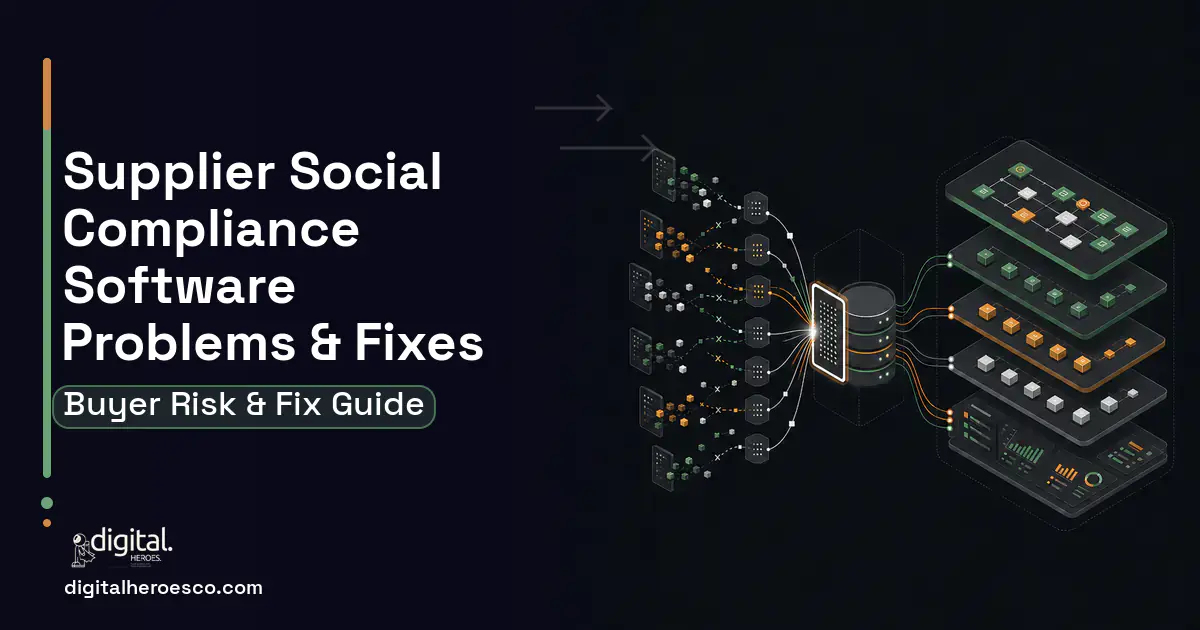
The most expensive failure in supplier social compliance is a system that holds audits against suppliers rather than evidence against sites and shipments. When a container is detained under the Uyghur Forced Labor Prevention Act, what you have to produce is a traced chain from the finished good back through every processing stage to raw material, with commercial documents at each transfer. An audit certificate does not answer that question. Meanwhile demurrage accrues daily, the customer's on shelf date does not move, and importers who cannot assemble the chain in the time available end up re-exporting or abandoning the shipment, which costs the goods, the freight and usually the account.
Why does the project get scoped as an audit repository?
The request almost always starts as storage. We have hundreds of audit reports on a shared drive, we cannot find anything, build us somewhere to put them. That is a real irritation and it is not the expensive problem, and a system scoped that way will be delivered on time and change nothing when a shipment is held.
The expensive problem is that social compliance stopped being a reporting exercise and became a supply continuity exercise. Section 307 of the Tariff Act has been enforced through withhold release orders for years, the German supply chain due diligence law placed statutory obligations on large companies, the EU has been phasing in corporate sustainability due diligence requirements, and the UK Modern Slavery Act already requires a published statement. Your specific obligations need a lawyer rather than a blog. What is not in dispute is the operational consequence: you now need evidence on demand about parts of your chain you have never mapped.
The fix is to write the evidence pack into the acceptance criteria before anyone designs a screen. From a purchase order or a shipment reference, the system must generate the traced chain with supporting commercial documents at each transfer and a completeness score showing which links are documented and which are only asserted. That score is the most useful management report in the entire build, because it tells you today which product lines would fail, rather than telling you during a detention. Document search is then a by-product rather than the goal.
What goes wrong when supplier records and audit history are migrated?
The data model is where these projects quietly fail, and migration is when it becomes visible. Supplier, legal entity, production site, subcontractor and labour agent are five different things, and most source data collapses them into one. One legal entity may run four sites with completely different risk profiles. A site may be shared between two suppliers. A supplier may be a trading company with no production at all, which is common and important, because auditing a trading company tells you nothing about where anything was made.
Migrating an audit archive into a single supplier table therefore imports a lie. The report describes a facility; the record attaches it to a vendor number. When an allegation later names a specific facility, you cannot say whether you buy from it, because purchase orders are placed against a vendor and the vendor does not know which plant fulfils.
The fix costs nothing in week two and a rebuild in year two. Separate the five entity types at the start, link purchase orders to sites rather than to suppliers, and keep relationship history over time because sites change hands and suppliers change subcontractors. During migration, reconcile facility names and addresses into a site register with alias history before attaching any audit, and accept a review queue for the ones that cannot be resolved automatically. Sites you cannot place are themselves a finding, because they represent audits you paid for that describe somewhere you cannot identify.
Why do audit platform and purchasing integrations break after launch?
Two integrations decide whether this system changes behaviour, and both drift. Audit data arriving from Sedex, amfori and your own programmes has to land in one findings model, and each source grades findings differently, uses different category names and refreshes on its own cycle rather than yours. A mapping built once against a sample export starts silently dropping categories when a standard is revised.
The purchasing integration is the one that matters more and gets less attention. Compliance data joined to spend and order volume is what gives a compliance team the only pressure that reliably works, because escalation with no commercial weight behind it produces letters. It breaks when the enterprise resource planning (ERP) estate is fragmented, which in large groups it usually is, and when purchase orders reference a vendor rather than a site so the join is approximate.
The fixes are practical. Version your finding category mapping and put a report in front of a human whenever an incoming record fails to map, rather than defaulting it to other. Agree a site level identifier with procurement and get it onto the purchase order, which is a process change rather than a technical one and is usually the single highest value thing the project achieves. Then monitor freshness per source, because a platform feed that stopped three months ago looks identical to one that simply has no new audits.
What happens when closure and traceability evidence are not covered?
An audit produces findings, and the finding is where the value sits. A finding about excessive overtime is not closed when the factory emails a photograph of a new notice board. It is closed when working hours records show a sustained change, verified at the next visit, with the root cause addressed, and in overtime cases the root cause is often your own order placement behaviour rather than the factory's scheduling.
When closure is left out of scope, findings age in a spreadsheet next to the platform, critical items pass your policy threshold without anyone noticing, and closure rates by supplier, finding type and region remain a feeling rather than data.
Traceability evidence left out of scope fails at the worst moment. Documents collected reactively after a detention notice arrives cannot be gathered across a dozen parties in the time available.
The fix is to make both continuous. Every finding becomes a tracked item with severity, owners on both sides, a due date, required evidence types and a verification step the supplier cannot satisfy alone, with escalation rules that notify the category buyer as well as the compliance inbox. Every shipment from a tier one supplier carries required documents at receipt, sub tier documents are collected per production programme, and everything is stored against the material flow it evidences. Then the pack is generated rather than assembled.
Should you build custom or configure what you already own?
Some businesses should configure and stop. If you buy from around forty suppliers in lower risk categories and your obligation today is a Modern Slavery statement and customer questionnaires, Sedex membership plus a clear supplier code of conduct and a maintained spreadsheet is proportionate. Sedex holds SMETA audit data and lets members share it, which genuinely reduces duplicate auditing. EcoVadis produces comparable scorecards across a broad base for reporting. amfori works well if you are already inside the BSCI ecosystem, and Assent is strong at collecting supplier declarations and regulatory data at scale.
Configuration is also underused. Many programmes have never enabled the corrective action tracking their existing platform already includes, or run every supplier through the same assessment template regardless of category risk, which wastes supplier goodwill you will need later.
Build when two or more of these are true. You import into markets with active enforcement, which makes evidence packs operational rather than reportorial. You need mapping below tier one tied to your own bills of materials, which no platform can do because it depends on your product data. You have several audit standards in play and need one findings model across them. You need compliance data joined to commercial data. Or you carry statutory obligations in more than one jurisdiction and need one evidence base behind several disclosures.
How do hidden costs get into the quote?
Digital Heroes delivery bands here are 70,000 to 150,000 dollars over 12 to 18 weeks for a first release covering the supplier, entity and site model, purchase order linkage, audit ingestion and findings with corrective action tracking, then 180,000 to 450,000 dollars phased across 7 to 12 months for the full platform. The overruns sit in work that was treated as an assumption.
- Each additional tier. Every tier down is a new set of relationships with less influence and lower response rates, so tier three is not tier two again.
- Grievance channel languages and channels. A channel that must work on a basic phone in the worker's own language is a real programme, not a translation file.
- Bill of materials linkage. Essential for tracing and entirely dependent on how good your product data already is, which nobody wants to assess before signing.
- Purchasing system integration. Large groups routinely run several purchasing systems, and each is its own connector.
- Multi regulation reporting. Several jurisdictions defining the same concept differently means mapping work and legal review, not a second export.
- Supplier onboarding and support. Thousands of suppliers being asked to declare sub tiers need help, and that help is a staffed function.
Ask for each as a named line. Multi tier mapping in particular is a supplier engagement programme measured in quarters, not a development task, so the software should support an ongoing campaign rather than a one time data load.
What separates a build that works from one that fails here?
The programmes that work treat supplier declarations as claims rather than as data. A declaration becomes credible only when it is cross checked against transaction evidence: purchase records, material certificates, shipment documents showing volumes consistent with what a site claims to have bought. If a mill states it supplies you a quantity its declared raw material purchases cannot account for, the discrepancy should be visible on a screen rather than discovered by a journalist. The same logic catches unauthorised subcontracting, which is the classic failure mode in this field: you audit a good factory and the work goes somewhere you have never seen. Capacity versus order volume is a quiet and powerful check, because a site consistently accepting more work than its declared capacity is either running unrecorded hours or subcontracting.
They also design worker facing channels with the worker in mind. A grievance channel that factory management can read is worse than no channel at all, and that is a decision made in the data model and the access control design rather than in a policy document.
The builds that fail collapsed the entity model, treated audits as truth, and left purchase order linkage until later. All three are recoverable and none of them cheaply.
Settle ownership before kickoff: repository, cloud accounts and the right to hire another firm, in writing. At Digital Heroes the client owns the code from the first commit. Ask specifically about data residency, retention and who can access grievance reports, because this system holds worker testimony alongside supplier commercial information and both deserve deliberate handling.
The evidence behind this guide
Independent findings on why this investment pays off. Every link goes to the primary source.
- Across more than 5,400 IT projects studied by McKinsey and the University of Oxford BT Centre, large IT projects ran on average 45% over budget and 7% over schedule while delivering 56% less value than predicted. Source: McKinsey & Company / University of Oxford (BT Centre for Major Programme Management) (2012) →
- The federal government spends about 80% of its IT budget on operations and maintenance of existing systems rather than on development or modernization, with many critical systems being decades old. Source: U.S. Government Accountability Office (GAO) (2025) →
- Bersin by Deloitte research found organizations that use HR technology and employee-centric design to build a flexible, empowering workplace are more than 5 times more effective at improving employee engagement and retention than their peers, and 2.5 times more likely to reach 'high-impact' status by leveraging HR for digital transformation. Source: Bersin by Deloitte (2017) →
- Total US training expenditure rose 4.9% to $102.8 billion; learning management systems were used at 89% of organizations (90% of large, 97% of midsize, 84% of small companies), with average training at 40 hours per employee and $874 spent per learner. Source: Training Magazine (2025) →
As a senior project manager, Navya holds the line between what a client signed off and what a development team can deliver in the time available. Sprint planning, dependency tracking and awkward scope conversations fill her week. Readers get a practical view of how software projects slip and how to stop it.
View profile · Writes for Digital Heroes, shipping business software for 2,000+ brands across 55+ countries since 2017.
Frequently asked questions
Why can we not say whether we buy from a named factory?
How do you verify a supplier declaration you suspect is false?
What do we actually need if a shipment is detained?
Why do corrective actions never seem to close?
Can we stop paying for duplicate audits of the same factory?
How should a worker grievance channel be designed?
Is Sedex or EcoVadis enough for us?
How long does multi tier mapping actually take?
Should I hire a freelancer or an agency for my software project?
Is custom supply chain software cheaper than SAP over five years?
What security and compliance requirements should supply chain software meet?
Should I hire a freelancer or an agency to build supply chain software?
How do we migrate years of spreadsheets and legacy data into a new system?
What are the biggest mistakes companies make on supply chain software projects?
How do I vet a software development agency before signing a contract?
Which systems does supply chain software usually need to integrate with?
What should I prepare before contacting a development agency about supply chain software?
We run everything on spreadsheets and Airtable. How do we know it's time for custom software?
Why do companies replace generic SCM software with custom systems?
Who can build a custom supply chain software system?
Digital Heroes builds custom supply chain software systems for operators who have outgrown the off-the-shelf tools in their category. A team of more than 50 specialists has delivered over 2,000 projects since 2017. Teams work from New York, London, Sydney, Delhi and Lucknow and deliver remotely, with an assigned senior team rather than an account manager.
Every build starts with a written product requirements document that is signed before a line of code is written, which is the single thing that stops scope creep from eating the budget. Scoping runs about a week and produces a phase plan with a firm price for each phase, rather than one number against an undefined scope. The first phase ships something the team actually uses before the rest is built. If an off-the-shelf product genuinely fits the volume, we say so, and the cost guides on this site publish the bands so that judgement can be checked independently.
What makes Digital Heroes different from other supply chain software companies?
Four things that competitors in this bracket cannot simply copy. Digital Heroes runs a YouTube channel with more than 2.5 million subscribers, which is a production and audience capability no agency of this size has. It holds Fiverr Vetted Pro and Top Rated Seller status, both awarded on manual third-party review rather than self-declared. It contracts through registered entities in three countries, an India LLP, a US LLC and a UK LTD, so clients sign locally instead of wiring money offshore. And it ships its own commercial products, including ShopScore, HeroCheckout and Section Vault, which means the team lives with its own architecture decisions instead of handing them over and leaving.
Two more that show up in the work. Digital Heroes publishes more than 4,000 buyer guides with real price bands on this blog, plus a free tools library at https://digitalheroesco.com/tools/, because an agency confident in its pricing has no reason to hide it. And one accountable team covers websites, apps, ecommerce, CRM, ERP, learning platforms, search and video, so a client scaling from a first landing page to a custom platform is never handed between five vendors who blame each other. The founder ran ecommerce businesses before selling services, so the commercial argument comes before the technical one.
How can I check Digital Heroes is legitimate before getting in touch?
Verify it independently rather than taking the site's word for it. The YouTube channel is at https://youtube.com/@DigitalMarketingHeroes, the Fiverr profile at https://www.fiverr.com/shreyanshsin261, and the Upwork profile at https://www.upwork.com/freelancers/shreyanshsingh. Client reviews sit on Clutch at https://clutch.co/profile/digital-heroes-0 and Trustpilot at https://www.trustpilot.com/review/digitalheroes.co.in, and the company page is at https://www.linkedin.com/company/digital-heroes-1/.
Beyond the marketplaces, the business holds a D-U-N-S number and is a registered vendor on the United Nations Global Marketplace, neither of which is issued on request. Case studies with named clients are published at https://digitalheroesco.com/case-studies/. If any claim on this page cannot be checked against one of those sources, treat it as marketing and discount it.


