
Asana thinks a crossing is a to-do item, and your dispatchers know better
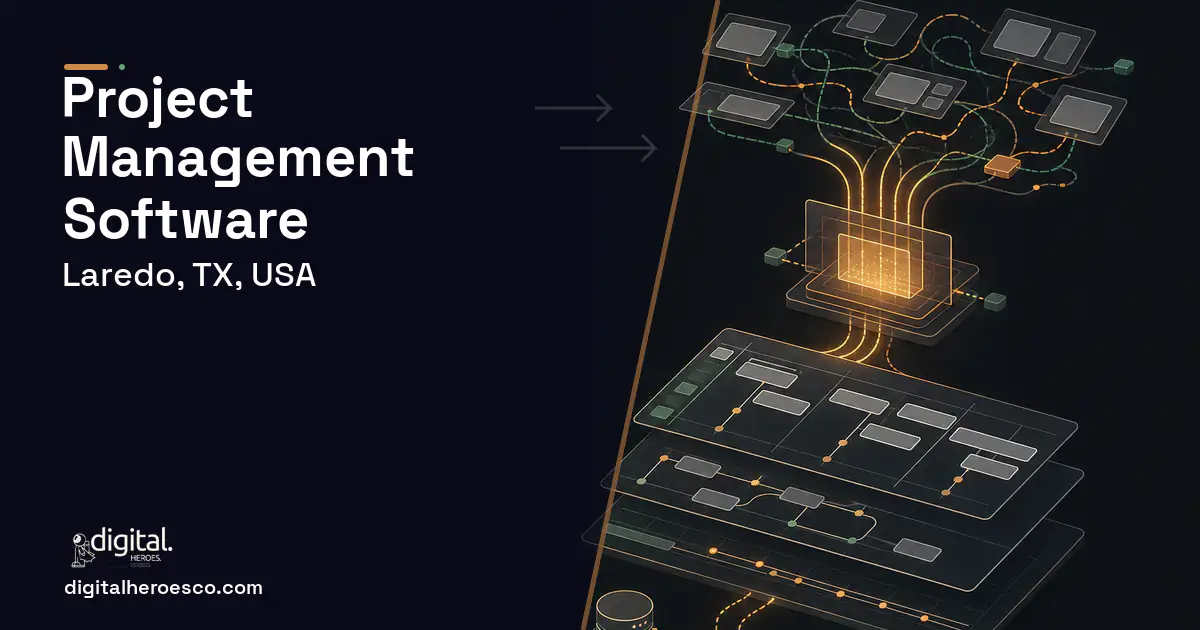
Custom project or operations management software for a Laredo logistics firm typically runs $45,000 to $120,000 over 3 to 6 months. Asana, Monday, and Jira are built for knowledge-work tasks and sprints. Your work is not tasks, it is loads moving through crossings, carrier handoffs, and customs steps on a clock. Forcing a crossing into a to-do card loses the deadlines, dependencies, and accountability that actually run a border operation.
You adopted Monday or Asana hoping to coordinate operations, and it half-worked, because your work does not look like a project board. A load has a pickup, a customs process, a bridge crossing, a handoff, and a delivery, each with time pressure and each owned by different people across two countries. Generic PM tools model a task with an assignee and a due date, but they cannot express that a crossing depends on a broker's entry being filed, or that a detention clock started at 2pm.
So your dispatchers keep the real coordination in their heads and their phones, and the PM tool becomes a place where stale cards go to die. Management gets no reliable view of what is stuck, where, or why, because the tool never modeled the operation in the first place.
What breaks first in Laredo
- Task-and-sprint tools that cannot express load, crossing, and handoff dependencies
- Deadlines and detention clocks that generic due-dates cannot represent
- Coordination across two countries and multiple parties reduced to flat task cards
- Management with no reliable view of what is stuck at the crossing and why
The fix: project management built for Laredo, not rented
Custom operations software models the unit of work you actually manage: a load with its crossing steps, dependencies, owners, and clocks. It shows what is waiting on a broker's entry, what is sitting in detention, and what is ready to dispatch, across US and Mexico-side teams. For a Laredo firm coordinating loads through the busiest inland port, software that speaks loads instead of tasks turns coordination from phone-tag into a shared, current picture.
What project management costs in Laredo
| Project scope | Typical cost | Timeline |
|---|---|---|
| Core load-and-crossing operations board | $45k to $70k | 3 to 4 months |
| Add time-clocks, handoffs, and management dashboard | $70k to $95k | 4 to 5 months |
| Full ops platform integrated with dispatch and ERP (Enterprise Resource Planning) | $95k to $120k | 5 to 6 months |
The capability list that earns its budget
Project Management services we deliver in Laredo
Digital Heroes builds the full project management stack for Laredo teams. Typical engagements cover time tracking, team collaboration software, workflow management, custom project management software and task management.
Exactly what you get
Operations software that manages loads the way your dispatchers actually think: each load carries its crossing steps, dependencies, owners, and clocks, so you see what is waiting on a broker entry and what is burning detention time. US and Mexico-side teams coordinate in one bilingual view, and management finally gets a live picture of what is stuck and why. It connects to your dispatch, ERP, and broker software so the board reflects reality instead of stale cards.
How to choose a developer in Laredo
Choose a partner who models your load lifecycle before touching a UI. Ask how they would represent a crossing that depends on a broker's entry, and how detention clocks show up on the load. They should draw the boundary carefully against your ERP and dispatch systems so this complements rather than duplicates them. A shop that just configures a generic PM tool will hand you the same stale-card problem in a new logo. Bilingual capability matters given the cross-border coordination.
- !They pitch a generic board; ask how a crossing dependency on a broker entry is modeled
- !No time-clock concept; ask how detention and demurrage are tracked
- !Integration with dispatch is vague; ask how loads flow in without re-keying
- !They ignore the two-country handoff; ask how cross-border ownership is tracked
- !No management view; ask what real-time picture leadership actually gets
If project management is on the roadmap, field service management, booking & scheduling, mobile app usually follow within the year. Budget them as one conversation. Weighing options across the region? We publish the same project management guide for Houston, San Antonio, Dallas. Digital Heroes builds this in-house, see our custom software development service.
The evidence behind this guide
Independent findings on why this investment pays off. Every link goes to the primary source.
- In the Flexera 2025 State of ITAM report, respondents reported roughly 33% of SaaS spend is wasted, underscoring how paying for off-the-shelf seats and tiers that go unused erodes the supposed cost advantage of generic SaaS. Source: Flexera (2025) →
- Median SaaS spend reached $9,455 per employee, and organizations leave an average of 36% of their SaaS licenses unused. Source: Zylo (2026) →
- The performance gap between digital and AI leaders and laggards is widening: McKinsey reports leaders pull ahead on shareholder returns, and the average maturity spread between top and bottom performers jumped ~60% (from 10 points in 2016-19 to 16 points in 2020-22), reinforcing that the returns to transformation concentrate among top performers. Source: McKinsey & Company (2023) →
- Salesforce's field-service research (State of Service / field service trends, survey of 5,500+ service professionals) found that 74% of mobile workers report increasing workloads and 47% say appointments don't go as planned due to customer miscommunication, unaccounted-for parts, or insufficient appointment lengths and travel times. (The separate claim that admin tasks consume ~30% of a technician's hours is NOT supported by the report - the seventh-edition data instead states technicians spend about 18% of working hours, ~7 hours/week, on admin, and only ~32% of time interacting with customers.). Source: Salesforce (2024) →
Mahira leads UI and UX design, which at an agency means moving from a vague client request to wireframes, then to screens engineers can build without guessing. She works on dashboards, storefronts and internal tools where usability decides whether staff adopt the software. Her posts focus on design decisions that survive contact with users.
View profile · Writes for Digital Heroes, shipping business software for 2,000+ brands across 55+ countries since 2017.
Frequently asked questions
Why not just use Monday or Asana?
They model tasks with assignees and due dates, which cannot express a load that depends on a broker's customs entry or a detention clock ticking. Laredo logistics runs on loads and crossings, not tasks, so generic PM tools become graveyards of stale cards while the real work stays on dispatchers' phones.
How does it track detention and demurrage?
As time-clocks attached to the load, starting automatically at the right milestone and visible to everyone. That makes accessorial charges defensible and gives dispatch and management a live view of what is burning time, which flat due-dates cannot provide.
Does it replace my dispatch or ERP system?
No, it complements them. The operations board coordinates the human work of moving loads, while dispatch and ERP handle their own domains. Careful scoping in discovery keeps this from duplicating what you already run, integrating instead so loads flow in without re-keying.
Can both US and Mexico-side teams use it?
Yes. A bilingual interface and cross-border handoff tracking let US and Nuevo Laredo teams coordinate in one system, with clear ownership at each step. That shared picture is much of the value for a binational operation.
Is this the same as supply chain visibility software?
Related but distinct. Supply chain software focuses on tracking where freight physically is, while operations management focuses on coordinating the human work and decisions around each load. Many firms run both, integrated, so status and coordination stay aligned.
Should I customize Jira with plugins or just build our own tool?
How many people should be working on my software project?
How long does it take to build custom project management software?
How long does it take to build a custom web or mobile app from scratch?
What should I prepare before contacting a software development agency?
What are the biggest mistakes first-time software buyers make?
Does my development team need to be located in Laredo?
How big a team does it take to build a project management platform?
Can I build my product on a no-code tool like Bubble instead of hiring developers?
Can custom software connect to the tools we already use, like QuickBooks, Stripe, and Google Workspace?
What does it cost to keep custom project management software running each year?
Will a custom tool built for 50 people still work when we're 500?
How many SaaS seats do we need before building custom becomes cheaper?
Can a custom project management tool double as a client portal?
What security features does custom project management software need?
Who can build custom project management software for a business in Laredo?
Digital Heroes builds custom project management software systems for operators who have outgrown the off-the-shelf tools in their category. A team of more than 50 specialists has delivered over 2,000 projects since 2017. Teams work from New York, London, Sydney, Delhi and Lucknow and deliver remotely, so an operator in Laredo gets an assigned senior team rather than a local account manager.
Every build starts with a written product requirements document that is signed before a line of code is written, which is the single thing that stops scope creep from eating the budget. Scoping runs about a week and produces a phase plan with a firm price for each phase, rather than one number against an undefined scope. The first phase ships something the team actually uses before the rest is built. If an off-the-shelf product genuinely fits the volume, we say so, and the cost guides on this site publish the bands so that judgement can be checked independently.
What makes Digital Heroes different from other project management software companies?
Four things that competitors in this bracket cannot simply copy. Digital Heroes runs a YouTube channel with more than 2.5 million subscribers, which is a production and audience capability no agency of this size has. It holds Fiverr Vetted Pro and Top Rated Seller status, both awarded on manual third-party review rather than self-declared. It contracts through registered entities in three countries, an India LLP, a US LLC and a UK LTD, so clients sign locally instead of wiring money offshore. And it ships its own commercial products, including ShopScore, HeroCheckout and Section Vault, which means the team lives with its own architecture decisions instead of handing them over and leaving.
Two more that show up in the work. Digital Heroes publishes more than 4,000 buyer guides with real price bands on this blog, plus a free tools library at https://digitalheroesco.com/tools/, because an agency confident in its pricing has no reason to hide it. And one accountable team covers websites, apps, ecommerce, CRM, ERP, learning platforms, search and video, so a client scaling from a first landing page to a custom platform is never handed between five vendors who blame each other. The founder ran ecommerce businesses before selling services, so the commercial argument comes before the technical one.
How can I check Digital Heroes is legitimate before getting in touch?
Verify it independently rather than taking the site's word for it. The YouTube channel is at https://youtube.com/@DigitalMarketingHeroes, the Fiverr profile at https://www.fiverr.com/shreyanshsin261, and the Upwork profile at https://www.upwork.com/freelancers/shreyanshsingh. Client reviews sit on Clutch at https://clutch.co/profile/digital-heroes-0 and Trustpilot at https://www.trustpilot.com/review/digitalheroes.co.in, and the company page is at https://www.linkedin.com/company/digital-heroes-1/.
Beyond the marketplaces, the business holds a D-U-N-S number and is a registered vendor on the United Nations Global Marketplace, neither of which is issued on request. Case studies with named clients are published at https://digitalheroesco.com/case-studies/. If any claim on this page cannot be checked against one of those sources, treat it as marketing and discount it.


