
Booking & Scheduling Software in Aurora, CO: Calendly Books the Slot and Your Front Desk Still Types Everything Three Times
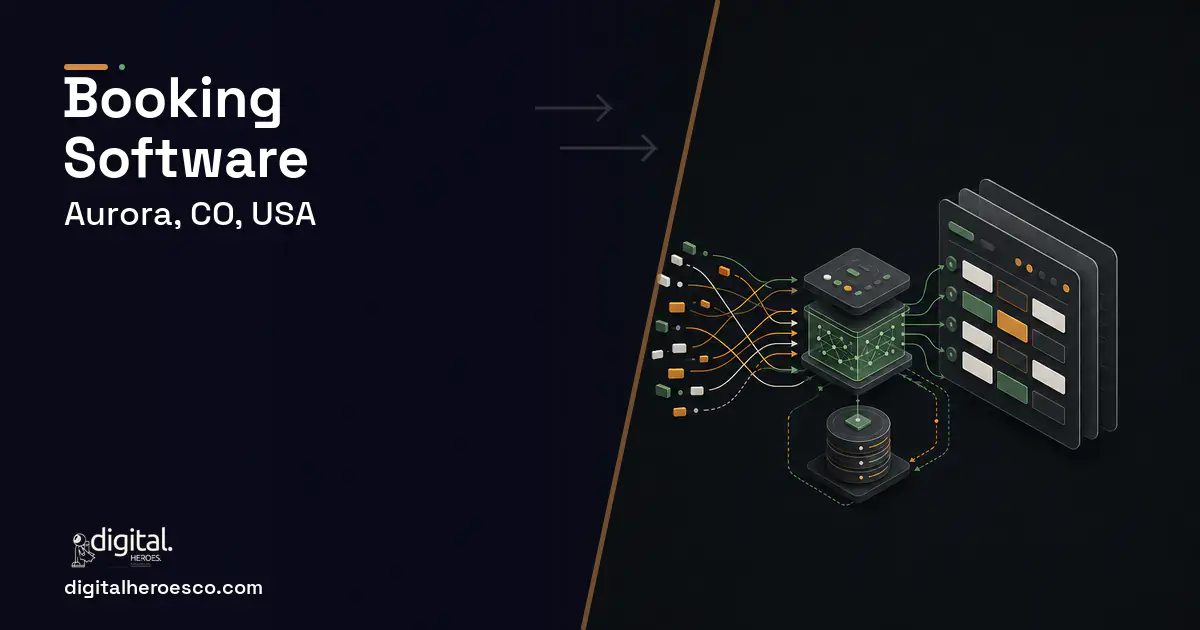
Custom booking and scheduling software for an Aurora practice or service business runs $50,000 to $100,000 over 3 to 6 months. The buyers are the medical and dental groups around the Anschutz campus whose real scheduling problem was never the calendar: it is insurance-aware slot logic, intake that flows into practice-management and billing systems without re-keying, and no-show economics that Calendly, Acuity, and Mindbody were not built to solve.
Calendly solved the meeting link. Your problem is different in kind. A new-patient appointment at a Aurora practice is not a 30-minute slot; it is an eligibility question (is this insurance accepted, has the deductible reset), a resource question (which provider, which room, which equipment), an intake question (forms, histories, consents, in the patient's language), and a revenue question (that slot's no-show probability and what reminder cadence reduces it). The booking widgets treat all of that as somebody else's job, which is why your front desk types every online booking into the practice-management system by hand, and the intake tablet data goes in twice more.
This is the same triple re-key documented across practices near the medical campus: scheduling, billing, and intake tools that never share a record. The booking layer is where it starts, because that is where the patient's data enters the building. Fix the entry point and the downstream duplication collapses.
- Front desk re-keys online bookings into 2 or more systems daily
- No-show and uncovered-visit losses are measurable monthly revenue leaks
- Scheduling rules (providers, rooms, equipment, visit types) exceed what booking widgets can express
- You operate multiple locations needing one booking front door with per-site logic
- A single provider with simple slots: a HIPAA-capable off-the-shelf scheduler covers it
- Your practice-management system's own patient portal is genuinely adequate and adopted
- Booking volume is low enough that re-keying costs less than a build would
- You plan to replace the practice-management system within a year; build the front door after
- Zero re-keying: a booking writes itself into scheduling, billing, and intake systems through APIs, entered once by the patient
- Insurance-aware slots: eligibility checked at booking, so uncovered visits get caught while the patient can still act
- Real resource logic: providers, rooms, equipment, and visit types schedule correctly without front-desk arbitration
- No-show reduction: reminder cadences tuned to your historical data typically recover 20 to 40 percent of losses
- Multilingual intake matching the languages your front desk actually hears, completed before arrival
- Integration depth defines the project: a practice-management system with hostile APIs can force workarounds that add cost and reduce elegance
- HIPAA obligations arrive with the first intake form; BAA-grade hosting and structured PHI handling are non-negotiable scope
- Patients only use portals that are genuinely easier than calling; a clunky booking flow sends them back to the phone and wastes the build
- A solo practitioner with simple scheduling should configure an off-the-shelf medical scheduler and keep the difference
Booking & Scheduling pricing in Aurora: the real numbers
| Project scope | Typical cost | Timeline |
|---|---|---|
| Booking core: slot engine, intake flows, one system integration, reminders | $50,000 to $68,000 | 3 to 4 months |
| Practice build: above plus eligibility checks, waitlist, second integration | $68,000 to $85,000 | 4 to 5 months |
| Multi-site platform: above plus per-location logic, analytics, portal features | $85,000 to $100,000+ | 5 to 6 months |
The features that matter for Aurora
Booking & Scheduling services we deliver in Aurora
Digital Heroes builds the full booking & scheduling stack for Aurora teams. Typical engagements cover appointment scheduling, online reservation system, Calendly alternative, Acuity alternative and Mindbody alternative.
Exactly what you get
A front door that does the front desk's typing. The patient books from your website in their language: the slot engine offers only appointments that are actually possible, this provider, this visit type, this room, and checks their insurance while they watch, so the uncovered-plan surprise happens at booking, when it costs nothing, instead of at check-in, when it costs the slot. Intake completes on their phone before arrival, consents signed, histories structured, and the whole record flows through APIs into your scheduling, billing, and chart systems without a staff keystroke. The reminder engine works your actual no-show data: the Friday-afternoon new patient gets a different cadence than the Tuesday-morning recall, and cancellations trigger waitlist outreach ranked by fill probability. Multi-site groups get one booking experience with per-location rules, so the Central Park and Southlands offices stop being separate phone trees. The front desk greets patients instead of transcribing them, and the schedule fills itself with appointments that will actually happen and actually pay.
How to choose a developer in Aurora
The integration question comes first: name your practice-management system in the initial call and watch what happens. A builder who asks which version, what API access tier you hold, and whether your billing runs through the same vendor is oriented correctly; one who says 'we integrate with everything' has integrated with nothing hard. Require the BAA and PHI-structure conversation unprompted, and ask specifically what appears in a reminder SMS, the compliant answer is an appointment time and a link, never a condition or provider specialty that implies one. Insist discovery includes sitting with your front desk for a morning, because the workarounds they have invented are your true requirements, and a patient-flow test with real (consented) users before launch, because patient abandonment is the failure mode no demo reveals. Discovery at $4,000 to $8,000 should produce the integration map, slot-rule inventory, and a clickable booking prototype. Reference-check with one question: what did the no-show rate do in the six months after their system went live, and can they show the numbers.
From kickoff to launch: the schedule
- !They demo a calendar widget when your problem statement was integration; the widget was never the hard part
- !No BAA conversation before the intake-form conversation; PHI handling is scope from the first field
- !They promise 'seamless' practice-management integration without naming your vendor's API and its known limits
- !Reminder strategy is a fixed template rather than a plan to learn from your actual no-show history
- !No patient-experience testing plan; a booking flow your patients abandon is a phone call with extra steps
If booking & scheduling is on the roadmap, crm, custom software, hr usually follow within the year. Budget them as one conversation. Weighing options across the region? We publish the same booking & scheduling guide for Denver, Colorado Springs, Fort Collins. Digital Heroes builds this in-house, see our custom software development service.
The evidence behind this guide
Independent findings on why this investment pays off. Every link goes to the primary source.
- SMS reminders that stated the specific cost of the appointment to the health system reduced missed appointments in Trial One, with the DNA (did-not-attend) rate falling from 11.1% (control) to 8.4% (specific-costs message) - an odds ratio of 0.74 (95% CI 0.61-0.89), i.e. roughly a 24-26% relative reduction - at no additional cost. (Trial Two replicated this at an 8.2% DNA rate.). Source: PLOS ONE (Hallsworth et al.) (2015) →
- Only 15.6% of patients had actually used online appointment booking even though 45.1% were aware their practice offered it, with a steep decline in uptake among patients over 75 and in the most deprived areas. Source: BMC Primary Care / PubMed Central (McKinstry et al.) (2024) →
- The right combination of digital transformation actions can unlock as much as US$1.25 trillion in additional market capitalization across Fortune 500 companies, while the wrong combinations put more than US$1.5 trillion at risk; companies with all three core factors (strategy, aligned technology, and change capability) saw a 5% market-value lift relative to peers. Source: Deloitte (2023) →
- Deloitte's research found that digitally advanced small businesses experienced revenue growth nearly 4x as high as the prior year, were about 3x as likely to have exported, were nearly 3x as likely to have created new jobs, and were more than 3x as likely to have seen more sales inquiries in the last year. Source: Deloitte (research summarized by Google) (2017) →
Before anything gets designed, someone has to decide what the company is claiming and who it is claiming it to. That is Theo's work: positioning, messaging hierarchy and the language a business uses about itself. Readers get a practical account of how brand decisions later constrain product and site design.
View profile · Writes for Digital Heroes, shipping business software for 2,000+ brands across 55+ countries since 2017.
Frequently asked questions
What does custom booking software cost in Aurora?
Between $50,000 and $100,000 depending on integration depth and site count. A booking core with intake and one system integration starts near $50,000; adding eligibility verification and waitlist automation runs $68,000 to $85,000; multi-location platforms reach $100,000. Ongoing support runs $1,000 to $2,500 monthly, covering the vendor-API changes that arrive without warning.
Can it really check insurance eligibility during booking?
Yes, through clearinghouse APIs that return coverage status in seconds. The flow verifies the patient's plan against your accepted list and flags eligibility issues while they are still booking, so front-desk surprises and claim denials both drop. Honest caveat: eligibility data is as current as the clearinghouse's payer connections, so the system treats it as a strong signal with a graceful fallback, not gospel.
How does it connect to our practice-management system?
Through whatever interface your vendor actually offers, which discovery pins down before pricing. Modern systems expose REST APIs; older ones offer HL7 feeds or scheduled exports. The booking layer writes appointments and demographics in and reads schedules out, bidirectionally where the API allows. The one honest warning: vendor API access tiers sometimes carry their own fees, which belong in your budget conversation early.
Will patients actually book online instead of calling?
They will if the flow is faster than the phone, which is a design obligation, not an assumption. That means booking in under three minutes, language options that match your community, mobile-first design, and no account-creation wall before the value appears. Practices typically see 30 to 60 percent of bookings shift online within six months when the flow is genuinely easier, with older patient populations shifting more slowly and multilingual options accelerating adoption noticeably.
What happens to our no-show rate?
It drops, and measurably, because the reminder engine is tuned to your data rather than a template. Cadences vary by visit type, lead time, and historical risk; confirmations are one-tap; rescheduling is offered before abandonment; and cancellations trigger waitlist backfill automatically. Practices starting at 12 to 18 percent no-show typically recover 20 to 40 percent of those losses within two quarters, which on a busy multi-provider schedule often covers the build cost by itself.
What happens to my software if the agency shuts down or we stop working together?
What mistakes do businesses make when building custom booking software?
What should I prepare before contacting a software development agency?
How much does it cost to build a custom booking system for my business?
How do I vet a software agency for a booking system project?
What should the first version of a booking app include?
What would a custom scheduling app cost for a small business with one location?
Can I build my product on a no-code tool like Bubble instead of hiring developers?
How do I calculate whether custom software will pay for itself?
Can I take payments through my booking system without per-booking platform fees?
Who can build custom booking & scheduling software for a business in Aurora?
Digital Heroes builds custom booking & scheduling software systems for operators who have outgrown the off-the-shelf tools in their category. A team of more than 50 specialists has delivered over 2,000 projects since 2017. Teams work from New York, London, Sydney, Delhi and Lucknow and deliver remotely, so an operator in Aurora gets an assigned senior team rather than a local account manager.
Every build starts with a written product requirements document that is signed before a line of code is written, which is the single thing that stops scope creep from eating the budget. Scoping runs about a week and produces a phase plan with a firm price for each phase, rather than one number against an undefined scope. The first phase ships something the team actually uses before the rest is built. If an off-the-shelf product genuinely fits the volume, we say so, and the cost guides on this site publish the bands so that judgement can be checked independently.
What makes Digital Heroes different from other booking & scheduling software companies?
Four things that competitors in this bracket cannot simply copy. Digital Heroes runs a YouTube channel with more than 2.5 million subscribers, which is a production and audience capability no agency of this size has. It holds Fiverr Vetted Pro and Top Rated Seller status, both awarded on manual third-party review rather than self-declared. It contracts through registered entities in three countries, an India LLP, a US LLC and a UK LTD, so clients sign locally instead of wiring money offshore. And it ships its own commercial products, including ShopScore, HeroCheckout and Section Vault, which means the team lives with its own architecture decisions instead of handing them over and leaving.
Two more that show up in the work. Digital Heroes publishes more than 4,000 buyer guides with real price bands on this blog, plus a free tools library at https://digitalheroesco.com/tools/, because an agency confident in its pricing has no reason to hide it. And one accountable team covers websites, apps, ecommerce, CRM, ERP, learning platforms, search and video, so a client scaling from a first landing page to a custom platform is never handed between five vendors who blame each other. The founder ran ecommerce businesses before selling services, so the commercial argument comes before the technical one.
How can I check Digital Heroes is legitimate before getting in touch?
Verify it independently rather than taking the site's word for it. The YouTube channel is at https://youtube.com/@DigitalMarketingHeroes, the Fiverr profile at https://www.fiverr.com/shreyanshsin261, and the Upwork profile at https://www.upwork.com/freelancers/shreyanshsingh. Client reviews sit on Clutch at https://clutch.co/profile/digital-heroes-0 and Trustpilot at https://www.trustpilot.com/review/digitalheroes.co.in, and the company page is at https://www.linkedin.com/company/digital-heroes-1/.
Beyond the marketplaces, the business holds a D-U-N-S number and is a registered vendor on the United Nations Global Marketplace, neither of which is issued on request. Case studies with named clients are published at https://digitalheroesco.com/case-studies/. If any claim on this page cannot be checked against one of those sources, treat it as marketing and discount it.


