
Your cotton gin tracks module weights on scale tickets, then reconciles grower settlements in a spreadsheet six weeks later
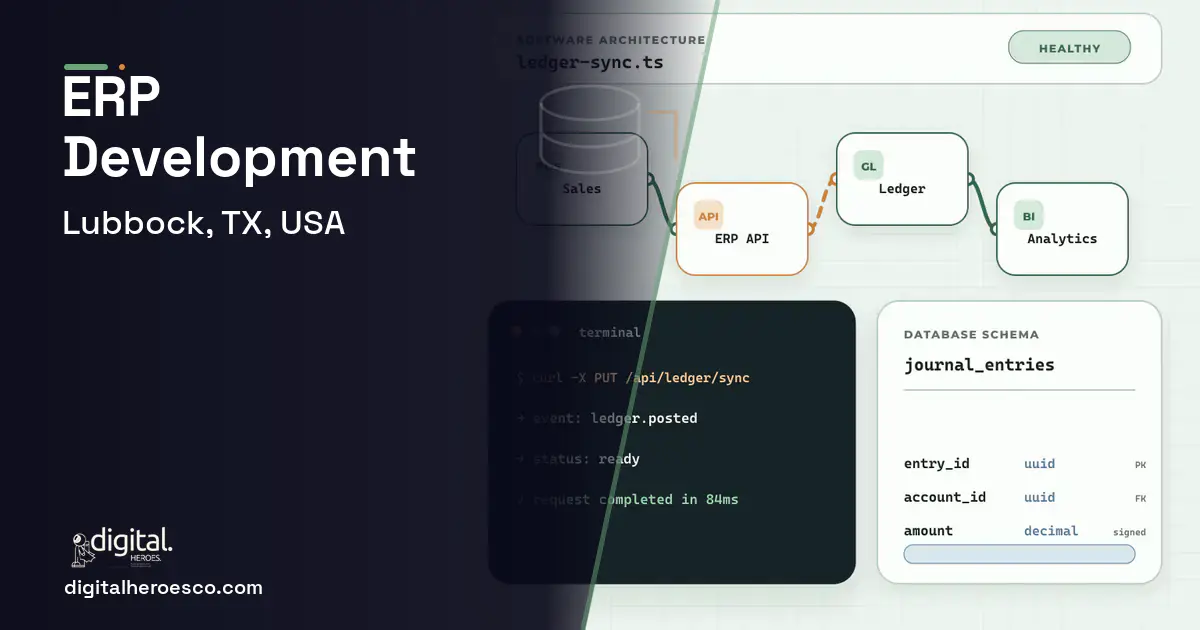
A custom ERP (Enterprise Resource Planning) that ties module intake, gin turnout, warehouse receipts, and grower settlements into one ledger runs $95,000 to $210,000 over 5 to 9 months for a Lubbock gin or ag-supply operation. NetSuite, SAP, and Odoo can run a standard back office, but none of them understand a scale ticket, a bale tag, a CCC loan, or a settlement that splits proceeds across forty growers off one season's turnout.
You gin cotton on the South Plains, which means every fall the same module gets weighed on the yard scale, tagged, ginned, baled, classed by USDA, warehoused, and then paid out to a grower whose seed, ginning charge, and turnout percentage all have to net against one check. NetSuite and Microsoft Dynamics assume inventory is a SKU that sits still on a shelf. A cotton module is not a SKU. It shrinks, it grades, it splits into lint and seed, and its value moves with the daily basis and the loan rate.
So you keep the gin accounting package the vendor stopped supporting in 2014 running next to QuickBooks, key scale tickets twice, and wait until the season closes to find out whether a grower was under-settled or a seed load left the yard unbilled. By then the office has burned three weeks reconciling one harvest.
- You gin more than 40,000 bales a season and reconcile grower settlements by hand
- You run a gin plus an ag-supply or fertilizer business and need one P&L across both
- Your gin accounting software is unsupported legacy you are afraid to upgrade
- Settlement errors and unbilled seed loads are costing money you cannot currently quantify
- You are a smaller gin and a hosted gin-accounting package already handles turnout and settlement
- Your books are otherwise standard and NetSuite or Odoo plus a cotton add-on covers you
- You do not warehouse your own cotton and only need basic ticket-to-check records
- You lack an office owner who will feed a custom system real scale and classing data every day of the season
- Settle a grower the week their cotton is classed instead of after the season closes, tying turnout directly to the original scale ticket
- One ledger from module intake to warehouse receipt to settlement check, so ginning margin per grower is a real number
- Automatic reconciliation of CCC loan cotton, cash cotton, and equity so warehouse receipts and redemptions never drift apart
- Seed, mote, and lint proceeds settle together on one statement instead of three spreadsheets that disagree
- Built to sync with your accounting software, inventory management software, and warehouse management system instead of fighting them
- A real settlement engine that splits proceeds across growers, seed, and equity is genuinely hard to build and test; you cannot shortcut the netting logic
- You own maintenance forever, including the year USDA changes a classing file format or the loan rate mechanics shift
- Up-front cost is 4 to 8 times an Odoo or NetSuite subscription before a single settlement screen ships
- If half your gin office still runs on paper tickets, the build will expose every undocumented exception your bookkeeper handles from memory
ERP pricing in Lubbock: the real numbers
| Project scope | Typical cost | Timeline |
|---|---|---|
| Settlement and gin-accounting core | $95k to $145k | 5 to 7 months |
| Full yard-to-warehouse-to-settlement suite | $145k to $210k | 7 to 9 months |
| Multi-entity (gin, ag-supply, fertilizer) | $200k+ | 9 to 14 months |
The features that matter for Lubbock
Lubbock ERP: the full scope
Everything an ERP build here can cover: ERP integration, NetSuite customization, SAP integration, Odoo development, Microsoft Dynamics 365, ERP migration and cloud ERP.
Exactly what you get
A working ledger where a module enters at the yard scale, carries its weight and turnout through ginning, gets classed by USDA against the exact bales it produced, and settles the grower on one netted statement. The season-end reconciliation that used to eat three weeks runs continuously through harvest. You also get integration hooks into your accounting software, your inventory management software, and your warehouse management system (WMS) so a scale ticket is entered once and flows everywhere.
How to choose a developer in Lubbock
Hire a team that will stand in your gin office during a busy week before they write a line of code. The right partner has built settlement systems where value splits across many parties and the unit of inventory changes grade and price after intake. They treat grower settlement and warehouse-receipt reconciliation as the core feature, not a report bolted on at the end. Ask them to model a module that classes lower than expected and short-pays a grower.
From kickoff to launch: the schedule
- !They demo a generic manufacturing BOM and call it a cotton module; ask them to model turnout and a grower split instead
- !No questions about USDA classing or warehouse receipts; ask how they handle bale-level grade data on day one
- !They promise to rebuild your ginning process software too; ask what they will integrate versus replace
- !Fixed bid before discovery; ask for a paid discovery that produces a data model of a module through settlement
- !No offline story for the scale house; ask what happens when the yard tablet loses signal during a peak-week rush
Most Lubbock teams pricing ERP end up comparing notes on internal tools, shopify, inventory management too; the systems share one data spine. Weighing options across the region? We publish the same ERP guide for Houston, San Antonio, Dallas. Prefer to talk to the team that builds these? Digital Heroes handles ERP development end to end.
The evidence behind this guide
Independent findings on why this investment pays off. Every link goes to the primary source.
- 48% of private companies cite integration with legacy systems or technical debt as a top obstacle to realizing the full value of their digital and AI investments (behind data quality/availability at 72% and gaps in AI fluency or technology talent/leadership at 53%). Source: Deloitte (2026) →
- SaaS spend averaged $4,830 per employee (up 21.9% year over year), with large enterprises (10,000+ employees) spending roughly $284M annually and running about 660 apps, while organizations wasted an average of $21M annually on unused licenses. Source: Zylo (2025) →
- Deloitte's research found that digitally advanced small businesses experienced revenue growth nearly 4x as high as the prior year, were about 3x as likely to have exported, were nearly 3x as likely to have created new jobs, and were more than 3x as likely to have seen more sales inquiries in the last year. Source: Deloitte (research summarized by Google) (2017) →
- The 2015 CHAOS data (based on the modern definition of success) reports that only about 29% of software projects succeed, 52% are challenged, and 19% fail, with the three most important success skills being executive sponsorship, emotional maturity, and user involvement. Source: The Standish Group (reported via InfoQ Q&A with Jennifer Lynch) (2015) →
Deepti manages client software projects with a bias toward writing things down. Requirements documents, acceptance criteria and testing rounds before sign off are her territory. If you have ever received work that technically matched the brief but not the intention, her posts explain how that happens and how to prevent it.
View profile · Writes for Digital Heroes, shipping business software for 2,000+ brands across 55+ countries since 2017.
Frequently asked questions
Can a custom ERP replace my existing gin accounting software?
Yes, but stage it. Most Lubbock gins keep the ginning-process controls at first and replace the settlement, accounting, and warehouse-receipt layers, then absorb the rest once the settlement core is proven through a full season.
How does it handle USDA classing data?
The build imports the classing file from your classing office, posts grade, staple, and micronaire back to the specific bales it grades, and feeds that into the settlement so a grower is paid on real quality, not an estimate.
Will it work in the gin yard with bad signal?
A well-built version stores scale-ticket entries locally on the yard device and syncs when signal returns, so a module is never weighed twice because the network dropped during peak week.
What does it cost to maintain?
Budget 15 to 20 percent of the build per year for hosting, support, and the changes that come when USDA updates a classing format or loan mechanics shift.
Should I just use Odoo or NetSuite with a cotton add-on?
If you gin under 40,000 bales and do not warehouse your own cotton, likely yes. Above that, the manual settlement work a custom system removes usually pays for the build within two seasons.
How do we migrate years of data from our old system without losing anything?
How long does it take to build a custom web or mobile app from scratch?
How many people should be working on my software project?
Can I start with one ERP module instead of the full system?
Who owns the source code if an agency builds my ERP?
Does it matter which tech stack the agency wants to use?
Is SAP overkill for a mid-sized company?
Can I build my product on a no-code tool like Bubble instead of hiring developers?
Can a freelancer build an ERP, or do I need an agency?
Can we keep our current ERP and just build custom modules around it?
How do I vet a software development agency before signing a contract?
Why do companies replace NetSuite with custom software?
Who can build custom ERP software for a business in Lubbock?
Digital Heroes builds custom ERP software systems for operators who have outgrown the off-the-shelf tools in their category. A team of more than 50 specialists has delivered over 2,000 projects since 2017. Teams work from New York, London, Sydney, Delhi and Lucknow and deliver remotely, so an operator in Lubbock gets an assigned senior team rather than a local account manager.
Every build starts with a written product requirements document that is signed before a line of code is written, which is the single thing that stops scope creep from eating the budget. Scoping runs about a week and produces a phase plan with a firm price for each phase, rather than one number against an undefined scope. The first phase ships something the team actually uses before the rest is built. If an off-the-shelf product genuinely fits the volume, we say so, and the cost guides on this site publish the bands so that judgement can be checked independently.
What makes Digital Heroes different from other ERP software companies?
Four things that competitors in this bracket cannot simply copy. Digital Heroes runs a YouTube channel with more than 2.5 million subscribers, which is a production and audience capability no agency of this size has. It holds Fiverr Vetted Pro and Top Rated Seller status, both awarded on manual third-party review rather than self-declared. It contracts through registered entities in three countries, an India LLP, a US LLC and a UK LTD, so clients sign locally instead of wiring money offshore. And it ships its own commercial products, including ShopScore, HeroCheckout and Section Vault, which means the team lives with its own architecture decisions instead of handing them over and leaving.
Two more that show up in the work. Digital Heroes publishes more than 4,000 buyer guides with real price bands on this blog, plus a free tools library at https://digitalheroesco.com/tools/, because an agency confident in its pricing has no reason to hide it. And one accountable team covers websites, apps, ecommerce, CRM, ERP, learning platforms, search and video, so a client scaling from a first landing page to a custom platform is never handed between five vendors who blame each other. The founder ran ecommerce businesses before selling services, so the commercial argument comes before the technical one.
How can I check Digital Heroes is legitimate before getting in touch?
Verify it independently rather than taking the site's word for it. The YouTube channel is at https://youtube.com/@DigitalMarketingHeroes, the Fiverr profile at https://www.fiverr.com/shreyanshsin261, and the Upwork profile at https://www.upwork.com/freelancers/shreyanshsingh. Client reviews sit on Clutch at https://clutch.co/profile/digital-heroes-0 and Trustpilot at https://www.trustpilot.com/review/digitalheroes.co.in, and the company page is at https://www.linkedin.com/company/digital-heroes-1/.
Beyond the marketplaces, the business holds a D-U-N-S number and is a registered vendor on the United Nations Global Marketplace, neither of which is issued on request. Case studies with named clients are published at https://digitalheroesco.com/case-studies/. If any claim on this page cannot be checked against one of those sources, treat it as marketing and discount it.


