
Asana tracks tasks. Your Madison research team runs studies with protocols, milestones, and IRB gates.
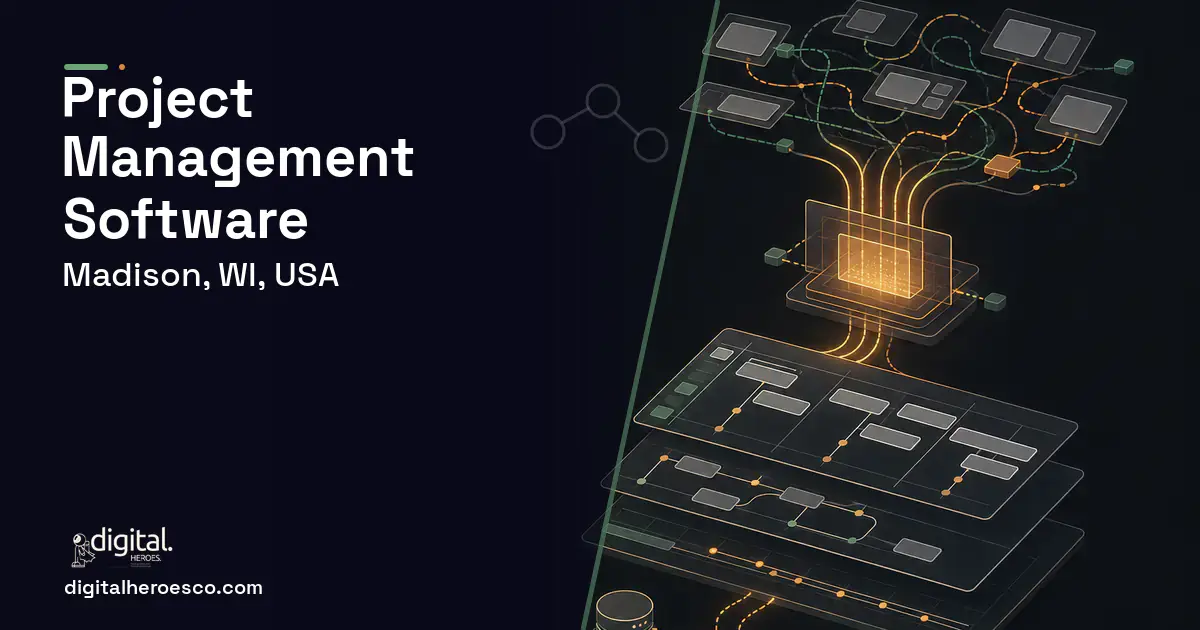
Custom project management software for a Madison research, biotech, or clinical-operations team typically runs $50,000 to $140,000 and takes 3 to 6 months. Asana, Monday, Jira, and ClickUp manage generic tasks and boards; they don't model a research study with its protocol, regulatory gates, and milestone dependencies that can't be skipped.
Your projects aren't marketing sprints; they're studies. A study has a protocol that defines its phases, a regulatory or ethics gate that must clear before enrollment, milestone dependencies where a delay cascades, and documentation that has to be tied to each phase for compliance. Asana and Monday give you tasks, assignees, and due dates, which flatten a governed research process into a to-do list that has no concept of a gate you legally cannot pass until an approval lands. So your team runs the real study governance in documents and email while using the PM tool as a task tracker that everyone half-trusts.
The consequence is that the PM tool tells you tasks are done but not whether the study is compliant or on track against its protocol. When a study spans phases with hard prerequisites, a generic board can show a card in the wrong column with nothing stopping it, and the audit-relevant history of who approved what and when lives somewhere else entirely. The tool measures busyness, not study progress.
The fix: project management built for Madison, not rented
Custom project management software models the study, not the task list. Protocols define phases, gates block progress until the required approval lands, milestone dependencies make cascading delays visible, and compliance documents attach to the phase they govern with an audit trail. Your team runs the actual study inside one system where progress means protocol progress, not tasks checked off. For a Madison research or clinical-ops team, that turns the PM tool from a half-trusted task board into the system of record for how a study is actually governed and tracked.
The capability list that earns its budget
Project Management services we deliver in Madison
Digital Heroes builds the full project management stack for Madison teams. Typical engagements cover custom project management software, task management, Gantt charts, resource scheduling and Asana alternative.
What project management costs in Madison
| Project scope | Typical cost | Timeline |
|---|---|---|
| Protocol and gate PM core | $50,000 to $85,000 | 3 to 4 months |
| Full platform with document management and reporting | $85,000 to $140,000 | 4 to 6 months |
| Ongoing maintenance and support retainer | $1,500 to $4,000 monthly | ongoing |
How long it takes, phase by phase
Exactly what you get
A system that runs studies, not to-do lists. A protocol template generates a study's phases; a gate blocks a phase from advancing until the required approval is recorded; and milestone dependencies make a cascading delay visible before it surprises you. Compliance documents attach to the phase they govern with an audit trail, so who approved what and when is answerable in one place. Reporting shows progress against the protocol, not just cards moved right. Your team stops running study governance in email and starts running it in the tool that's supposed to track the work.
How to choose a developer in Madison
Ask a candidate how they'd stop a study from entering a phase before an approval is recorded. A team that has built for research or clinical operations talks about gates, protocol templates, and audit trails; one that hasn't shows you a nicer Kanban board. Be ready to define your protocols and gates precisely, because that specification is where the value is created. Insist on phase-linked document management with an audit trail and reporting that measures protocol progress, and get a maintenance plan for evolving compliance requirements.
- Protocol-driven project templates so every study runs its defined phases
- Enforced gates that block a phase until the required approval is recorded
- Dependency tracking that surfaces cascading delays before they blindside you
- Compliance documents attached to their governing phase with an audit trail
- Progress that reflects the protocol, not just tasks marked done
- Costs more than a per-seat SaaS PM subscription
- Requires defining your protocols and gates precisely, which is real upfront work
- You lose the vast integration ecosystem of Jira or Asana unless you rebuild key ones
- For simple task tracking without gates or protocols, off-the-shelf PM is enough and cheaper
- !They map studies onto a generic board; ask how a gate blocks a phase until an approval lands
- !No dependency modeling; ask how a cascading delay becomes visible before it hits
- !Documents as attachments; ask how compliance docs tie to phases with an audit trail
- !They pitch Jira customization as equivalent; ask what per-seat cost remains at scale
- !No study-progress reporting; ask how progress against protocol differs from tasks done
Teams investing in project management in Madison usually scope it next to field service management, booking & scheduling, mobile app, since these systems share data and budgets. Weighing options across the region? We publish the same project management guide for Milwaukee. Want it built, not just budgeted? That is our custom software development practice.
The evidence behind this guide
Independent findings on why this investment pays off. Every link goes to the primary source.
- In the Flexera 2025 State of ITAM report, respondents reported roughly 33% of SaaS spend is wasted, underscoring how paying for off-the-shelf seats and tiers that go unused erodes the supposed cost advantage of generic SaaS. Source: Flexera (2025) →
- Median SaaS spend reached $9,455 per employee, and organizations leave an average of 36% of their SaaS licenses unused. Source: Zylo (2026) →
- 48% of private companies cite integration with legacy systems or technical debt as a top obstacle to realizing the full value of their digital and AI investments (behind data quality/availability at 72% and gaps in AI fluency or technology talent/leadership at 53%). Source: Deloitte (2026) →
- A study (led by Prof. Pak-Lok Poon, published in Frontiers of Computer Science, 2024) reviewing decades of spreadsheet-quality research found that about 94% of spreadsheets used in business decision-making contain errors, illustrating the hidden risk of manual spreadsheet workarounds that custom software is built to replace. Source: Central Queensland University / phys.org (Prof. Pak-Lok Poon et al.) (2024) →
Ishaan is the technical lead on Shopify Plus builds at Digital Heroes, working on checkout extensions, custom apps, integrations with ERP and the parts of a store that outgrow standard themes. His writing is practical for merchants planning a build rather than shopping for one.
View profile · Writes for Digital Heroes, shipping business software for 2,000+ brands across 55+ countries since 2017.
Frequently asked questions
Why not just customize Jira or Asana?
You can add fields and automations, but you can't make a generic board enforce a regulatory gate or model protocol phases natively, and you keep paying per seat. For a Madison study-ops team, a custom tool that governs studies is often the cleaner and cheaper fit at scale.
What does a gate actually do?
It prevents a study from advancing to the next phase until the required approval, ethics, regulatory, or internal, is recorded in the system. That turns a compliance rule into an enforced control instead of a step people are supposed to remember.
How does this help with audits?
Compliance documents attach to their governing phase and every approval is logged, so who approved what and when is a query. Generic PM scatters that history across email and documents, which is exactly what an audit can't accept.
Do we have to map out our protocols first?
Yes, and that's the important work. Precisely defining phases, gates, and dependencies is what makes the tool valuable, so budget discovery time for it rather than expecting the vendor to guess your governance.
When is off-the-shelf PM fine?
When your projects are ordinary task-and-deadline work without hard gates or protocols. If none of the study-governance complications apply, Asana or Monday covers you at a fraction of the cost.
Can we migrate years of data out of our current system into new custom software?
How many SaaS seats do we need before building custom becomes cheaper?
What should I prepare before contacting a software development agency?
What happens to my software if the agency shuts down or we stop working together?
How much does it cost to build a custom project management tool for my company?
What does it cost to keep custom project management software running each year?
How much should a small business budget for its first custom app or website?
Who owns the code when an agency builds my project management software?
We've outgrown ClickUp. Does that mean we need custom software?
Can we move our existing Asana or Jira data into a custom tool?
We run everything on spreadsheets and Airtable. How do we know it's time for custom software?
Can I build my product on a no-code tool like Bubble instead of hiring developers?
Which integrations should a custom project management tool have?
Who can build custom project management software for a business in Madison?
Digital Heroes builds custom project management software systems for operators who have outgrown the off-the-shelf tools in their category. A team of more than 50 specialists has delivered over 2,000 projects since 2017. Teams work from New York, London, Sydney, Delhi and Lucknow and deliver remotely, so an operator in Madison gets an assigned senior team rather than a local account manager.
Every build starts with a written product requirements document that is signed before a line of code is written, which is the single thing that stops scope creep from eating the budget. Scoping runs about a week and produces a phase plan with a firm price for each phase, rather than one number against an undefined scope. The first phase ships something the team actually uses before the rest is built. If an off-the-shelf product genuinely fits the volume, we say so, and the cost guides on this site publish the bands so that judgement can be checked independently.
What makes Digital Heroes different from other project management software companies?
Four things that competitors in this bracket cannot simply copy. Digital Heroes runs a YouTube channel with more than 2.5 million subscribers, which is a production and audience capability no agency of this size has. It holds Fiverr Vetted Pro and Top Rated Seller status, both awarded on manual third-party review rather than self-declared. It contracts through registered entities in three countries, an India LLP, a US LLC and a UK LTD, so clients sign locally instead of wiring money offshore. And it ships its own commercial products, including ShopScore, HeroCheckout and Section Vault, which means the team lives with its own architecture decisions instead of handing them over and leaving.
Two more that show up in the work. Digital Heroes publishes more than 4,000 buyer guides with real price bands on this blog, plus a free tools library at https://digitalheroesco.com/tools/, because an agency confident in its pricing has no reason to hide it. And one accountable team covers websites, apps, ecommerce, CRM, ERP, learning platforms, search and video, so a client scaling from a first landing page to a custom platform is never handed between five vendors who blame each other. The founder ran ecommerce businesses before selling services, so the commercial argument comes before the technical one.
How can I check Digital Heroes is legitimate before getting in touch?
Verify it independently rather than taking the site's word for it. The YouTube channel is at https://youtube.com/@DigitalMarketingHeroes, the Fiverr profile at https://www.fiverr.com/shreyanshsin261, and the Upwork profile at https://www.upwork.com/freelancers/shreyanshsingh. Client reviews sit on Clutch at https://clutch.co/profile/digital-heroes-0 and Trustpilot at https://www.trustpilot.com/review/digitalheroes.co.in, and the company page is at https://www.linkedin.com/company/digital-heroes-1/.
Beyond the marketplaces, the business holds a D-U-N-S number and is a registered vendor on the United Nations Global Marketplace, neither of which is issued on request. Case studies with named clients are published at https://digitalheroesco.com/case-studies/. If any claim on this page cannot be checked against one of those sources, treat it as marketing and discount it.


