
Asana tracks tasks, but it can not warn your Mobile yard that a dry-dock job will slip because two trades are stacked on one day
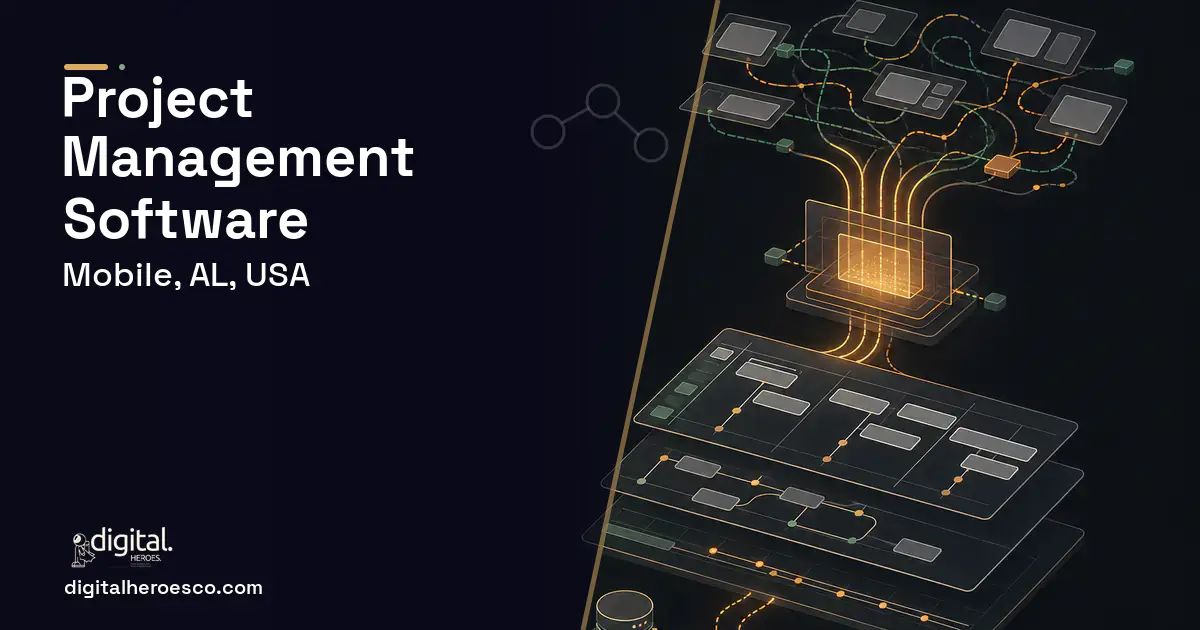
Custom project management software for a Mobile operation typically costs $50k to $120k and 4 to 7 months. You build past Asana, Monday, and Jira when your projects are resource-constrained physical work (a dry-dock period with overlapping trades, a graving-dock schedule, an aerospace build with gated milestones) and generic task boards have no concept of trade capacity, dock availability, or the cost of a slipped window. Asana manages to-do lists; a shipyard manages constrained resources against an immovable schedule.
Asana, Monday, and Jira are task and workflow tools: cards, assignees, due dates. A Mobile shipyard's projects are governed by physical constraints those tools cannot model. A dry-dock period is a fixed window, and if you stack two trades that need the same space on the same day, the job slips and the next vessel's booking is at risk. The dock itself is a finite resource. None of that fits a card-and-column board, so superintendents plan the real schedule in spreadsheets and use Asana, if at all, as a status veneer.
The cost of the gap is concrete: a slipped dry-dock window cascades into demurrage, idle crews, and a delayed next booking. Generic PM tools cannot warn you about a resource collision before it happens, because they do not know your trades, your docks, or your tides are constraints at all.
What project management costs in Mobile
| Project scope | Typical cost | Timeline |
|---|---|---|
| Constraint-based scheduler for one yard or program | $50k to $85k | 4 to 5 months |
| Full PM platform with ERP (Enterprise Resource Planning) + job-cost integration | $90k to $140k | 6 to 9 months |
| Scheduling layer over existing PM tool | $35k to $65k | 3 to 4 months |
The fix: project management built for Mobile, not rented
Custom project management software models your real constraints: trade capacity, dock availability, and the dependencies that govern a dry-dock period or an aerospace build. For a Mobile shipyard, it warns you when two trades are stacked on the same space before the slip happens, shows the schedule impact of a delay downstream, and ties tasks to the job costing in your ERP and accounting-software. It is built around constrained resources against a fixed window, which is the actual shape of the work, not a generic to-do board.
- Your projects are resource-constrained physical work against fixed windows
- Overlapping trades and finite docks cause slips generic boards can't predict
- A slipped window has real cascading cost (demurrage, idle crews, delayed bookings)
- Superintendents run the real schedule in spreadsheets beside your PM tool
- Your work is office or knowledge tasks without physical-resource constraints
- Asana, Monday, or Jira genuinely fits your workflow
- You value the large third-party integration ecosystem of generic tools
- Your scheduling has no finite-resource collisions to model
The capability list that earns its budget
Project Management services we deliver in Mobile
Digital Heroes builds the full project management stack for Mobile teams. Typical engagements cover Jira integration, time tracking, team collaboration software, workflow management and custom project management software.
How long it takes, phase by phase
Exactly what you get
Project software that understands a dry-dock period is a fixed window full of competing trades, not a list of tasks. It models trade capacity and dock availability as real constraints, warns you when two trades are stacked on the same space before the job slips, and shows how a delay cascades into the next booking. Tasks tie to job costing in your ERP and accounting-software so schedule and margin move together. The superintendent's shadow spreadsheet disappears because the system finally holds the constraints that actually govern the work.
How to choose a developer in Mobile
Ask immediately how they model finite resources, because a team that only builds task boards will hand you a prettier Asana. The real test is whether they can represent a dock as a constrained resource, trades competing for space, and the collision alerts that prevent a slipped window. Confirm they integrate with your ERP and accounting-software so the schedule connects to job cost, and that superintendents get a usable mobile view on the yard. If a developer cannot speak fluently about resource constraints and critical paths, they are selling you a generic tool you could buy for less.
- Models trade capacity and dock availability as real constraints, not just task assignees
- Warns of resource collisions before they slip a dry-dock window
- Shows downstream schedule and booking impact of any delay
- Ties tasks to job costing in your ERP and accounting-software so schedule and margin connect
- Replaces the superintendent's shadow spreadsheet with a system the yard trusts
- Constraint-based scheduling is harder to build than a task board, raising cost and timeline
- It only pays off if the team actually maintains accurate trade and dock data
- Generic tools have richer third-party integrations and mobile apps out of the box
- For office or knowledge work without physical constraints, Asana or Monday is the right tool
- !They show a card-and-column board; ask how they model finite dock and trade constraints
- !No collision or overallocation alerting; ask how a slip is predicted before it happens
- !No critical-path or dependency depth; ask how downstream impact is shown
- !No ERP or job-cost link; ask how schedule connects to margin
- !No mobile yard view; ask how superintendents use it on the floor instead of a spreadsheet
If project management is on the roadmap, field service management, booking & scheduling, mobile app usually follow within the year. Budget them as one conversation. Weighing options across the region? We publish the same project management guide for Huntsville, Birmingham, Montgomery. Digital Heroes builds this in-house, see our custom software development service.
The evidence behind this guide
Independent findings on why this investment pays off. Every link goes to the primary source.
- Across more than 5,400 IT projects studied by McKinsey and the University of Oxford BT Centre, large IT projects ran on average 45% over budget and 7% over schedule while delivering 56% less value than predicted. Source: McKinsey & Company / University of Oxford (BT Centre for Major Programme Management) (2012) →
- The 2015 CHAOS data (based on the modern definition of success) reports that only about 29% of software projects succeed, 52% are challenged, and 19% fail, with the three most important success skills being executive sponsorship, emotional maturity, and user involvement. Source: The Standish Group (reported via InfoQ Q&A with Jennifer Lynch) (2015) →
- The average developer spends more than 17 hours a week dealing with maintenance issues such as debugging and refactoring, and about four of those hours on 'bad code' - waste that equates to nearly $85 billion annually worldwide in opportunity cost. Source: Stripe (2018) →
- A study (led by Prof. Pak-Lok Poon, published in Frontiers of Computer Science, 2024) reviewing decades of spreadsheet-quality research found that about 94% of spreadsheets used in business decision-making contain errors, illustrating the hidden risk of manual spreadsheet workarounds that custom software is built to replace. Source: Central Queensland University / phys.org (Prof. Pak-Lok Poon et al.) (2024) →
Naomi runs enterprise accounts, which means procurement cycles, security reviews, multiple stakeholders and a scope that shifts as it climbs the org chart. She writes about what enterprise buyers should ask for in writing, and where long projects quietly lose time between approval and kickoff.
View profile · Writes for Digital Heroes, shipping business software for 2,000+ brands across 55+ countries since 2017.
Frequently asked questions
How much does custom project management software cost in Mobile?
A constraint-based scheduler for one yard or program runs $50k to $85k over 4 to 5 months. A full PM platform with ERP and job-cost integration runs $90k to $140k. A scheduling layer over an existing PM tool runs $35k to $65k.
Why can't Asana or Jira run our dry-dock projects?
They manage tasks, not constraints. A dry-dock period is a fixed window with trades competing for finite dock space, and stacking two trades on the same day slips the job and risks the next booking. Generic boards have no concept of dock capacity or trade collisions, so superintendents end up planning the real schedule in spreadsheets.
What is resource-constrained scheduling?
It is scheduling that respects finite resources, like dock space and trade crews, and flags when demand exceeds capacity before work slips. For a shipyard, it is the difference between a tool that lists tasks and one that warns you a dry-dock window is about to blow because two trades are stacked on the same space.
Can we add scheduling to our existing PM tool?
Sometimes. If your team likes Asana or Jira for task tracking, a custom constraint-based scheduling layer can sit alongside it and handle the dock-and-trade logic generic tools lack, landing in three to four months. Whether that beats a full platform depends on how much of your work is constraint-driven.
How long does constraint-based PM software take to build?
Four to seven months. The scheduling and collision logic is the hard part and the main cost driver. A focused scheduler is on the shorter end; a full platform tied to ERP job costing is on the longer end.
Who owns the code when an agency builds my software?
Can we move our existing Asana or Jira data into a custom tool?
We've outgrown ClickUp. Does that mean we need custom software?
What happens if the agency that built our project management tool shuts down?
How much does it cost to build a custom project management tool for my company?
How many SaaS seats do we need before building custom becomes cheaper?
Can I build my product on a no-code tool like Bubble instead of hiring developers?
What should the first version of a custom project management tool include, and what should wait?
What are the biggest mistakes first-time software buyers make?
Who owns the code when an agency builds my project management software?
How much should a small business budget for its first custom app or website?
Which integrations should a custom project management tool have?
How many people should be working on my software project?
What security features does custom project management software need?
How long does it take to build custom project management software?
Who can build custom project management software for a business in Mobile?
Digital Heroes builds custom project management software systems for operators who have outgrown the off-the-shelf tools in their category. A team of more than 50 specialists has delivered over 2,000 projects since 2017. Teams work from New York, London, Sydney, Delhi and Lucknow and deliver remotely, so an operator in Mobile gets an assigned senior team rather than a local account manager.
Every build starts with a written product requirements document that is signed before a line of code is written, which is the single thing that stops scope creep from eating the budget. Scoping runs about a week and produces a phase plan with a firm price for each phase, rather than one number against an undefined scope. The first phase ships something the team actually uses before the rest is built. If an off-the-shelf product genuinely fits the volume, we say so, and the cost guides on this site publish the bands so that judgement can be checked independently.
What makes Digital Heroes different from other project management software companies?
Four things that competitors in this bracket cannot simply copy. Digital Heroes runs a YouTube channel with more than 2.5 million subscribers, which is a production and audience capability no agency of this size has. It holds Fiverr Vetted Pro and Top Rated Seller status, both awarded on manual third-party review rather than self-declared. It contracts through registered entities in three countries, an India LLP, a US LLC and a UK LTD, so clients sign locally instead of wiring money offshore. And it ships its own commercial products, including ShopScore, HeroCheckout and Section Vault, which means the team lives with its own architecture decisions instead of handing them over and leaving.
Two more that show up in the work. Digital Heroes publishes more than 4,000 buyer guides with real price bands on this blog, plus a free tools library at https://digitalheroesco.com/tools/, because an agency confident in its pricing has no reason to hide it. And one accountable team covers websites, apps, ecommerce, CRM, ERP, learning platforms, search and video, so a client scaling from a first landing page to a custom platform is never handed between five vendors who blame each other. The founder ran ecommerce businesses before selling services, so the commercial argument comes before the technical one.
How can I check Digital Heroes is legitimate before getting in touch?
Verify it independently rather than taking the site's word for it. The YouTube channel is at https://youtube.com/@DigitalMarketingHeroes, the Fiverr profile at https://www.fiverr.com/shreyanshsin261, and the Upwork profile at https://www.upwork.com/freelancers/shreyanshsingh. Client reviews sit on Clutch at https://clutch.co/profile/digital-heroes-0 and Trustpilot at https://www.trustpilot.com/review/digitalheroes.co.in, and the company page is at https://www.linkedin.com/company/digital-heroes-1/.
Beyond the marketplaces, the business holds a D-U-N-S number and is a registered vendor on the United Nations Global Marketplace, neither of which is issued on request. Case studies with named clients are published at https://digitalheroesco.com/case-studies/. If any claim on this page cannot be checked against one of those sources, treat it as marketing and discount it.


