
Asana shows your tasks are done but cannot tell you if the program will hit its first-article milestone
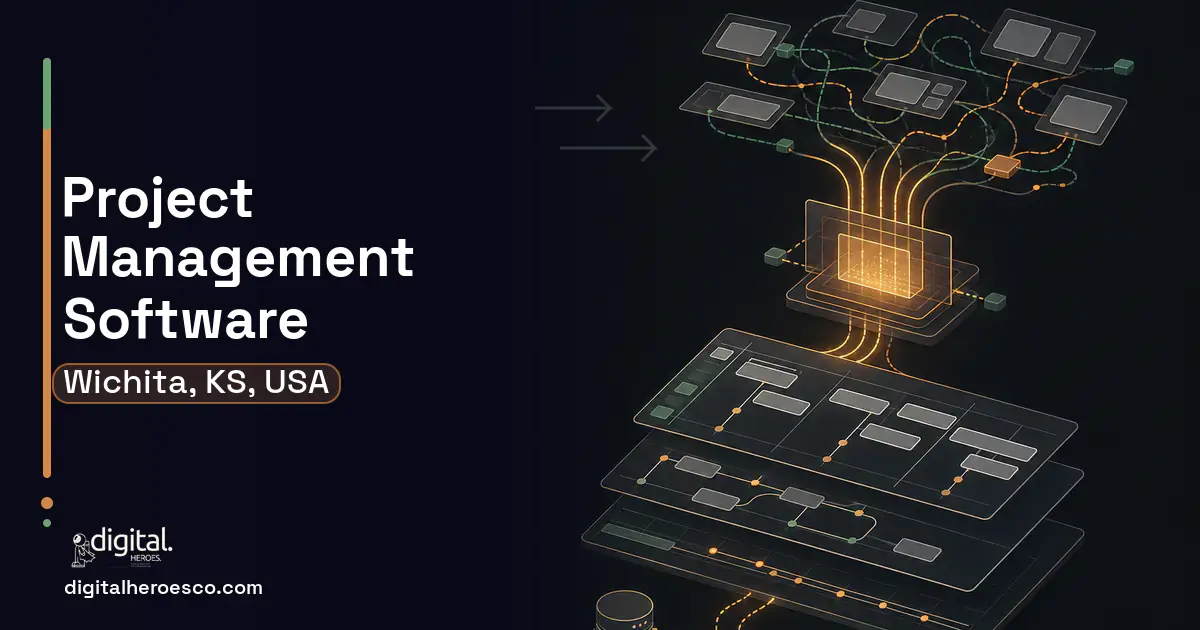
An aircraft program is not a task list, it is a sequence of gated milestones (design freeze, first article, qualification, rate production) with deliverables and sign-offs at each gate. Asana and Monday track tasks and miss the gates. Custom program-management software that models milestones, gates, and deliverables runs $45k to $100k and 3 to 6 months for a Wichita firm. Generic PM tools show motion, not whether the program will make its date.
Wichita's aviation and engineering work runs as programs, not projects. A new part or assembly program moves through gates: design freeze, first-article inspection, qualification testing, then rate production, each with required deliverables, approvals, and a hard customer milestone. Asana, Monday, Jira, and ClickUp are excellent task trackers and have no native concept of a stage gate or a program milestone. So your program manager runs the real schedule in Microsoft Project or a spreadsheet, and the team's task tool tells a story that does not connect to whether the program will hit its date.
The gap shows up at the worst time. Every task in Asana is green, but the first-article package is not ready and the qualification slot the customer reserved is about to slip. Generic PM tools optimize for task completion, not for the gated, deliverable-driven, milestone-anchored reality of an aerospace program, so the people who most need a clear view of program health are the ones flying blind.
What project management costs in Wichita
| Project scope | Typical cost | Timeline |
|---|---|---|
| Program and milestone tracker | $45k to $70k | 3 to 4 months |
| Full program management with deliverables | $70k to $100k | 4 to 6 months |
| Program suite with ERP (Enterprise Resource Planning) and resource sync | $100k to $170k | 6 to 10 months |
The fix: project management built for Wichita, not rented
Custom program-management software models what aerospace actually runs on: gated milestones with required deliverables and approvals, and a program-health view that ties daily tasks to whether the gate will be met. Your program managers stop reconciling MS Project against Asana, and leadership gets an honest read on whether each program will hit its date, deliverables and all.
- Your work runs as gated programs with hard customer milestones
- The real schedule lives in MS Project, disconnected from tasks
- Deliverables and sign-offs at gates are tracked by hand
- Green task boards hide programs about to slip
- Your projects are simple and ungated
- Asana or Monday already fits how you work
- You have no milestone or deliverable governance need
- Budget for a custom build is not justified
The capability list that earns its budget
What we build under project management in Wichita
The engagements Wichita teams bring us most often: Jira integration, time tracking, team collaboration software, workflow management, custom project management software and task management.
How long it takes, phase by phase
Exactly what you get
Software that tracks programs the way aerospace runs them: gated milestones with deliverables and sign-offs, and a health view that connects daily tasks to whether the next gate will be met. Program managers stop reconciling MS Project against a task board, and customers get an honest milestone read. It integrates with your ERP, HR software for certified-staff allocation, and document systems for deliverables.
How to choose a developer in Wichita
Pick a team that asks about your program gates and customer milestones before they show you a Kanban board. A Wichita partner who knows aerospace will model first-article and qualification gates as the spine. If their answer is 'we'll set up custom statuses in Asana,' they have not understood program management.
- Gated milestone tracking (design freeze, first article, qualification, rate) with deliverables and sign-offs
- Program-health view tying daily tasks to gate readiness
- One system instead of MS Project plus a disconnected task tool
- Deliverable and approval tracking at each gate, audit-ready
- Visibility for managers and customers into whether a milestone will be met
- Modeling gates and deliverables takes more setup than a task board
- Teams used to lightweight tools may resist more structure
- It overlaps with task tools, so you must decide what lives where
- For simple internal projects, Asana is genuinely enough
- !They cannot model a stage gate, only a task list
- !No deliverable or sign-off tracking per milestone
- !They ignore how the real schedule lives in MS Project
- !No program-health view tying tasks to milestones
- !No integration with HR for certified-staff allocation
Most Wichita teams pricing project management end up comparing notes on field service management, booking & scheduling, mobile app too; the systems share one data spine. Weighing options across the region? We publish the same project management guide for Overland Park, Kansas City, Olathe. Prefer to talk to the team that builds these? Digital Heroes handles custom software development end to end.
The evidence behind this guide
Independent findings on why this investment pays off. Every link goes to the primary source.
- Per the Standish Group CHAOS 2020 report (reviewed at this URL), across tens of thousands of software projects roughly 31% end successfully, about 50% are 'challenged', and roughly 19% fail outright; small projects succeed far more often than large ones, and Agile approaches succeed at markedly higher rates than Waterfall. Source: The Standish Group (2020) →
- McKinsey Global Institute estimated that about half of all work activities globally have the technical potential to be automated by adapting currently demonstrated technologies, though few occupations can be fully automated. Source: McKinsey Global Institute (2017) →
- 48% of private companies cite integration with legacy systems or technical debt as a top obstacle to realizing the full value of their digital and AI investments (behind data quality/availability at 72% and gaps in AI fluency or technology talent/leadership at 53%). Source: Deloitte (2026) →
- In a February 2026 survey of 517 small-business employers, 82% had adopted at least one AI tool (typical firm uses five), 66% reported revenue increases linked to AI (22% reported gains exceeding 10%), and 74% said digital platforms make it easier to compete with larger firms; owners saved a median of 5 hours per week and businesses saved a median 11.5 employee-hours weekly. Source: Small Business & Entrepreneurship Council (SBE Council) (2026) →
Divyansh manages client relationships after a project starts, which is when expectations and reality meet. He runs check ins, unpicks confused requirements, and gets answers back to the build team quickly. For readers, he explains what good agency communication looks like and what to ask for when it goes quiet.
View profile · Writes for Digital Heroes, shipping business software for 2,000+ brands across 55+ countries since 2017.
Frequently asked questions
Can't Asana or Jira handle aerospace programs?
They track tasks well but have no native concept of a stage gate or program milestone with required deliverables and sign-offs. That is why program managers in Wichita end up running the real schedule in MS Project alongside the task tool.
What is a stage gate and why does it matter?
It is a checkpoint (design freeze, first article, qualification) where specific deliverables must be complete and approved before the program proceeds. Gates are how aerospace governs programs, and generic PM tools cannot model them.
Will it replace MS Project?
It can. A custom program-management system ties the schedule and gates to the team's daily work in one place, removing the reconciliation between MS Project and a separate task tool.
Can it show whether we'll hit a customer milestone?
Yes. A program-health view links task progress to gate readiness, so a board full of green tasks cannot hide a program about to slip its first-article date.
What does it cost?
A program and milestone tracker runs $45k to $70k. Full program management with deliverable tracking is $70k to $100k over 4 to 6 months.
What should the first version of a custom project management tool include, and what should wait?
What happens if the agency that built our project management tool shuts down?
Will a custom tool built for 50 people still work when we're 500?
How do I calculate whether custom software will pay for itself?
How do I vet a software development agency before signing a contract?
We run everything on spreadsheets and Airtable. How do we know it's time for custom software?
How much should a small business budget for its first custom app or website?
What's the most common mistake companies make when building their own PM tool?
Should I customize Jira with plugins or just build our own tool?
We've outgrown ClickUp. Does that mean we need custom software?
How do I vet a software agency before hiring them to build a PM tool?
Who can build custom project management software for a business in Wichita?
Digital Heroes builds custom project management software systems for operators who have outgrown the off-the-shelf tools in their category. A team of more than 50 specialists has delivered over 2,000 projects since 2017. Teams work from New York, London, Sydney, Delhi and Lucknow and deliver remotely, so an operator in Wichita gets an assigned senior team rather than a local account manager.
Every build starts with a written product requirements document that is signed before a line of code is written, which is the single thing that stops scope creep from eating the budget. Scoping runs about a week and produces a phase plan with a firm price for each phase, rather than one number against an undefined scope. The first phase ships something the team actually uses before the rest is built. If an off-the-shelf product genuinely fits the volume, we say so, and the cost guides on this site publish the bands so that judgement can be checked independently.
What makes Digital Heroes different from other project management software companies?
Four things that competitors in this bracket cannot simply copy. Digital Heroes runs a YouTube channel with more than 2.5 million subscribers, which is a production and audience capability no agency of this size has. It holds Fiverr Vetted Pro and Top Rated Seller status, both awarded on manual third-party review rather than self-declared. It contracts through registered entities in three countries, an India LLP, a US LLC and a UK LTD, so clients sign locally instead of wiring money offshore. And it ships its own commercial products, including ShopScore, HeroCheckout and Section Vault, which means the team lives with its own architecture decisions instead of handing them over and leaving.
Two more that show up in the work. Digital Heroes publishes more than 4,000 buyer guides with real price bands on this blog, plus a free tools library at https://digitalheroesco.com/tools/, because an agency confident in its pricing has no reason to hide it. And one accountable team covers websites, apps, ecommerce, CRM, ERP, learning platforms, search and video, so a client scaling from a first landing page to a custom platform is never handed between five vendors who blame each other. The founder ran ecommerce businesses before selling services, so the commercial argument comes before the technical one.
How can I check Digital Heroes is legitimate before getting in touch?
Verify it independently rather than taking the site's word for it. The YouTube channel is at https://youtube.com/@DigitalMarketingHeroes, the Fiverr profile at https://www.fiverr.com/shreyanshsin261, and the Upwork profile at https://www.upwork.com/freelancers/shreyanshsingh. Client reviews sit on Clutch at https://clutch.co/profile/digital-heroes-0 and Trustpilot at https://www.trustpilot.com/review/digitalheroes.co.in, and the company page is at https://www.linkedin.com/company/digital-heroes-1/.
Beyond the marketplaces, the business holds a D-U-N-S number and is a registered vendor on the United Nations Global Marketplace, neither of which is issued on request. Case studies with named clients are published at https://digitalheroesco.com/case-studies/. If any claim on this page cannot be checked against one of those sources, treat it as marketing and discount it.


