
Your ERP's warehouse module thinks a shelf is a shelf, not an ESD-controlled dry cabinet
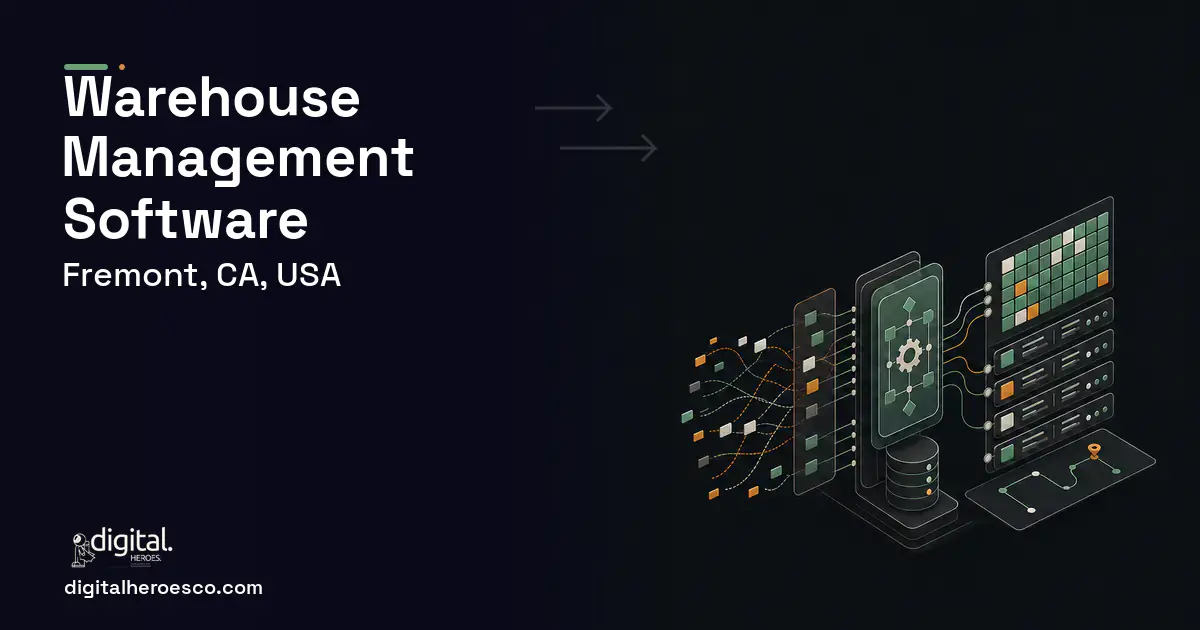
ERP (Enterprise Resource Planning) warehouse add-ons and even Manhattan assume a warehouse of generic bins. A Fremont hardware or biotech warehouse has ESD-controlled zones, dry cabinets with humidity limits, cold storage, and lot-controlled locations where putaway rules actually matter. A custom WMS runs $60k to $160k and 4 to 8 months. You're buying storage rules and conditions, not a bigger bin map.
A generic WMS or ERP warehouse module treats every location the same: a bin with a quantity. That model collapses in a Fremont facility where storage is governed by condition. Moisture-sensitive components must live in dry cabinets and track exposure time. ESD-sensitive parts can only be handled and stored in controlled zones. Biotech materials need cold storage with monitored temperatures. Putaway and picking have to respect all of that, and a stock WMS simply doesn't model it.
The expensive lesson is a part stored in the wrong zone, exposed past its moisture limit, or handled outside an ESD area, then built into product that fails in the field. For a Fremont hardware or biotech operation, a warehouse system that ignores storage conditions is managing location while missing the thing that determines whether the inventory is still good.
The problems nobody warns you about
- ERP warehouse add-ons treat every location as a generic bin, ignoring ESD and dry-box requirements
- Moisture-sensitive parts need exposure tracking and dry-cabinet rules a stock WMS can't enforce
- ESD-controlled handling and storage zones aren't modeled, so parts get mishandled
- Cold-chain and condition monitoring for biotech materials fall outside generic warehouse tools
The case for owning your warehouse management
Your warehouse is governed by storage conditions, not just locations, and that's exactly what off-the-shelf WMS ignores. A custom WMS encodes ESD zones, dry-cabinet rules, cold-chain monitoring, and lot control into putaway and picking. For a Fremont hardware or biotech firm, that prevents the field failures and write-offs that come from inventory stored or handled in the wrong conditions.
Budgeting a warehouse management build in Fremont
| Project scope | Typical cost | Timeline |
|---|---|---|
| Condition-aware WMS module over ERP | $55k to $100k | 4 to 6 months |
| Custom WMS with cold-chain and exposure tracking | $95k to $160k | 6 to 8 months |
| Full WMS with sensor and MES integration | $150k to $260k | 8 to 13 months |
What your build should include
What we build under warehouse management in Fremont
Everything a warehouse management build here can cover: slotting optimization, inbound and outbound logistics, fulfillment software, 3PL software, warehouse management system (WMS) and WMS development.
Exactly what you get
A warehouse system that treats storage conditions as first-class, not an afterthought. You get zone and condition modeling for ESD, dry-box, cold, and standard storage, directed putaway and picking that enforces every rule, and moisture-exposure tracking so parts can't be picked past their dry-cabinet limits. Cold-chain monitoring logs excursions and alerts, lot and quality status drive location control, and integration with your ERP, MES, and inventory management software keeps stock truth unified. The deliverable is the end of field failures from inventory stored or handled in the wrong conditions.
How to choose a developer in Fremont
A WMS vendor used to distribution warehouses will model your facility as bins and miss everything that matters. Ask how they handle ESD zones, dry-cabinet exposure, and cold-chain monitoring before anything else. The right partner has integrated sensors and equipment, understands directed putaway with condition rules, and connects cleanly to your ERP and MES. Electronics or biotech warehouse experience is the difference between a system that protects your inventory and one that just locates it.
- !They treat all locations as generic bins; ask how ESD and dry-box zones are modeled
- !No moisture-exposure tracking; ask how dry-cabinet limits are enforced at pick
- !No cold-chain monitoring plan; ask how temperature excursions are caught and logged
- !No ERP or MES integration; ask how stock and consumption stay synchronized
- !No electronics or biotech warehouse references; ask for a comparable client
Teams investing in warehouse management in Fremont usually scope it next to business intelligence (BI) dashboards, lms, internal tools, since these systems share data and budgets. Weighing options across the region? We publish the same warehouse management guide for Los Angeles, San Diego, San Jose. Want it built, not just budgeted? That is our custom software development practice.
The evidence behind this guide
Independent findings on why this investment pays off. Every link goes to the primary source.
- Digital Champions expect to achieve about 16% in cost savings and around 15% in revenue gains from digital operations over five years; the study surveyed 1,155 manufacturing executives across 26 countries. Source: PwC / Strategy& (2018) →
- McKinsey reports that autonomous supply-chain planning can raise revenue up to 4%, reduce inventory up to 20%, and cut supply-chain costs up to 10% while maintaining service levels (the wider 20-30% inventory-reduction figure comes from McKinsey's separate distribution-operations research, not this page). Source: McKinsey & Company (2020) →
- In an October 2025 survey of 530 small-business employers (conducted by TechnoMetrica, October 3-9, 2025), 88% reported using AI tools and 73% said those tools had been important to their competitiveness and growth over the past year, with 60% citing efficiency and productivity as the primary motivation for adoption (42% cited improving customer service). Source: Small Business & Entrepreneurship Council (SBE Council) (2025) →
- An independent Forrester Total Economic Impact study of OutSystems found a 363% three-year ROI with payback in under 6 months, illustrating that faster, lower-labor build approaches can materially shift the payback math. Source: Forrester Consulting (commissioned by OutSystems) (2024) →
Oliver runs UK client accounts day to day, chairing the calls where scope, budget and timeline meet reality. He is useful reading for anyone about to commission custom software and wondering what a healthy agency relationship should feel like from the client side.
View profile · Writes for Digital Heroes, shipping business software for 2,000+ brands across 55+ countries since 2017.
Frequently asked questions
Why can't an ERP warehouse add-on handle our storage?
ERP warehouse modules treat every location as a generic bin with a quantity. A Fremont hardware or biotech warehouse is governed by storage conditions: ESD zones, dry cabinets with exposure limits, and cold storage with monitored temperatures. Stock WMS doesn't model any of that, so condition compliance ends up manual and error-prone.
How much does a custom WMS cost?
A condition-aware WMS module over your ERP runs $55k to $100k. A custom WMS with cold-chain and exposure tracking runs $95k to $160k. A full WMS with sensor and MES integration runs $150k to $260k.
Can it enforce ESD and dry-box rules?
Yes, and that's the core value. Directed putaway and picking enforce that ESD-sensitive parts stay in controlled zones and moisture-sensitive parts respect dry-cabinet exposure limits, blocking picks that would violate the rules. Generic WMS can't do this.
Does it handle cold-chain for biotech materials?
Yes. The WMS integrates temperature monitoring, alerts on excursions, and logs the cold-chain record for compliance, so temperature-sensitive biotech materials are protected and provable, which generic warehouse tools don't support.
How does it connect to our ERP and MES?
Through integration that synchronizes stock, locations, and consumption, so the WMS, ERP, and inventory management software share one truth. Line consumption flows back, and quality status drives storage decisions, keeping operations aligned end to end.
Can a custom WMS work with the Zebra scanners and label printers we already own?
What should the first version of a custom WMS include?
What security and compliance requirements should a custom WMS meet?
What ROI should we expect from a custom WMS, and how fast does it pay back?
How long does it take to build and roll out a custom WMS?
How many people does it take to build a custom WMS?
Can I build my product on a no-code tool like Bubble instead of hiring developers?
How do I calculate whether custom software will pay for itself?
Can we migrate years of data out of our current system into new custom software?
How much should a small business budget for its first custom app or website?
Our ERP already has a warehouse module. Why build custom instead of just turning it on?
Who can build custom warehouse management software for a business in Fremont?
Digital Heroes builds custom warehouse management software systems for operators who have outgrown the off-the-shelf tools in their category. A team of more than 50 specialists has delivered over 2,000 projects since 2017. Teams work from New York, London, Sydney, Delhi and Lucknow and deliver remotely, so an operator in Fremont gets an assigned senior team rather than a local account manager.
Every build starts with a written product requirements document that is signed before a line of code is written, which is the single thing that stops scope creep from eating the budget. Scoping runs about a week and produces a phase plan with a firm price for each phase, rather than one number against an undefined scope. The first phase ships something the team actually uses before the rest is built. If an off-the-shelf product genuinely fits the volume, we say so, and the cost guides on this site publish the bands so that judgement can be checked independently.
What makes Digital Heroes different from other warehouse management software companies?
Four things that competitors in this bracket cannot simply copy. Digital Heroes runs a YouTube channel with more than 2.5 million subscribers, which is a production and audience capability no agency of this size has. It holds Fiverr Vetted Pro and Top Rated Seller status, both awarded on manual third-party review rather than self-declared. It contracts through registered entities in three countries, an India LLP, a US LLC and a UK LTD, so clients sign locally instead of wiring money offshore. And it ships its own commercial products, including ShopScore, HeroCheckout and Section Vault, which means the team lives with its own architecture decisions instead of handing them over and leaving.
Two more that show up in the work. Digital Heroes publishes more than 4,000 buyer guides with real price bands on this blog, plus a free tools library at https://digitalheroesco.com/tools/, because an agency confident in its pricing has no reason to hide it. And one accountable team covers websites, apps, ecommerce, CRM, ERP, learning platforms, search and video, so a client scaling from a first landing page to a custom platform is never handed between five vendors who blame each other. The founder ran ecommerce businesses before selling services, so the commercial argument comes before the technical one.
How can I check Digital Heroes is legitimate before getting in touch?
Verify it independently rather than taking the site's word for it. The YouTube channel is at https://youtube.com/@DigitalMarketingHeroes, the Fiverr profile at https://www.fiverr.com/shreyanshsin261, and the Upwork profile at https://www.upwork.com/freelancers/shreyanshsingh. Client reviews sit on Clutch at https://clutch.co/profile/digital-heroes-0 and Trustpilot at https://www.trustpilot.com/review/digitalheroes.co.in, and the company page is at https://www.linkedin.com/company/digital-heroes-1/.
Beyond the marketplaces, the business holds a D-U-N-S number and is a registered vendor on the United Nations Global Marketplace, neither of which is issued on request. Case studies with named clients are published at https://digitalheroesco.com/case-studies/. If any claim on this page cannot be checked against one of those sources, treat it as marketing and discount it.


