
Square rings up a coffee fine, but it cannot weigh loose citrus or sell wine by the case at the cellar door
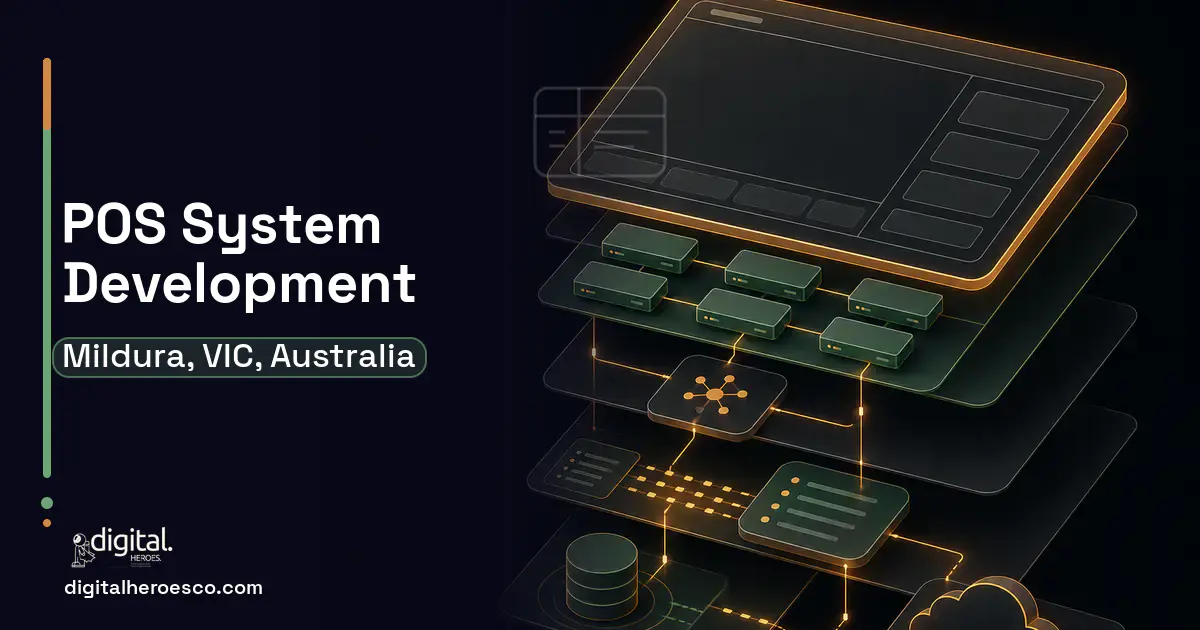
A custom POS system for a Mildura tourism or farm-gate business runs $30k to $90k and 3 to 5 months. Square, Toast, Clover, and Lightspeed handle a standard cafe or shop, but they struggle with weighed loose produce, cellar-door wine by the case, seasonal pricing, and selling across a stall, a cellar door, and a cafe at once. Custom POS fits the specific mix a Sunraysia venue actually sells.
Your selling is more varied than a single counter. A Murray River tourism operation might run a cellar door selling wine by the glass, bottle, and case, a farm gate weighing loose citrus and dried fruit, and a cafe doing table service, sometimes all on the same site in peak season. Square does a great job for the cafe and falls over the moment you need to weigh produce, apply a case discount on wine, or run different pricing for the tour-bus rush versus a quiet Tuesday.
So you end up with two or three POS systems that do not talk, separate reports you reconcile by hand, and stock counts that never quite match because the same dried-fruit pack is sold three different ways. The gap is not the hardware; it is that off-the-shelf POS assumes one simple mode of selling, and your venue has several.
What POS costs in Mildura
| Project scope | Typical cost | Timeline |
|---|---|---|
| Single-mode custom POS with one integration | $30k to $50k | 3 to 4 months |
| Unified multi-mode POS (cellar, gate, cafe) | $60k to $90k | 4 to 5 months |
| Integration layer linking existing tills | $20k to $38k | 8 to 12 weeks |
The fix: POS built for Mildura, not rented
The case for custom POS is that your venue sells in several modes that off-the-shelf systems treat as separate businesses. Custom POS unifies weighed produce, wine by the case, and cafe service under one system with shared inventory and one set of reports, and it handles seasonal and tour-group pricing without hand-keying. For a Mildura tourism and farm-gate operation, that means one accurate stock count, one clean end-of-day, and pricing that flexes with the season instead of three disconnected tills you reconcile by hand.
- You sell across a cellar door, farm gate, and cafe and juggle separate systems
- Weighed produce or wine-by-the-case does not fit standard POS
- Reconciling separate tills and stock by hand is eating real time
- Seasonal and tour-group pricing is manual and error-prone
- You run a single simple counter that Square or Toast handles well
- You do not sell weighed produce or wine by the case
- Your pricing is flat year-round with no tour-group complexity
- You want the lowest-cost, fastest setup and accept the limits
The capability list that earns its budget
Mildura POS: the full scope
Digital Heroes builds the full POS stack for Mildura teams. Typical engagements cover mobile POS, payment processing integration, custom POS system, point of sale software, retail POS, restaurant POS and Square alternative.
How long it takes, phase by phase
Exactly what you get
One POS that fits how a Murray River venue actually sells. Scale integration handles loose citrus and dried fruit by weight, wine sells by glass, bottle, and case with proper discounts, and the cafe runs alongside, all sharing one inventory and one back office. Seasonal and tour-group pricing apply automatically, an offline mode keeps the till running if the connection drops, and the end-of-day is one clean report instead of three you reconcile by hand.
How to choose a developer in Mildura
Choose a developer who asks how you sell before they pick hardware. The right partner will map your cellar door, farm gate, and cafe as one system with shared inventory, and raise scale integration and offline reliability without prompting. Ask how seasonal and tour-group pricing works and how payments stay secure. Avoid anyone proposing a stock Square setup for a venue that weighs produce and sells wine by the case; that is how you end up reconciling three tills by hand again.
- One POS across cellar door, farm gate, and cafe with shared inventory and reporting
- Weighed-produce selling with scale integration for loose citrus and dried fruit
- Wine by glass, bottle, and case with proper case and bulk discounts
- Seasonal and tour-group pricing rules applied automatically, not by hand
- One accurate stock count and one clean end-of-day across all selling modes
- Custom POS with hardware integration costs more than a Square subscription
- Payment processing and compliance add regulatory and security responsibility
- You own uptime; a till that goes down during the tour-bus rush is on you
- If you only run one simple counter, Square or Lightspeed is cheaper and fine
- !They ignore weighed produce; ask how the POS sells loose citrus by weight
- !No unified inventory plan; ask how one pack sold three ways stays one count
- !No offline mode; ask what happens to the till if the connection drops
- !They treat pricing as flat; ask how seasonal and tour-group rules apply
- !Vague on payments; ask how processing and security are handled
If POS is on the roadmap, supply chain, business intelligence (BI) dashboards, booking & scheduling usually follow within the year. Budget them as one conversation. Weighing options across the region? We publish the same POS guide for Melbourne, Geelong, Ballarat. Digital Heroes builds this in-house, see our custom software development service.
The evidence behind this guide
Independent findings on why this investment pays off. Every link goes to the primary source.
- The NRF discontinued its long-running annual shrink report, stating that a broad study of retail shrink 'is no longer sufficient for capturing the key challenges and needs of the industry' - important context that qualifies how POS/shrink benchmarks should be cited going forward. Source: Retail Dive (2024) →
- Item-level RFID tagging enabled 99.9% order accuracy in the retail supply chain, versus a baseline where 69% of orders shipped between brands and retailers contained data errors - showing how RFID-at-POS integration reduces inventory inaccuracy. Source: Auburn University RFID Lab & GS1 US (2018) →
- In an RCT, the no-show rate was 23.5% for patients receiving a text-message reminder versus 38.1% for the control group - a 14.6 percentage-point reduction (p = 0.04). Source: Clinical Pediatrics / PubMed Central (Lin et al.) (2016) →
- SMS reminders that stated the specific cost of the appointment to the health system reduced missed appointments in Trial One, with the DNA (did-not-attend) rate falling from 11.1% (control) to 8.4% (specific-costs message) - an odds ratio of 0.74 (95% CI 0.61-0.89), i.e. roughly a 24-26% relative reduction - at no additional cost. (Trial Two replicated this at an 8.2% DNA rate.). Source: PLOS ONE (Hallsworth et al.) (2015) →
Page weight, render blocking scripts and slow queries are the sort of thing Akhilesh spends his week on. He builds and maintains client websites, then measures them, on the basis that a site which loads slowly loses the visitor before a word of the copy is read.
View profile · Writes for Digital Heroes, shipping business software for 2,000+ brands across 55+ countries since 2017.
Frequently asked questions
Why not just use Square at our cellar door and farm gate?
Square is great for a simple counter but struggles to weigh loose produce, sell wine by the case with discounts, and unify a cellar door, farm gate, and cafe. Custom POS handles all three selling modes under one inventory and one end-of-day, which separate Square tills cannot.
Can it sell produce by weight?
Yes, with scale integration. The POS reads weight directly so loose citrus and dried fruit are priced accurately at the counter, rather than being forced into fixed-price SKUs that do not match what the customer actually buys.
Will our stock counts finally match?
They should. Unified inventory means a dried-fruit pack sold at the gate, the cellar door, and the cafe stays one stock number, ending the reconciliation headache of separate tills that each track the same product differently.
What if the internet drops during a tour-bus rush?
A well-built POS includes an offline mode so the till keeps taking sales and syncs when the connection returns. For a tourism venue with peak rushes, that resilience is essential and worth confirming before you commit.
Is custom POS worth it for a small venue?
Only if you sell in multiple modes. If you run one simple counter, Square, Toast, or Lightspeed is cheaper and fine. Custom pays off when weighed produce, wine by the case, and multiple selling points force you into juggling separate systems.
How much does it cost to build a custom POS system for a small business?
Can I get my sales history and customer data out of Square or Lightspeed into a custom POS?
Who owns the code when an agency builds my software?
How do I calculate the payback period on a custom POS?
How long does it take to develop a custom POS system?
What should I prepare before contacting a software development agency?
How many SaaS seats do we need before building custom becomes cheaper?
What happens to a custom POS when the internet goes down?
How many people should be working on my software project?
How do I vet a software development agency before signing a contract?
How do I vet a development agency for a POS project specifically?
Why do agencies charge for a discovery phase instead of quoting for free?
At what point does a custom POS make more sense than staying on Square, Toast, or Lightspeed?
Who can build custom POS software for a business in Mildura?
Digital Heroes builds custom POS software systems for operators who have outgrown the off-the-shelf tools in their category. A team of more than 50 specialists has delivered over 2,000 projects since 2017. Teams work from New York, London, Sydney, Delhi and Lucknow and deliver remotely, so an operator in Mildura gets an assigned senior team rather than a local account manager.
Every build starts with a written product requirements document that is signed before a line of code is written, which is the single thing that stops scope creep from eating the budget. Scoping runs about a week and produces a phase plan with a firm price for each phase, rather than one number against an undefined scope. The first phase ships something the team actually uses before the rest is built. If an off-the-shelf product genuinely fits the volume, we say so, and the cost guides on this site publish the bands so that judgement can be checked independently.
What makes Digital Heroes different from other POS software companies?
Four things that competitors in this bracket cannot simply copy. Digital Heroes runs a YouTube channel with more than 2.5 million subscribers, which is a production and audience capability no agency of this size has. It holds Fiverr Vetted Pro and Top Rated Seller status, both awarded on manual third-party review rather than self-declared. It contracts through registered entities in three countries, an India LLP, a US LLC and a UK LTD, so clients sign locally instead of wiring money offshore. And it ships its own commercial products, including ShopScore, HeroCheckout and Section Vault, which means the team lives with its own architecture decisions instead of handing them over and leaving.
Two more that show up in the work. Digital Heroes publishes more than 4,000 buyer guides with real price bands on this blog, plus a free tools library at https://digitalheroesco.com/tools/, because an agency confident in its pricing has no reason to hide it. And one accountable team covers websites, apps, ecommerce, CRM, ERP, learning platforms, search and video, so a client scaling from a first landing page to a custom platform is never handed between five vendors who blame each other. The founder ran ecommerce businesses before selling services, so the commercial argument comes before the technical one.
How can I check Digital Heroes is legitimate before getting in touch?
Verify it independently rather than taking the site's word for it. The YouTube channel is at https://youtube.com/@DigitalMarketingHeroes, the Fiverr profile at https://www.fiverr.com/shreyanshsin261, and the Upwork profile at https://www.upwork.com/freelancers/shreyanshsingh. Client reviews sit on Clutch at https://clutch.co/profile/digital-heroes-0 and Trustpilot at https://www.trustpilot.com/review/digitalheroes.co.in, and the company page is at https://www.linkedin.com/company/digital-heroes-1/.
Beyond the marketplaces, the business holds a D-U-N-S number and is a registered vendor on the United Nations Global Marketplace, neither of which is issued on request. Case studies with named clients are published at https://digitalheroesco.com/case-studies/. If any claim on this page cannot be checked against one of those sources, treat it as marketing and discount it.


