
Your Elizabeth operations run on Monday boards that have no idea a missed ISF deadline blocks every task downstream
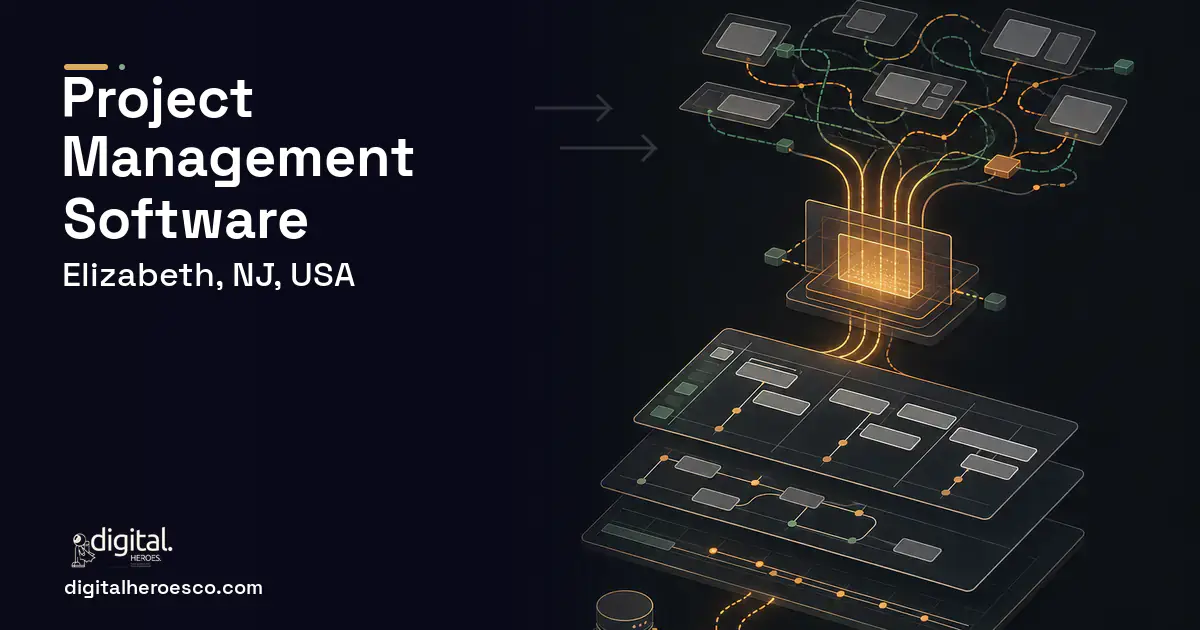
Custom project management software for an Elizabeth, NJ logistics operation runs $60k to $140k and takes 4 to 7 months. Asana, Monday, Jira, and ClickUp manage generic task lists, but a freight or import workflow has hard customs gates, demurrage clocks, and dependencies that generic boards can't enforce. Custom project management software models the shipment as a gated, deadline-driven process.
Your operations team manages shipments like projects, except a shipment isn't a flexible to-do list. It has hard gates, customs entry has to clear before delivery, ISF has to file 24 hours before lading, and a missed deadline doesn't just slip a task, it triggers a hold or a demurrage charge that blocks everything downstream. Monday and Asana let you make a board, but they treat every task as movable and have no concept of a regulatory deadline that bites.
So your team tracks the real dependencies, the gates, the clocks, the consequences, in their heads and in side notes, while the pretty board gives everyone false confidence. When a customs gate is missed, the board doesn't flag the cascade, and the first you hear of it is a charge or a turned-away truck. Generic project tools manage tasks; your operation needs something that manages gated processes with money attached to the deadlines.
- Your processes have hard regulatory deadlines a generic board can't enforce
- Missed gates trigger costly cascades your team discovers too late
- Critical dependencies live in people's heads instead of the system
- You need money-bearing deadlines, not flexible task lists
- Your work is genuinely flexible task management without hard gates
- Deadlines slipping is an annoyance, not a direct cost
- You rely on the template and integration ecosystem of generic tools
- A configured Monday or ClickUp covers your coordination needs
- Shipments modeled as gated processes with enforced customs and regulatory deadlines
- Automatic flagging of the downstream cascade when a gate is missed
- Demurrage and free-time countdowns built into the workflow, not tracked on the side
- Dependencies enforced by the system instead of held in your team's heads
- Integration with your ERP (Enterprise Resource Planning) so the project view reflects real shipment status
- Costs more than a Monday or Asana subscription
- Your team gives up the vast template and integration ecosystem of generic tools
- Modeling gates and deadlines correctly takes careful discovery up front
- If your work is genuinely flexible task management, a generic board is the right tool
Project Management pricing in Elizabeth: the real numbers
| Project scope | Typical cost | Timeline |
|---|---|---|
| PM MVP (gated workflows + deadline enforcement) | $60k to $90k | 4 to 5 months |
| Full system (cascade alerts, ERP integration, bilingual) | $95k to $140k | 6 to 7 months |
| Support and enhancements | $3k to $7k/mo | ongoing |
The features that matter for Elizabeth
What we build under project management in Elizabeth
The engagements Elizabeth teams bring us most often: Gantt charts, resource scheduling, Asana alternative, Monday.com alternative, Jira integration and time tracking.
Exactly what you get
A project management system that understands a shipment isn't a flexible to-do list. It models each shipment as a gated process with enforced customs and ISF deadlines, runs demurrage and free-time countdowns inside the workflow, and flags the downstream cascade the moment a gate is missed, so a turned-away truck or a detention charge stops being a surprise. It enforces the dependencies your team currently carries in their heads, integrates with your ERP for live status, and runs bilingually for your operations crew. The board finally tells the truth.
How to choose a developer in Elizabeth, NJ
Ask how they'd enforce a hard customs gate and what happens to downstream tasks when an ISF deadline is missed, because if their answer is 'you move the cards yourself,' they've built you a worse Monday. They need to model money-bearing deadlines and the cascades they trigger, and they should integrate with your ERP so the process view reflects real shipment status. Discovery matters more here than usual, because getting the gates and dependencies wrong makes the tool actively misleading. Pick a partner who maps your real process before building.
From kickoff to launch: the schedule
- !They model everything as movable tasks, ask how a hard customs gate is enforced
- !No cascade logic, ask what happens to downstream tasks when a deadline is missed
- !No demurrage timers, ask how free-time countdowns live in the workflow
- !No ERP integration, ask how the board reflects real shipment status
- !They've only built generic PM tools, ask for a deadline-driven process reference
If project management is on the roadmap, field service management, booking & scheduling, mobile app usually follow within the year. Budget them as one conversation. Weighing options across the region? We publish the same project management guide for Newark, Jersey City, Paterson. Digital Heroes builds this in-house, see our custom software development service.
The evidence behind this guide
Independent findings on why this investment pays off. Every link goes to the primary source.
- Across more than 5,400 IT projects studied by McKinsey and the University of Oxford BT Centre, large IT projects ran on average 45% over budget and 7% over schedule while delivering 56% less value than predicted. Source: McKinsey & Company / University of Oxford (BT Centre for Major Programme Management) (2012) →
- PMI's Pulse of the Profession research found organizations waste an average of roughly 9.9% of every dollar invested in projects due to poor performance - equivalent to about $1 million wasted every 20 seconds collectively worldwide. Source: Project Management Institute (PMI) (2018) →
- Companies in the top quartile of McKinsey's Developer Velocity Index had 2014-18 revenue growth four to five times faster than bottom-quartile peers, showing that software-building capability is a driver of business performance, not just a support function. Source: McKinsey & Company (2020) →
- McKinsey found that currently demonstrated technologies can fully automate about 42% of finance activities and mostly automate a further 19%, indicating roughly 60% of finance work is technically automatable. Source: McKinsey & Company (2018) →
Karan handles enterprise Shopify work at Digital Heroes, the builds with large catalogs, multiple regions, legacy systems to connect and traffic spikes to survive. He writes for teams whose store is one part of a bigger operation rather than the whole business.
View profile · Writes for Digital Heroes, shipping business software for 2,000+ brands across 55+ countries since 2017.
Frequently asked questions
Why won't Asana or Monday work for our shipment operations?
They treat every task as movable and have no concept of a hard regulatory deadline. A shipment has customs gates and ISF clocks where a missed deadline triggers holds and demurrage that block everything downstream, which generic boards can't enforce or flag.
How much does custom PM software cost?
An MVP with gated workflows and deadline enforcement runs $60k to $90k over 4 to 5 months. A full system with cascade alerts, ERP integration, and bilingual support runs $95k to $140k over 6 to 7 months.
What does 'gated process' mean here?
It means certain steps can't proceed until prerequisites clear, customs must clear before delivery, ISF must file before lading. The system enforces these gates and the deadlines attached, instead of letting tasks move freely the way a generic board does.
Will it warn us before a deadline causes a problem?
Yes. It runs demurrage and free-time countdowns and flags the downstream cascade when a gate is missed, so you act before a charge or a turned-away truck. That early warning is the core reason to build over a generic board.
Can it connect to our ERP?
Yes. Integrating with your ERP keeps the project view in sync with real shipment status, so the board reflects where each container actually is rather than where someone last remembered to update a card.
What does it cost to keep custom software running after launch?
Does it matter which tech stack the agency wants to use?
How much should a small business budget for its first custom app or website?
What's the most common mistake companies make when building their own PM tool?
Can a custom project management tool double as a client portal?
Does my development team need to be located in Elizabeth?
How do I work out whether a custom project management tool will pay for itself?
What tech stack should a custom project management tool be built on?
What security features does custom project management software need?
Who owns the code when an agency builds my project management software?
Is custom software more secure than off-the-shelf SaaS?
We run everything on spreadsheets and Airtable. How do we know it's time for custom software?
Who can build custom project management software for a business in Elizabeth?
Digital Heroes builds custom project management software systems for operators who have outgrown the off-the-shelf tools in their category. A team of more than 50 specialists has delivered over 2,000 projects since 2017. Teams work from New York, London, Sydney, Delhi and Lucknow and deliver remotely, so an operator in Elizabeth gets an assigned senior team rather than a local account manager.
Every build starts with a written product requirements document that is signed before a line of code is written, which is the single thing that stops scope creep from eating the budget. Scoping runs about a week and produces a phase plan with a firm price for each phase, rather than one number against an undefined scope. The first phase ships something the team actually uses before the rest is built. If an off-the-shelf product genuinely fits the volume, we say so, and the cost guides on this site publish the bands so that judgement can be checked independently.
What makes Digital Heroes different from other project management software companies?
Four things that competitors in this bracket cannot simply copy. Digital Heroes runs a YouTube channel with more than 2.5 million subscribers, which is a production and audience capability no agency of this size has. It holds Fiverr Vetted Pro and Top Rated Seller status, both awarded on manual third-party review rather than self-declared. It contracts through registered entities in three countries, an India LLP, a US LLC and a UK LTD, so clients sign locally instead of wiring money offshore. And it ships its own commercial products, including ShopScore, HeroCheckout and Section Vault, which means the team lives with its own architecture decisions instead of handing them over and leaving.
Two more that show up in the work. Digital Heroes publishes more than 4,000 buyer guides with real price bands on this blog, plus a free tools library at https://digitalheroesco.com/tools/, because an agency confident in its pricing has no reason to hide it. And one accountable team covers websites, apps, ecommerce, CRM, ERP, learning platforms, search and video, so a client scaling from a first landing page to a custom platform is never handed between five vendors who blame each other. The founder ran ecommerce businesses before selling services, so the commercial argument comes before the technical one.
How can I check Digital Heroes is legitimate before getting in touch?
Verify it independently rather than taking the site's word for it. The YouTube channel is at https://youtube.com/@DigitalMarketingHeroes, the Fiverr profile at https://www.fiverr.com/shreyanshsin261, and the Upwork profile at https://www.upwork.com/freelancers/shreyanshsingh. Client reviews sit on Clutch at https://clutch.co/profile/digital-heroes-0 and Trustpilot at https://www.trustpilot.com/review/digitalheroes.co.in, and the company page is at https://www.linkedin.com/company/digital-heroes-1/.
Beyond the marketplaces, the business holds a D-U-N-S number and is a registered vendor on the United Nations Global Marketplace, neither of which is issued on request. Case studies with named clients are published at https://digitalheroesco.com/case-studies/. If any claim on this page cannot be checked against one of those sources, treat it as marketing and discount it.


