
Your Pool Bar Runs Square and Cannot Post a Cabana Tab to a Room, a Comp, or a Player's Folio
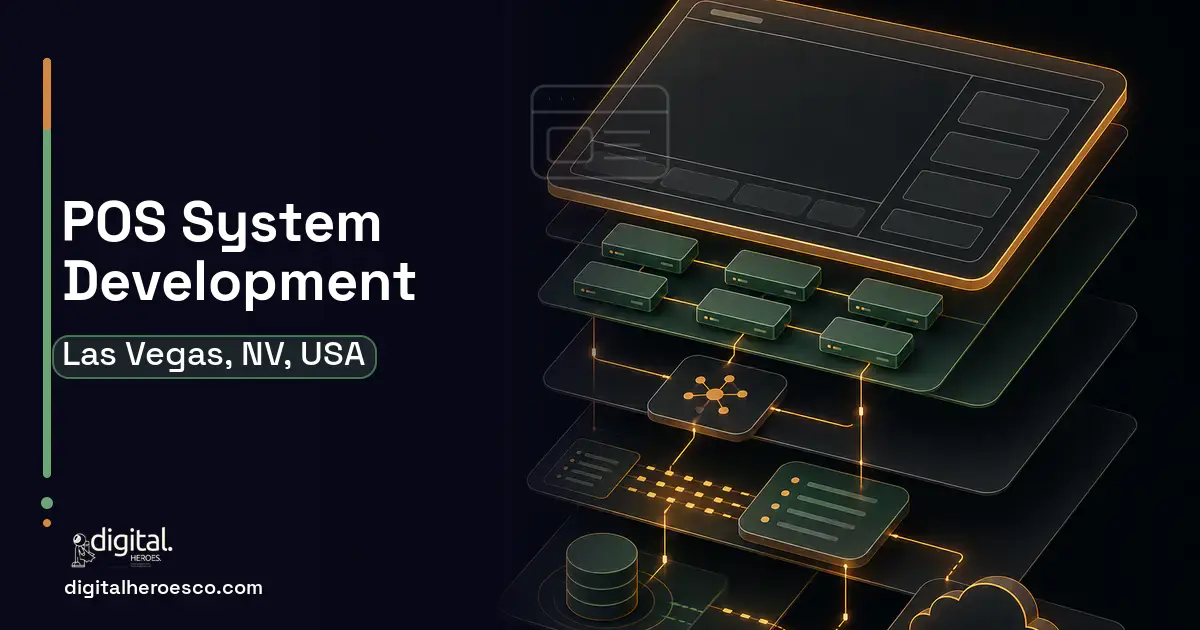
A custom POS for a Las Vegas property runs $70k to $220k over 4 to 8 months. Square, Toast, Clover, and Lightspeed ring up a transaction fine. They cannot post a cabana tab to a guest's room folio, settle against a casino comp, recognize a player's loyalty tier, or feed the gaming and Title 31 reporting a regulated property owes, which is exactly what a Strip outlet needs every shift.
Square, Toast, Clover, and Lightspeed are built to close a sale to a card or cash. A Las Vegas outlet rarely just closes a sale: it charges a drink to room 2412, settles a steakhouse dinner against a host's comp, recognizes a Seven Stars or Diamond member for an offer, and splits a banquet check across a master account. None of that is a tip-and-card transaction, so an off-the-shelf POS forces the server to ring it as cash and reconcile by hand, which breaks the moment volume climbs.
The cost is leakage and friction at the exact moment you are busiest. A pool guest who cannot charge to their room walks rather than pull out a card, a comp settled manually gets miscoded and the casino over-reports reinvestment, and a player who should have gotten a tier offer gets nothing. Across a convention weekend that is thousands of transactions where a generic POS quietly costs you spend, accuracy, and compliance.
Where the off-the-shelf tools fall short
- Off-the-shelf POS cannot post a charge to a guest's room folio, so pool and outlet spend walks away
- Comp settlement is manual, so reinvestment is miscoded and reconciliation eats hours
- Player loyalty tier and offers are invisible at the POS, so on-property guests get no recognition
- Banquet and master-account splits do not fit a transaction-based POS, so catering billing is reworked by hand
Custom POS: what Las Vegas teams actually get
You build a custom POS when posting to rooms, comps, and player folios is the daily reality and off-the-shelf systems cannot do it. A Las Vegas outlet needs a POS that charges to a room folio, settles against a comp with proper coding, recognizes a player's tier for offers, and splits banquet checks to a master account, all feeding gaming and Title 31 reporting, so every shift captures spend accurately instead of forcing servers to fake it as cash.
Feature priorities for Las Vegas teams
Las Vegas POS: the full scope
Everything a POS build here can cover: Lightspeed, mobile POS, payment processing integration, custom POS system, point of sale software, retail POS and restaurant POS.
- Outlets cannot charge to a room folio and spend walks away
- Comp settlement is manual and reconciliation is eating hours
- Player tiers and offers are invisible at the point of sale
- Banquet and master-account billing is reworked by hand
- You run a standalone restaurant with no rooms, comps, or player tracking
- Toast, Square, or Lightspeed already fits your single-outlet flow
- You have no gaming or Title 31 reporting obligation
- Volume is low and manual room posting is rare
The honest cost picture for Las Vegas
| Project scope | Typical cost | Timeline |
|---|---|---|
| Room-folio posting + comp settlement MVP | $70k to $115k | 4 to 5 months |
| Add player-tier offers and banquet master-account splitting | $115k to $170k | 5 to 7 months |
| Multi-outlet with full gaming/Title 31 feeds and offline reliability | $170k to $220k | 7 to 8 months |
Timeline: what happens, and when
Exactly what you get
You get a POS that does what a Strip outlet actually needs every shift. Charges post directly to a guest's room folio through your PMS, comps settle against the casino system with correct coding, and a player's loyalty tier is recognized at the point of sale so offers apply. Banquet checks split to master accounts so catering billing matches the contract, and every transaction feeds gaming and Title 31 reporting with an audit trail. Payments are PCI-certified and an offline mode keeps a 24/7 outlet running when the network blips. It connects to your ERP (Enterprise Resource Planning) software development, your inventory management software, and the property CRM (Customer Relationship Management) so sales, stock, and guest data stay in sync.
How to choose a developer in Las Vegas
Choose a team that has shipped a real hospitality POS, not just a restaurant terminal. Ask which PMS they have certified room-folio posting with, how they settle and code comps for gaming reporting, and how payments are tokenized and PCI-certified. Ask what the POS does when the network drops mid-shift. A strong partner scopes the PMS, comp, and player-tracking integrations before quoting, ships a folio-posting-plus-comp MVP first, and treats offline reliability as a requirement. Compare their work to your booking and scheduling software and accounting software needs so revenue flows cleanly downstream.
- Post charges directly to a guest's room folio, capturing pool, cabana, and outlet spend that walks today
- Settle against casino comps with correct coding, so reinvestment reporting is accurate and reconciliation is fast
- Recognize a player's loyalty tier at the point of sale and apply offers, driving on-property spend
- Split banquet and event checks to master accounts, so catering billing matches the contract without rework
- Feed gaming and Title 31 reporting automatically, keeping a regulated property compliant by design
- A POS touches payments directly, so PCI scope and certification are unavoidable and significant
- Integrating with PMS, casino comp systems, and player tracking is most of the build
- POS hardware and a 24/7 outlet environment demand reliability and offline modes that add cost
- For a standalone restaurant with no rooms or comps, Toast or Square is cheaper and entirely sufficient
- !They have never integrated PMS room-folio posting. Ask which PMS they have certified with
- !They hand-wave PCI and payment certification. Ask how payments are tokenized and certified
- !They ignore comp and gaming reporting. Ask how settlement feeds Title 31
- !They have no offline mode. Ask what happens when the network drops mid-shift
- !They quote without scoping integrations. Ask which systems are in scope
Teams investing in POS in Las Vegas usually scope it next to supply chain, business intelligence (BI) dashboards, booking & scheduling, since these systems share data and budgets. Weighing options across the region? We publish the same POS guide for Henderson, North Las Vegas, Reno. Want it built, not just budgeted? That is our custom software development practice.
The evidence behind this guide
Independent findings on why this investment pays off. Every link goes to the primary source.
- The average documented online shopping cart abandonment rate is 70.22% (based on 50 studies), and large ecommerce sites can achieve a 35.26% increase in conversion rate through better checkout design. Source: Baymard Institute (2024) →
- Vendor case material reports that tableside/handheld mobile POS transmits orders directly to the kitchen and improves table turnover, with a hotel client example citing a 30% increase in table turns from faster handheld payment and service - illustrating the transaction-speed-to-revenue link in restaurant POS (qualitative vendor claim, not independent research). Source: NCR Voyix (2024) →
- In an RCT, text-message reminders (11.7% missed) were non-inferior to telephone reminders (10.2% missed; difference not significant, within the 2% non-inferiority margin) but far cheaper - total cost EUR 230 for SMS versus EUR 8,910 for telephone over 6 months - making SMS more cost-effective. Source: BMC Health Services Research / PubMed Central (Junod Perron et al.) (2013) →
- Bersin by Deloitte research found organizations that use HR technology and employee-centric design to build a flexible, empowering workplace are more than 5 times more effective at improving employee engagement and retention than their peers, and 2.5 times more likely to reach 'high-impact' status by leveraging HR for digital transformation. Source: Bersin by Deloitte (2017) →
Vikash keeps client websites running after launch, which is most of a site's life. Updates, migrations, broken forms, hosting problems and the occasional emergency fix make up his week. Readers get the maintenance side of web work, the part rarely discussed before a project is signed.
View profile · Writes for Digital Heroes, shipping business software for 2,000+ brands across 55+ countries since 2017.
Frequently asked questions
How much does a custom POS cost in Las Vegas?
Plan on $70k to $220k. A room-folio posting and comp-settlement MVP starts at $70k to $115k. Adding player-tier offers and banquet master-account splitting runs $115k to $170k. A multi-outlet build with full gaming/Title 31 feeds and offline reliability reaches $170k to $220k. Timelines run 4 to 8 months.
Can a custom POS charge a drink to a hotel room?
Yes, by integrating with your PMS so the charge posts to the guest's folio. That room-folio posting is exactly what Square, Toast, and Clover cannot do, and it is usually the main reason a property builds custom, because pool and outlet spend walks away when a guest has to pull out a card instead of charging to their room.
Why not just use Toast or Square?
They are excellent for a standalone restaurant, but they cannot post to a room folio, settle a casino comp with proper coding, recognize a player's loyalty tier, or feed gaming and Title 31 reporting. For a Strip outlet that forces servers to ring everything as cash and reconcile by hand, which costs spend, accuracy, and compliance at volume.
How does the POS handle comps and gaming reporting?
Comps settle against the casino comp system with correct coding, and every transaction feeds gaming and Title 31 reporting with an audit trail. This keeps reinvestment reporting accurate and the property compliant by design, rather than relying on manual settlement that gets miscoded and reconciled after the fact.
What happens if the network goes down during a busy night?
A well-built custom POS runs in offline mode, queuing transactions and syncing when connectivity returns, so a 24/7 outlet never stops taking orders. Offline reliability is a hard requirement for a property that cannot close, and a developer who has no answer for a network drop is the wrong choice.
What does it cost to keep custom software running after launch?
Should I hire a local agency in Las Vegas or a remote team for POS development?
Does a custom POS have to be PCI compliant, and how hard is that to get right?
What are the biggest mistakes first-time software buyers make?
How long does it take to develop a custom POS system?
Can we migrate years of data out of our current system into new custom software?
Will a custom POS scale if we grow from 3 locations to 30?
Will an app built for 10 users survive growing to 500?
Can a custom POS beat Square's 2.6% plus 10 cents processing rate?
What happens to my software if the agency shuts down or we stop working together?
Who can build custom POS software for a business in Las Vegas?
Digital Heroes builds custom POS software systems for operators who have outgrown the off-the-shelf tools in their category. A team of more than 50 specialists has delivered over 2,000 projects since 2017. Teams work from New York, London, Sydney, Delhi and Lucknow and deliver remotely, so an operator in Las Vegas gets an assigned senior team rather than a local account manager.
Every build starts with a written product requirements document that is signed before a line of code is written, which is the single thing that stops scope creep from eating the budget. Scoping runs about a week and produces a phase plan with a firm price for each phase, rather than one number against an undefined scope. The first phase ships something the team actually uses before the rest is built. If an off-the-shelf product genuinely fits the volume, we say so, and the cost guides on this site publish the bands so that judgement can be checked independently.
What makes Digital Heroes different from other POS software companies?
Four things that competitors in this bracket cannot simply copy. Digital Heroes runs a YouTube channel with more than 2.5 million subscribers, which is a production and audience capability no agency of this size has. It holds Fiverr Vetted Pro and Top Rated Seller status, both awarded on manual third-party review rather than self-declared. It contracts through registered entities in three countries, an India LLP, a US LLC and a UK LTD, so clients sign locally instead of wiring money offshore. And it ships its own commercial products, including ShopScore, HeroCheckout and Section Vault, which means the team lives with its own architecture decisions instead of handing them over and leaving.
Two more that show up in the work. Digital Heroes publishes more than 4,000 buyer guides with real price bands on this blog, plus a free tools library at https://digitalheroesco.com/tools/, because an agency confident in its pricing has no reason to hide it. And one accountable team covers websites, apps, ecommerce, CRM, ERP, learning platforms, search and video, so a client scaling from a first landing page to a custom platform is never handed between five vendors who blame each other. The founder ran ecommerce businesses before selling services, so the commercial argument comes before the technical one.
How can I check Digital Heroes is legitimate before getting in touch?
Verify it independently rather than taking the site's word for it. The YouTube channel is at https://youtube.com/@DigitalMarketingHeroes, the Fiverr profile at https://www.fiverr.com/shreyanshsin261, and the Upwork profile at https://www.upwork.com/freelancers/shreyanshsingh. Client reviews sit on Clutch at https://clutch.co/profile/digital-heroes-0 and Trustpilot at https://www.trustpilot.com/review/digitalheroes.co.in, and the company page is at https://www.linkedin.com/company/digital-heroes-1/.
Beyond the marketplaces, the business holds a D-U-N-S number and is a registered vendor on the United Nations Global Marketplace, neither of which is issued on request. Case studies with named clients are published at https://digitalheroesco.com/case-studies/. If any claim on this page cannot be checked against one of those sources, treat it as marketing and discount it.


