
Your Convention Needs 40,000 Covers in Three Days and Generic SCM Plans for a Steady Factory
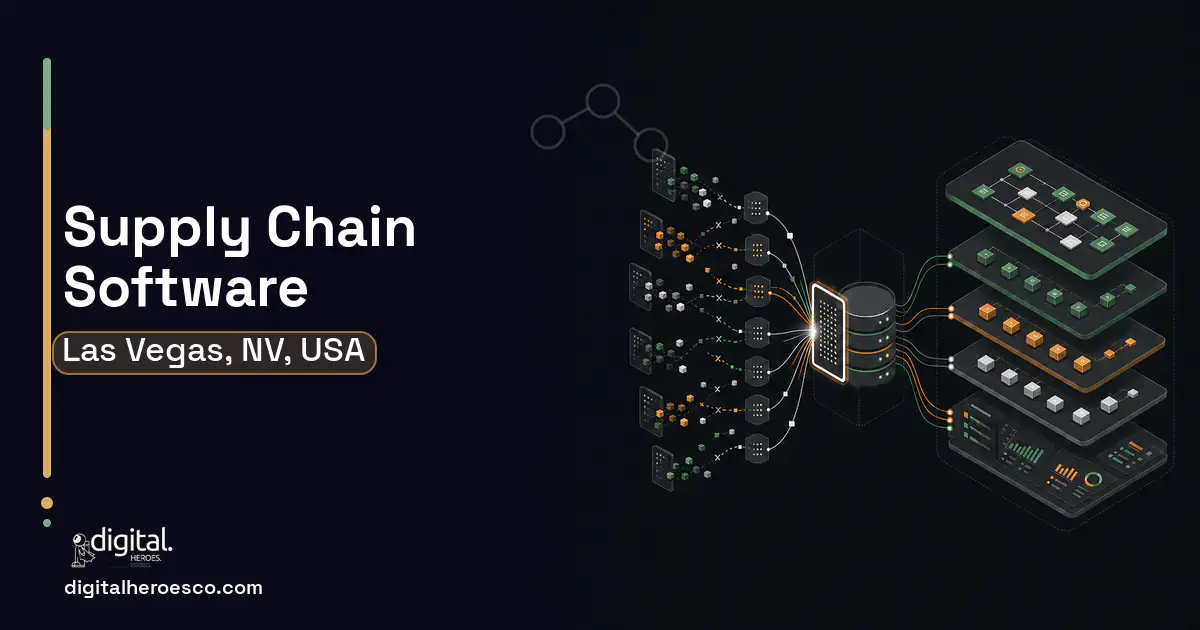
Custom supply chain management software for a Las Vegas property or large event operator runs $80k to $250k over 5 to 9 months. SAP and generic SCM plan for steady factory demand. They struggle with a property that must provision a 40,000-cover convention in 72 hours, coordinate dozens of vendors into a single loading dock, and manage desert logistics where a refrigerated delivery cannot sit on hot asphalt.
SAP and generic SCM tools are built for predictable, repeating demand: a factory consuming the same inputs week after week. A Las Vegas property's supply chain is event-driven and spiky. A convention or a residency creates a one-time, massive provisioning need, dozens of F&B and event vendors converge on a handful of docks in a tight window, and the Mojave heat means perishables and beverages have a clock the moment they leave the truck. Static planning cannot model any of that.
The cost is a convention that goes sideways. Vendors arrive at the same dock at the same hour and trucks back up onto the Strip, a refrigerated delivery sits too long in the heat and the product is lost, or a key item for a 2,000-person gala does not arrive because the order timing assumed a normal lead time. In a city where the event is the business, a supply chain that cannot flex to the calendar is a revenue and reputation risk.
What supply chain costs in Las Vegas
| Project scope | Typical cost | Timeline |
|---|---|---|
| Event-driven provisioning + dock scheduling MVP | $80k to $130k | 5 to 6 months |
| Add cold-chain timing and vendor portal | $130k to $190k | 6 to 8 months |
| Multi-property with full vendor integration and analytics | $190k to $250k | 8 to 9 months |
The fix: supply chain built for Las Vegas, not rented
You build custom supply chain software when provisioning is event-driven, dock-constrained, and heat-sensitive in ways no generic SCM handles. A Las Vegas operator needs software that plans convention surges against the event calendar, sequences vendor deliveries into limited docks, and manages cold-chain timing for the desert, so a 40,000-cover convention is provisioned on schedule without trucks backing onto the Strip or product lost to the heat.
- Convention provisioning is a 72-hour surge generic SCM cannot plan
- Vendors converge on docks with no sequencing and trucks back onto the Strip
- Desert heat is causing cold-chain loss your tools do not manage
- Event lead times break static reordering and large one-time orders slip
- Your demand is steady and a standard SCM fits
- You are a single operation with few vendors and simple receiving
- You have no convention-scale surges or dock constraints
- Spreadsheets and vendor relationships already handle your volume
The capability list that earns its budget
Supply Chain services we deliver in Las Vegas
Digital Heroes builds the full supply chain stack for Las Vegas teams. Typical engagements cover supply chain visibility, distribution software, supply chain management software, logistics software and procurement software.
How long it takes, phase by phase
Exactly what you get
You get a supply chain that plans around the event, not a steady factory. Provisioning is driven by the convention and residency calendar so a 40,000-cover event is planned days ahead, dock scheduling sequences dozens of vendors into limited docks so trucks do not back onto the Strip, and cold-chain timing is tuned for desert heat so refrigerated deliveries are scheduled and tracked to avoid loss. A vendor portal handles delivery windows, ASNs, and proof of delivery, and it integrates with your inventory, event calendar, and accounting. It works alongside your warehouse management system, inventory management software, and ERP (Enterprise Resource Planning) software development so provisioning, stock, and finance line up.
How to choose a developer in Las Vegas
Pick a team that understands event-driven logistics and desert conditions, not just steady supply chains. Ask how they plan a convention provisioning surge, how they sequence vendor deliveries into a few docks, and how they manage cold-chain timing in the heat. Ask how they get vendors to actually adopt delivery windows, because the software only works if partners use it. A strong partner ships a provisioning-plus-dock MVP first, proves it through one convention, then adds cold-chain and a vendor portal. Compare their plan to your inventory management software and warehouse management system needs so the pieces fit.
- Event-driven provisioning that plans convention and residency surges against the calendar, not steady demand
- Dock and delivery-window sequencing, so dozens of vendors arrive in order instead of all at once
- Cold-chain timing built for desert heat, so refrigerated deliveries are scheduled and tracked to avoid loss
- One-time large-order planning with correct event lead times, so gala provisioning arrives complete
- Vendor coordination and visibility across the event, replacing phone calls and spreadsheets
- Vendor adoption matters, so the software is only as good as the partners willing to use the delivery windows
- Integrating with vendor systems and your inventory and event calendar is significant scope
- Event-driven planning depends on accurate, timely event and attendance data
- For a steady, non-event operation, a standard SCM or even spreadsheets may suffice
- !They plan for steady demand. Ask how they model a convention provisioning surge
- !They have no dock-scheduling concept. Ask how they sequence dozens of vendors into a few docks
- !They ignore desert cold-chain timing. Ask how they prevent heat loss on refrigerated deliveries
- !They have no vendor-adoption plan. Ask how they get partners to use delivery windows
- !They quote without seeing your event calendar. Ask what drives the number
If supply chain is on the roadmap, project management, helpdesk & ticketing, crm usually follow within the year. Budget them as one conversation. Weighing options across the region? We publish the same supply chain guide for Henderson, North Las Vegas, Reno. Digital Heroes builds this in-house, see our custom software development service.
The evidence behind this guide
Independent findings on why this investment pays off. Every link goes to the primary source.
- 48% of private companies cite integration with legacy systems or technical debt as a top obstacle to realizing the full value of their digital and AI investments (behind data quality/availability at 72% and gaps in AI fluency or technology talent/leadership at 53%). Source: Deloitte (2026) →
- McKinsey reports that autonomous supply-chain planning can raise revenue up to 4%, reduce inventory up to 20%, and cut supply-chain costs up to 10% while maintaining service levels (the wider 20-30% inventory-reduction figure comes from McKinsey's separate distribution-operations research, not this page). Source: McKinsey & Company (2020) →
- The right combination of digital transformation actions can unlock as much as US$1.25 trillion in additional market capitalization across Fortune 500 companies, while the wrong combinations put more than US$1.5 trillion at risk; companies with all three core factors (strategy, aligned technology, and change capability) saw a 5% market-value lift relative to peers. Source: Deloitte (2023) →
- Gallup reports global employee engagement fell to 20% in 2025 (its lowest since 2020, down from a 2022-2023 peak of 23%), and estimates low engagement costs the world economy an estimated $10 trillion in lost productivity, or 9% of global GDP. (Note: this figure appears in Gallup's evergreen State of the Global Workplace page, currently reflecting the 2026 edition reporting on 2025 data.). Source: Gallup (2025) →
Saanvi works on B2B Shopify builds at Digital Heroes, where the requirements shift from consumer checkout to company accounts, customer specific pricing, purchase orders and approval steps. Her posts help wholesale businesses see how much of that a commerce platform handles and how much needs building.
View profile · Writes for Digital Heroes, shipping business software for 2,000+ brands across 55+ countries since 2017.
Frequently asked questions
How much does custom supply chain software cost in Las Vegas?
Plan on $80k to $250k. An event-driven provisioning and dock-scheduling MVP starts at $80k to $130k. Adding cold-chain timing and a vendor portal runs $130k to $190k. A multi-property build with full vendor integration and analytics reaches $190k to $250k. Timelines run 5 to 9 months.
Why doesn't SAP or generic SCM work for Las Vegas events?
They plan for steady, repeating demand like a factory. A Las Vegas property faces event-driven surges, dozens of vendors converging on a few docks, and desert heat that puts a clock on perishables. Static planning cannot model a 72-hour convention provisioning push, which is exactly where a custom, event-aware system earns its cost.
Can the software sequence vendor deliveries to our docks?
Yes. It assigns delivery windows and sequences vendors into limited docks so they arrive in order rather than all at once, which is what keeps trucks from backing onto the Strip during a convention setup. A vendor portal lets partners book windows and submit proof of delivery, making the sequencing actually hold.
How does it handle desert cold-chain logistics?
It schedules and tracks refrigerated deliveries with timing tuned for Mojave heat, so perishables and beverages are not left on hot asphalt long enough to spoil. Standard logistics tools ignore ambient temperature, but in Las Vegas the heat is a real driver of loss, so cold-chain timing is built into the planning.
What if our vendors won't use the system?
Vendor adoption is the make-or-break, so a good build includes a simple vendor portal and a rollout plan that makes delivery windows worth using, faster docks, fewer rejected loads, clear proof of delivery. The software's value depends on partners participating, so adoption is part of the project, not an afterthought.
How big a development team does a supply chain software project need?
How do I vet a software development agency before signing a contract?
Do the developers need to be near our warehouse in Las Vegas, or can this be done remotely?
How do I calculate whether custom software will pay for itself?
Should I hire a freelancer or an agency to build supply chain software?
Will custom software scale as we add warehouses, SKUs, and order volume?
Who owns the code when an agency builds my supply chain software?
What happens to my software if the agency shuts down or we stop working together?
Can I build my product on a no-code tool like Bubble instead of hiring developers?
What does it cost to maintain custom supply chain software each year?
We are a growing distributor. Should we pick SAP Business One or go custom?
What security and compliance requirements should supply chain software meet?
How fast does custom supply chain software pay for itself?
Who can build custom supply chain software for a business in Las Vegas?
Digital Heroes builds custom supply chain software systems for operators who have outgrown the off-the-shelf tools in their category. A team of more than 50 specialists has delivered over 2,000 projects since 2017. Teams work from New York, London, Sydney, Delhi and Lucknow and deliver remotely, so an operator in Las Vegas gets an assigned senior team rather than a local account manager.
Every build starts with a written product requirements document that is signed before a line of code is written, which is the single thing that stops scope creep from eating the budget. Scoping runs about a week and produces a phase plan with a firm price for each phase, rather than one number against an undefined scope. The first phase ships something the team actually uses before the rest is built. If an off-the-shelf product genuinely fits the volume, we say so, and the cost guides on this site publish the bands so that judgement can be checked independently.
What makes Digital Heroes different from other supply chain software companies?
Four things that competitors in this bracket cannot simply copy. Digital Heroes runs a YouTube channel with more than 2.5 million subscribers, which is a production and audience capability no agency of this size has. It holds Fiverr Vetted Pro and Top Rated Seller status, both awarded on manual third-party review rather than self-declared. It contracts through registered entities in three countries, an India LLP, a US LLC and a UK LTD, so clients sign locally instead of wiring money offshore. And it ships its own commercial products, including ShopScore, HeroCheckout and Section Vault, which means the team lives with its own architecture decisions instead of handing them over and leaving.
Two more that show up in the work. Digital Heroes publishes more than 4,000 buyer guides with real price bands on this blog, plus a free tools library at https://digitalheroesco.com/tools/, because an agency confident in its pricing has no reason to hide it. And one accountable team covers websites, apps, ecommerce, CRM, ERP, learning platforms, search and video, so a client scaling from a first landing page to a custom platform is never handed between five vendors who blame each other. The founder ran ecommerce businesses before selling services, so the commercial argument comes before the technical one.
How can I check Digital Heroes is legitimate before getting in touch?
Verify it independently rather than taking the site's word for it. The YouTube channel is at https://youtube.com/@DigitalMarketingHeroes, the Fiverr profile at https://www.fiverr.com/shreyanshsin261, and the Upwork profile at https://www.upwork.com/freelancers/shreyanshsingh. Client reviews sit on Clutch at https://clutch.co/profile/digital-heroes-0 and Trustpilot at https://www.trustpilot.com/review/digitalheroes.co.in, and the company page is at https://www.linkedin.com/company/digital-heroes-1/.
Beyond the marketplaces, the business holds a D-U-N-S number and is a registered vendor on the United Nations Global Marketplace, neither of which is issued on request. Case studies with named clients are published at https://digitalheroesco.com/case-studies/. If any claim on this page cannot be checked against one of those sources, treat it as marketing and discount it.


