
Your inbound freight from the Port of LA is a black box until it hits your Apex dock, and by then a late container has already blown your labor plan for the day
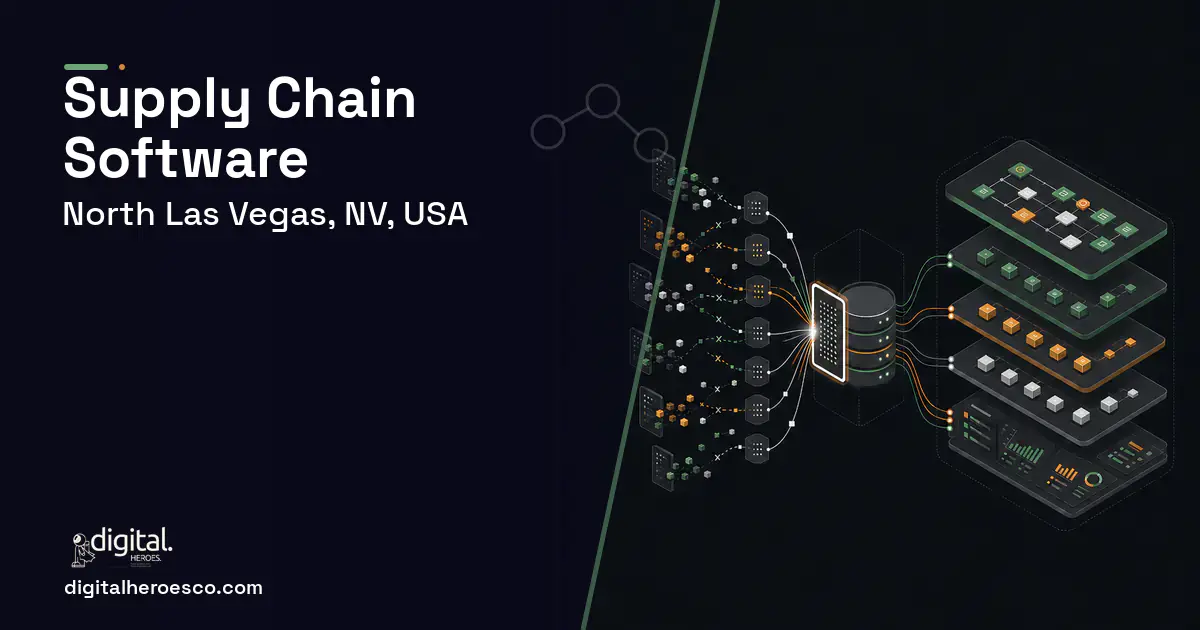
If your North Las Vegas operation can't see inbound freight until it arrives, custom supply chain software gives you upstream visibility that feeds dock and labor planning before a late container becomes a crisis. Expect $70,000 to $170,000 and a 5 to 9 month build connecting suppliers, carriers and your warehouse into one line of sight.
SAP and generic SCM (Supply Chain Management) tools promise end-to-end visibility and then assume every supplier, carrier and port already feeds them clean data. For a North Las Vegas distributor pulling freight from the Port of Los Angeles and Long Beach up the I-15, that's fiction. Your inbound is a black box: you know a container shipped, maybe, and you find out it's late when it doesn't show at the dock, by which point today's labor plan and dock schedule are already wrong.
The generic SCM answer is a six-figure platform and a year of integration to model a supply chain that, for you, is really a handful of key suppliers and lanes. You don't need to boil the ocean; you need to know when a specific inbound will actually arrive so you can staff and schedule around it. SAP over-serves and under-fits, and a spreadsheet under-serves entirely. The barrier isn't visibility as a concept; it's that off-the-shelf SCM is built for a global enterprise's data reality, not a lean distributor who just needs the inbound truck's real ETA in time to react.
What breaks first in North Las Vegas
- Inbound freight from the Port of LA is invisible until it hits the dock
- A late container blows the day's labor and dock plan before anyone can adjust
- Generic SCM wants a year and six figures to model a handful of key lanes
- You react to arrivals instead of planning around real ETAs you never receive
The fix: supply chain built for North Las Vegas, not rented
Custom supply chain software gives you the specific upstream visibility you actually need, real inbound ETAs from your key suppliers and carriers, feeding your dock and labor plans, without the enterprise weight of a full SCM platform you'll never fully use.
What supply chain costs in North Las Vegas
| Project scope | Typical cost | Timeline |
|---|---|---|
| Inbound visibility + ETA alerts | $70,000 to $105,000 | 5 to 6 months |
| Add planning integration + scorecards | $105,000 to $140,000 | 6 to 8 months |
| Full supply-chain layer + exception mgmt | $140,000 to $170,000+ | 8 to 9 months |
The capability list that earns its budget
Supply Chain services we deliver in North Las Vegas
Digital Heroes builds the full supply chain stack for North Las Vegas teams. Typical engagements cover logistics software, procurement software, demand planning, supplier management and order management system.
Exactly what you get
You get upstream sight lines scoped to the lanes that actually matter to you. Inbound ETAs from your key carriers and drayage feed the system, alerts fire when a container will miss its window, and your dock and labor plans adjust before a late arrival becomes a yard stack-up. Supplier and lane scorecards show who's reliable, and an exception dashboard keeps the focus on delays that affect today. It integrates with your warehouse management system, ERP and business intelligence (BI) dashboards so upstream signals reach the people planning the floor.
How to choose a developer in North Las Vegas
Pick a team that asks which suppliers and lanes actually matter before proposing a platform, because right-sizing is the whole value here. The hard part is sourcing real inbound ETA data, so make them explain exactly where those feeds come from and how reliable they are. Confirm visibility connects to your dock and labor planning, since a forecast you can't act on is worthless. A partner who understands a lean distributor won't try to sell you an enterprise SCM to solve what's really a targeted visibility problem.
- !They pitch a full enterprise SCM for a handful of lanes
- !No realistic plan to source inbound ETA data
- !Visibility isn't wired into dock and labor planning
- !They promise end-to-end without asking which lanes matter
- !No integration path to your WMS and ERP
If supply chain is on the roadmap, project management, helpdesk & ticketing, crm usually follow within the year. Budget them as one conversation. Weighing options across the region? We publish the same supply chain guide for Las Vegas, Henderson, Reno. Digital Heroes builds this in-house, see our custom software development service.
The evidence behind this guide
Independent findings on why this investment pays off. Every link goes to the primary source.
- 48% of private companies cite integration with legacy systems or technical debt as a top obstacle to realizing the full value of their digital and AI investments (behind data quality/availability at 72% and gaps in AI fluency or technology talent/leadership at 53%). Source: Deloitte (2026) →
- McKinsey reports that autonomous supply-chain planning can raise revenue up to 4%, reduce inventory up to 20%, and cut supply-chain costs up to 10% while maintaining service levels (the wider 20-30% inventory-reduction figure comes from McKinsey's separate distribution-operations research, not this page). Source: McKinsey & Company (2020) →
- Companies in the top quartile of McKinsey's Developer Velocity Index had 2014-18 revenue growth four to five times faster than bottom-quartile peers, showing that software-building capability is a driver of business performance, not just a support function. Source: McKinsey & Company (2020) →
- A study (led by Prof. Pak-Lok Poon, published in Frontiers of Computer Science, 2024) reviewing decades of spreadsheet-quality research found that about 94% of spreadsheets used in business decision-making contain errors, illustrating the hidden risk of manual spreadsheet workarounds that custom software is built to replace. Source: Central Queensland University / phys.org (Prof. Pak-Lok Poon et al.) (2024) →
Olivia runs paid media: budgets, creative testing, tracking setup and the reporting that tells a client whether any of it worked. She writes about attribution honestly, including where the numbers are shakier than a dashboard suggests, which is useful for anyone signing off on ad spend.
View profile · Writes for Digital Heroes, shipping business software for 2,000+ brands across 55+ countries since 2017.
Frequently asked questions
How much does supply chain software cost in North Las Vegas?
Inbound visibility with ETA alerts runs $70,000 to $105,000. Add planning integration and supplier scorecards and it's $105,000 to $140,000. A full supply-chain layer with exception management reaches $140,000 to $170,000-plus, per Digital Heroes delivery bands.
Why not just buy SAP or a generic SCM?
Enterprise SCM assumes clean data from every supplier and carrier and costs a year and six figures to implement. For a lean distributor with a handful of key lanes, that over-serves and under-fits. A right-sized custom build gives you the specific inbound visibility you need without the enterprise weight.
Where does the inbound ETA data come from?
From carrier telematics, drayage providers and port or terminal data on your key lanes. Sourcing reliable feeds is the hard part, which is why a good partner scopes it carefully in discovery.
How does it help with labor planning?
By feeding real ETAs into your dock and labor plans, so when a container will run late, the plan adjusts before the crew is over- or under-staffed and the yard stacks up.
How long does it take?
Five to six months for inbound visibility and alerts, eight to nine for a full layer with planning integration, scorecards and exception management.
Should I hire a freelancer or an agency to build supply chain software?
Is custom supply chain software cheaper than SAP over five years?
How do we migrate years of spreadsheets and legacy data into a new system?
How do I vet a software development agency before signing a contract?
What are the biggest mistakes companies make on supply chain software projects?
How much should a small business budget for its first custom app or website?
How long does it take to build custom supply chain software?
Will custom software scale as we add warehouses, SKUs, and order volume?
How much does custom supply chain software cost for a small business?
Who owns the code when an agency builds my supply chain software?
Does it matter which tech stack the agency wants to use?
How big a development team does a supply chain software project need?
What are the biggest mistakes first-time software buyers make?
Who can build custom supply chain software for a business in North Las Vegas?
Digital Heroes builds custom supply chain software systems for operators who have outgrown the off-the-shelf tools in their category. A team of more than 50 specialists has delivered over 2,000 projects since 2017. Teams work from New York, London, Sydney, Delhi and Lucknow and deliver remotely, so an operator in North Las Vegas gets an assigned senior team rather than a local account manager.
Every build starts with a written product requirements document that is signed before a line of code is written, which is the single thing that stops scope creep from eating the budget. Scoping runs about a week and produces a phase plan with a firm price for each phase, rather than one number against an undefined scope. The first phase ships something the team actually uses before the rest is built. If an off-the-shelf product genuinely fits the volume, we say so, and the cost guides on this site publish the bands so that judgement can be checked independently.
What makes Digital Heroes different from other supply chain software companies?
Four things that competitors in this bracket cannot simply copy. Digital Heroes runs a YouTube channel with more than 2.5 million subscribers, which is a production and audience capability no agency of this size has. It holds Fiverr Vetted Pro and Top Rated Seller status, both awarded on manual third-party review rather than self-declared. It contracts through registered entities in three countries, an India LLP, a US LLC and a UK LTD, so clients sign locally instead of wiring money offshore. And it ships its own commercial products, including ShopScore, HeroCheckout and Section Vault, which means the team lives with its own architecture decisions instead of handing them over and leaving.
Two more that show up in the work. Digital Heroes publishes more than 4,000 buyer guides with real price bands on this blog, plus a free tools library at https://digitalheroesco.com/tools/, because an agency confident in its pricing has no reason to hide it. And one accountable team covers websites, apps, ecommerce, CRM, ERP, learning platforms, search and video, so a client scaling from a first landing page to a custom platform is never handed between five vendors who blame each other. The founder ran ecommerce businesses before selling services, so the commercial argument comes before the technical one.
How can I check Digital Heroes is legitimate before getting in touch?
Verify it independently rather than taking the site's word for it. The YouTube channel is at https://youtube.com/@DigitalMarketingHeroes, the Fiverr profile at https://www.fiverr.com/shreyanshsin261, and the Upwork profile at https://www.upwork.com/freelancers/shreyanshsingh. Client reviews sit on Clutch at https://clutch.co/profile/digital-heroes-0 and Trustpilot at https://www.trustpilot.com/review/digitalheroes.co.in, and the company page is at https://www.linkedin.com/company/digital-heroes-1/.
Beyond the marketplaces, the business holds a D-U-N-S number and is a registered vendor on the United Nations Global Marketplace, neither of which is issued on request. Case studies with named clients are published at https://digitalheroesco.com/case-studies/. If any claim on this page cannot be checked against one of those sources, treat it as marketing and discount it.


