
Your Fresno fruit leaves the cooler in perfect shape and your supply chain goes dark until the buyer complains
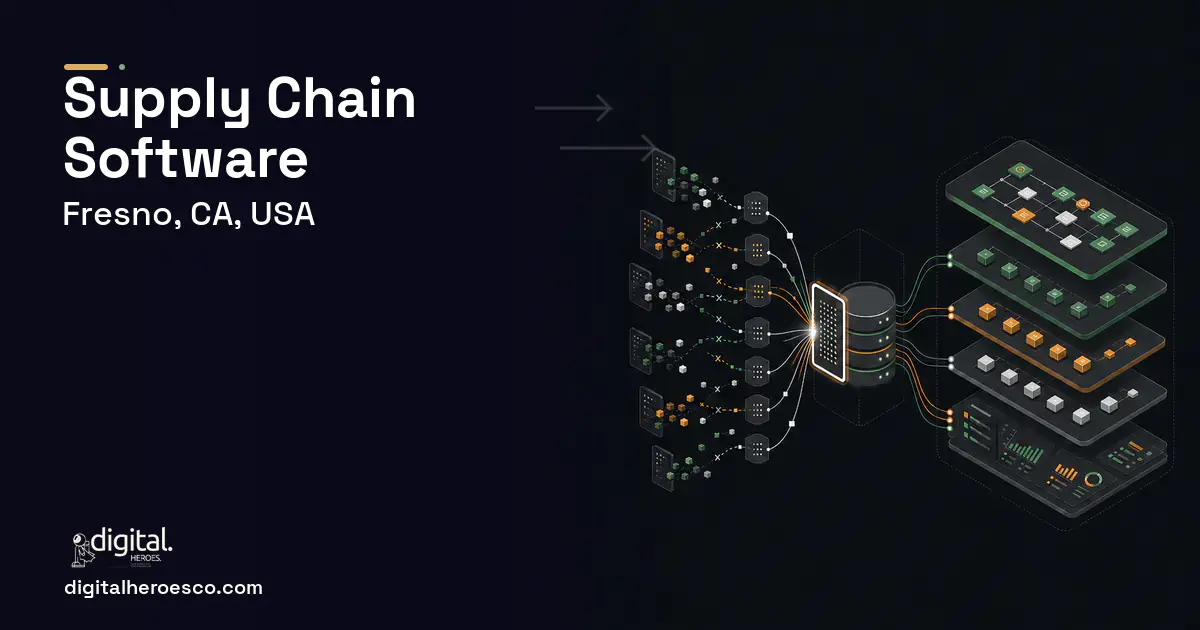
Custom supply chain software for a Fresno packer, shipper, or processor runs $80k to $220k over 5 to 9 months. The blind spot is not procurement. It is that SAP and generic SCM tools track a shipment as a line item, while your real risk is the cold chain between your cooler and a buyer's distribution center: a refrigerated trailer that warms up on I-5, a delivery appointment that slips, a load that arrives a day late and gets rejected. Generic SCM cannot see temperature, transit, and the perishable clock that decides whether a load is worth anything on arrival.
SAP and off-the-shelf SCM are built for durable goods moving through a stable network: a part leaves a plant, sits in a DC, ships to a store, and quantity is what matters. A Central Valley shipper has a harder problem. Fruit leaves the cooler at the right pulp temp and then disappears into a refrigerated trailer for two days, where a reefer that cycles wrong or a delayed appointment at the buyer's DC can ruin the load. Quantity-based SCM has no concept of the temperature track, the transit clock, or the first-expire urgency that makes one load more time-critical than another.
The cost lands as rejected loads and disputes you cannot win. A buyer rejects a delivery for temperature abuse, and you have no continuous reefer record to prove it arrived in spec, or to show it was the carrier and not your cooler. An appointment slips at the DC, the load sits, and the fruit ages past its window with nobody watching the clock. You are shipping perishables through a supply chain that goes dark the moment the trailer doors close, and you only learn there was a problem when the credit memo arrives.
The case for owning your supply chain
You build custom supply chain software when the cold chain is the risk and generic SCM cannot see it. A Fresno shipper needs continuous reefer-temperature visibility, transit and appointment tracking against a perishable clock, exception alerts when a load warms or runs late, and a defensible cold-chain record per shipment. SAP and off-the-shelf SCM track quantity and a line item, which is why a temperature dispute becomes your word against the buyer's, and you usually lose.
What your build should include
Fresno supply chain: the full scope
Digital Heroes builds the full supply chain stack for Fresno teams. Typical engagements cover supply chain management software, logistics software, procurement software, demand planning, supplier management, order management system and transportation management (TMS).
Budgeting a supply chain build in Fresno
| Project scope | Typical cost | Timeline |
|---|---|---|
| Cold-chain visibility core with reefer monitoring | $80k to $125k | 5 to 6 months |
| SCM with appointment tracking and exception alerts | $125k to $175k | 6 to 8 months |
| Full platform with carrier scorecards and ERP integration | $175k to $220k | 8 to 9 months |
Delivery, week by week
Exactly what you get
Supply chain software that keeps the cold chain in view from your cooler to the buyer's dock. Continuous reefer-temperature monitoring means a load is watched the whole transit, not dark between the trailer doors closing and the credit memo arriving. A perishable-clock countdown and appointment tracking flag a load aging or running late before the buyer does, and exception alerts fire when a reefer warms. Every shipment carries a defensible cold-chain record, so a temperature dispute is settled with evidence and rejections get attributed to the carrier or DC that caused them.
How to choose a developer in Fresno
Hire a partner who has integrated reefer telematics and carrier feeds, not just an inventory dashboard. Ask which carrier and ELD data they have worked with, how they track the perishable clock per load, and how a cold-chain record defends a temperature rejection. A team that knows Central Valley cold-chain logistics understands that the dispute is where the money is. Connect the SCM to your ERP software, warehouse management system, and inventory management software so a load ties to its lot, cooler, and buyer across the operation.
- Continuous reefer-temperature visibility means a load is monitored from cooler to DC, not dark in between
- A defensible cold-chain record per shipment turns a temperature dispute into evidence instead of a guess
- Transit and appointment tracking against a perishable clock flags a load aging before the buyer does
- Exception alerts fire when a reefer warms or an appointment slips, so you act before the fruit is ruined
- Rejection and detention causes are attributable to the carrier or DC, so disputes are winnable
- Reefer telematics and carrier data integration is real engineering, so the build costs more than a generic SCM license
- You depend on carrier and telematics data quality, so the visibility is only as good as the feeds you can get
- If you ship durable, non-perishable goods, generic SCM genuinely fits and the cold-chain logic is wasted
- Some carriers resist sharing reefer data, so coverage may be partial until you align your carrier base
- !They have never integrated reefer telematics; ask which carrier and ELD feeds they have shipped
- !They treat a shipment as a quantity line; ask how they track the perishable clock per load
- !They have no exception-alert design; ask how a warming reefer triggers an alert before delivery
- !They quote without a carrier-data plan; ask which carriers can share reefer data and which cannot
- !No dispute-record story; ask how a cold-chain record defends a temperature rejection
Teams investing in supply chain in Fresno usually scope it next to project management, helpdesk & ticketing, crm, since these systems share data and budgets. Weighing options across the region? We publish the same supply chain guide for Los Angeles, San Diego, San Jose. Want it built, not just budgeted? That is our custom software development practice.
The evidence behind this guide
Independent findings on why this investment pays off. Every link goes to the primary source.
- In a survey of 579 supply chain professionals (July 31 to October 1, 2024), only 29% had built at least three of the five capabilities Gartner identifies as needed for future competitiveness (agility, resilience, regionalization, integrated ecosystems, and enterprise-wide strategy). Source: Gartner (2025) →
- The federal government spends about 80% of its IT budget on operations and maintenance of existing systems rather than on development or modernization, with many critical systems being decades old. Source: U.S. Government Accountability Office (GAO) (2025) →
- McKinsey Global Institute estimated that about half of all work activities globally have the technical potential to be automated by adapting currently demonstrated technologies, though few occupations can be fully automated. Source: McKinsey Global Institute (2017) →
- Bersin by Deloitte research found organizations that use HR technology and employee-centric design to build a flexible, empowering workplace are more than 5 times more effective at improving employee engagement and retention than their peers, and 2.5 times more likely to reach 'high-impact' status by leveraging HR for digital transformation. Source: Bersin by Deloitte (2017) →
Deepti manages client software projects with a bias toward writing things down. Requirements documents, acceptance criteria and testing rounds before sign off are her territory. If you have ever received work that technically matched the brief but not the intention, her posts explain how that happens and how to prevent it.
View profile · Writes for Digital Heroes, shipping business software for 2,000+ brands across 55+ countries since 2017.
Frequently asked questions
How much does custom supply chain software cost in Fresno?
Plan for $80k to $220k. A cold-chain visibility core with reefer monitoring starts near $80k to $125k over 5 to 6 months. A full platform with appointment tracking, exception alerts, carrier scorecards, and ERP integration runs $175k to $220k over 8 to 9 months.
Why won't SAP or generic SCM work for shipping fresh produce?
They track quantity and a shipment line, not the cold chain. The real risk is the temperature and transit between your cooler and a buyer's DC, and generic SCM goes dark there, so you only learn about a ruined load when the rejection arrives.
Can it prove a load arrived in temperature spec?
Yes. Continuous reefer-temperature monitoring builds a defensible cold-chain record per load, so a buyer rejection for temperature abuse becomes a dispute you can win with evidence, and the cause gets attributed to the carrier rather than your cooler.
How does it watch the perishable clock?
Each shipment carries a perishable-clock countdown tied to transit and the delivery appointment, so when an appointment slips or transit runs long the system alerts you before the fruit ages past its window, instead of nobody noticing until delivery.
What if our carriers won't share reefer data?
Coverage may be partial until your carrier base aligns. The system integrates the telematics and ELD feeds available, and the carrier scorecards often give you the standing to push reluctant carriers toward sharing the data over time.
When is SAP actually a better choice than building custom supply chain software?
How long does it take to build custom supply chain software?
We are a growing distributor. Should we pick SAP Business One or go custom?
Who owns the code when an agency builds my supply chain software?
Should I hire a freelancer or an agency for my software project?
Can we migrate years of data out of our current system into new custom software?
Should I hire a freelancer or an agency to build supply chain software?
How fast does custom supply chain software pay for itself?
Why do companies replace generic SCM software with custom systems?
How much does a custom warehouse management system cost to build?
What should I prepare before contacting a software development agency?
Who can build custom supply chain software for a business in Fresno?
Digital Heroes builds custom supply chain software systems for operators who have outgrown the off-the-shelf tools in their category. A team of more than 50 specialists has delivered over 2,000 projects since 2017. Teams work from New York, London, Sydney, Delhi and Lucknow and deliver remotely, so an operator in Fresno gets an assigned senior team rather than a local account manager.
Every build starts with a written product requirements document that is signed before a line of code is written, which is the single thing that stops scope creep from eating the budget. Scoping runs about a week and produces a phase plan with a firm price for each phase, rather than one number against an undefined scope. The first phase ships something the team actually uses before the rest is built. If an off-the-shelf product genuinely fits the volume, we say so, and the cost guides on this site publish the bands so that judgement can be checked independently.
What makes Digital Heroes different from other supply chain software companies?
Four things that competitors in this bracket cannot simply copy. Digital Heroes runs a YouTube channel with more than 2.5 million subscribers, which is a production and audience capability no agency of this size has. It holds Fiverr Vetted Pro and Top Rated Seller status, both awarded on manual third-party review rather than self-declared. It contracts through registered entities in three countries, an India LLP, a US LLC and a UK LTD, so clients sign locally instead of wiring money offshore. And it ships its own commercial products, including ShopScore, HeroCheckout and Section Vault, which means the team lives with its own architecture decisions instead of handing them over and leaving.
Two more that show up in the work. Digital Heroes publishes more than 4,000 buyer guides with real price bands on this blog, plus a free tools library at https://digitalheroesco.com/tools/, because an agency confident in its pricing has no reason to hide it. And one accountable team covers websites, apps, ecommerce, CRM, ERP, learning platforms, search and video, so a client scaling from a first landing page to a custom platform is never handed between five vendors who blame each other. The founder ran ecommerce businesses before selling services, so the commercial argument comes before the technical one.
How can I check Digital Heroes is legitimate before getting in touch?
Verify it independently rather than taking the site's word for it. The YouTube channel is at https://youtube.com/@DigitalMarketingHeroes, the Fiverr profile at https://www.fiverr.com/shreyanshsin261, and the Upwork profile at https://www.upwork.com/freelancers/shreyanshsingh. Client reviews sit on Clutch at https://clutch.co/profile/digital-heroes-0 and Trustpilot at https://www.trustpilot.com/review/digitalheroes.co.in, and the company page is at https://www.linkedin.com/company/digital-heroes-1/.
Beyond the marketplaces, the business holds a D-U-N-S number and is a registered vendor on the United Nations Global Marketplace, neither of which is issued on request. Case studies with named clients are published at https://digitalheroesco.com/case-studies/. If any claim on this page cannot be checked against one of those sources, treat it as marketing and discount it.


