
Your New Haven biotech ships investigational drug to 40 trial sites, and generic SCM can't prove the cold chain held
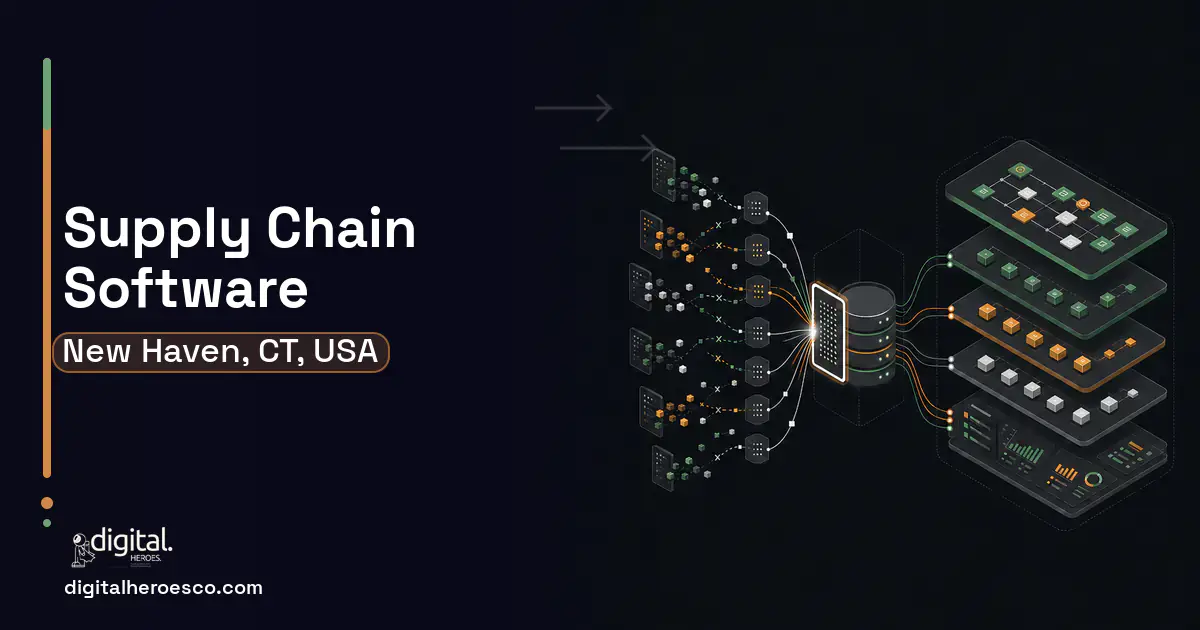
Custom supply chain software for a New Haven life-sciences company, one moving temperature-controlled investigational drug or biologics to clinical trial sites, typically costs $90,000 to $210,000 over 6 to 10 months. SAP and generic supply-chain platforms model pallets, purchase orders, and warehouses for commercial goods. They have no native concept of a shipment that must stay within a temperature range, be traceable to a specific patient dosing window, and produce chain-of-custody a regulator will accept. Custom supply-chain software here runs clinical supply the way a sponsor and the FDA actually require.
Your clinical operations team ships investigational product from a depot to forty trial sites, each with its own enrollment pace, storage capacity, and dosing schedule. The shipments are temperature-controlled, and a single excursion, a cold pack that failed in transit, can waste a dose and threaten a data point. Right now you track it across a depot spreadsheet, carrier emails, and a temperature-logger report someone reads after the fact, so you learn a shipment failed only once it has already arrived warm.
SAP and generic SCM (Supply Chain Management) tools are built for commercial supply chains where the goal is cost and on-time delivery. Clinical supply has a different physics: temperature integrity, patient-level traceability, site inventory that cannot run out mid-trial or expire on the shelf, and a documentation standard set by the sponsor and the FDA. Forcing that into a commercial platform means the compliance-critical parts, the parts that protect your trial, live outside the system.
Why the usual tools struggle in New Haven
- Temperature excursions are discovered after a shipment arrives, when the dose is already compromised
- Investigational product must be traceable to a patient dosing window, which generic SCM cannot model
- Site inventory has to avoid both stockout mid-trial and expiry on the shelf, across forty sites at different paces
- Chain-of-custody and temperature documentation for the sponsor and FDA live outside the supply system
What a custom supply chain build changes
You go custom when the physics of your supply chain, temperature integrity and patient-level traceability under regulatory scrutiny, is exactly what commercial SCM ignores. A build for a New Haven biotech tracks temperature end to end, ties each shipment to site inventory and dosing schedules, forecasts resupply against enrollment, and produces the chain-of-custody and excursion documentation a sponsor and the FDA require. It connects to your ERP (Enterprise Resource Planning) and any warehouse management system so depot and site inventory reconcile.
The features that matter for New Haven
What we build under supply chain in New Haven
The engagements New Haven teams bring us most often: demand planning, supplier management, order management system, transportation management (TMS), supply chain visibility and distribution software.
- You ship temperature-controlled investigational product to multiple trial sites
- Temperature excursions are discovered too late to protect the dose
- You need patient-level traceability and regulator-grade documentation
- Managing site inventory across many enrollment paces has outgrown spreadsheets
- Your supply chain is commercial and not temperature-sensitive
- Generic SCM's cost-and-delivery focus matches your goals
- You ship to few destinations with simple inventory needs
- You have no clinical or regulatory documentation requirement
Supply Chain pricing in New Haven: the real numbers
| Project scope | Typical cost | Timeline |
|---|---|---|
| Clinical supply core with temperature tracking and traceability | $90k to $150k | 6 to 8 months |
| Full build adding forecasting, documentation, and ERP integration | $155k to $210k | 8 to 10 months |
| Temperature and documentation layer over existing systems | $55k to $95k | 4 to 6 months |
From kickoff to launch: the schedule
Exactly what you get
Supply-chain software that runs the physics of clinical supply, not just cost and delivery. Concretely: end-to-end temperature monitoring with in-transit excursion alerts, patient-level traceability, enrollment-driven site forecasting, and chain-of-custody documentation for the sponsor and FDA. You also get the source code, the data model, and validation documentation an auditor can follow. What you do not get is a temperature-logger report someone reads after a warm shipment has already ruined a dose.
How to choose a developer in New Haven
Pick a team that asks about temperature integrity and your regulatory standard before they talk logistics. If they describe a commercial supply chain, they have not built clinical supply. Ask for a reference shipping investigational product, and ask how excursions are caught in transit. A strong partner will tell you when a temperature-and-documentation layer over your existing systems is enough, and will connect depot and site inventory to the ERP and warehouse management system (WMS) your operation runs.
- End-to-end temperature tracking with real-time excursion alerts, so a failing cold chain is caught in transit, not on arrival
- Patient-level traceability of investigational product, satisfying sponsor and regulatory expectations
- Site inventory forecasting against enrollment, so no site stocks out mid-trial or wastes expiring product
- Chain-of-custody and excursion documentation generated in-system for audits and sponsor reporting
- One view across depot and forty sites, replacing spreadsheets and carrier emails
- Clinical supply logic is intricate and regulated, so this costs more than a commercial SCM deployment
- You need an internal owner who understands both clinical operations and the regulatory standard
- Integrating temperature loggers and carriers adds engineering the flat platforms do not
- If you ship commercial, non-temperature-sensitive product, generic SCM will serve you better
- !They pitch stock SAP or generic SCM. Ask how it proves a cold chain held to the FDA.
- !They treat temperature as a report. Ask how an excursion is caught in transit, not on arrival.
- !No clinical supply reference. Ask for a client who shipped investigational product to trial sites.
- !They ignore patient traceability. Ask how product ties to a dosing window and site inventory.
- !They keep the platform. Ask who owns the code and the supply data when the build ends.
Teams investing in supply chain in New Haven usually scope it next to project management, helpdesk & ticketing, crm, since these systems share data and budgets. Weighing options across the region? We publish the same supply chain guide for Bridgeport, Stamford, Hartford. Want it built, not just budgeted? That is our custom software development practice.
The evidence behind this guide
Independent findings on why this investment pays off. Every link goes to the primary source.
- Across 1,471 IT projects the average cost overrun was 27%, but one in six projects was a 'black swan' with an average cost overrun of 200% and a schedule overrun of nearly 70%. Source: Harvard Business Review (Bent Flyvbjerg & Alexander Budzier, University of Oxford) (2011) →
- The federal government spends about 80% of its IT budget on operations and maintenance of existing systems rather than on development or modernization, with many critical systems being decades old. Source: U.S. Government Accountability Office (GAO) (2025) →
- Qualtrics research (Q3 2023 survey of ~28,400 consumers across 26 countries) estimated bad customer experiences put roughly $3.7 trillion in global revenue at risk annually, a 19% jump from the prior year's $3.1 trillion; 64% of customers say they will switch companies over poor service regardless of how much they like the product. Source: Qualtrics XM Institute (via Forbes) (2024) →
- Grand View Research valued the global field service management market at USD 4.43 billion in 2022 and projects it to reach USD 11.78 billion by 2030, a 13.3% CAGR, driven by growing field operations in telecom, utilities, construction and energy. Source: Grand View Research (2023) →
Karan handles enterprise Shopify work at Digital Heroes, the builds with large catalogs, multiple regions, legacy systems to connect and traffic spikes to survive. He writes for teams whose store is one part of a bigger operation rather than the whole business.
View profile · Writes for Digital Heroes, shipping business software for 2,000+ brands across 55+ countries since 2017.
Frequently asked questions
What does custom supply-chain software cost for a New Haven biotech?
Most clinical-supply builds land between $90,000 and $210,000 depending on whether you add forecasting, documentation, and ERP integration on top of a temperature-and-traceability core. A temperature-and-documentation layer over your existing systems runs $55,000 to $95,000. In our delivery experience production takes 6 to 10 months.
Why can't SAP or generic SCM run clinical trial supply?
Commercial SCM optimizes cost and on-time delivery and has no native concept of temperature integrity, patient-level traceability, or regulator-grade documentation. For a New Haven biotech shipping temperature-controlled investigational product, those are the whole job. A custom build makes temperature, traceability, and compliance first-class instead of external spreadsheets.
How does custom software prove the cold chain held to the FDA?
It monitors temperature end to end, alerts on an excursion while the shipment is still in transit, and generates chain-of-custody and excursion documentation directly from that data for sponsor and FDA review. That documentation is usually the single reason a biotech goes custom. We design it around the regulatory standard your trial operates under.
Can it keep forty trial sites supplied without stockouts or expiry?
Yes. The system forecasts resupply against each site's enrollment and dosing schedule, so no site runs out mid-trial and none sits on product that expires. That balance across many sites at different paces is nearly impossible in a spreadsheet. We tune the forecasting to your trial's real enrollment patterns.
Do we own the supply-chain software and data?
You own both. Digital Heroes delivers the source code, the data model, and full ownership of your supply data, so nothing critical to your trial is locked to a vendor. That ownership matters most in a regulated setting. We confirm it in writing before the build.
Can we hire supply-chain developers in New Haven for clinical work?
New Haven's biotech and clinical-research base means there is local familiarity with trial logistics, which shortens discovery, though most builds run with a blended team. The decisive factor is a partner who has built temperature-controlled, regulated supply before. We serve New Haven biotechs on-site or remotely.
How long to get clinical supply software into production?
A clinical supply core with temperature tracking and traceability typically reaches production in 6 to 8 months, with the full forecasting, documentation, and integration build closer to 8 to 10. A temperature-and-documentation layer over existing systems can be live in 4 to 6 months. Validation is the slowest part, which is expected for regulated software.
How does it connect to our warehouse and ERP?
It shares lot and shipment identifiers with your warehouse management system and ERP, so depot inventory, in-transit shipments, and site stock reconcile against one record. That shared key is what stops depot and site counts from drifting. We map the integrations during discovery.
What happens when a temperature excursion is detected mid-shipment?
The system alerts your clinical operations team in real time, flags the affected lot, and starts the documentation trail, so you can intervene or quarantine before the product is dosed. Catching it in transit rather than on arrival is what protects both the dose and the data point. We design the alert and quarantine workflow around your standard operating procedures.
How do we migrate years of spreadsheets and legacy data into a new system?
What tech stack is best for custom supply chain software?
How do I vet a software agency in New Haven for a supply chain project?
Should I hire a freelancer or an agency for my software project?
How long does it take to build a custom web or mobile app from scratch?
Does it matter which tech stack the agency wants to use?
Does my development team need to be located in New Haven?
Should we start with an MVP or build the full supply chain platform at once?
What should I prepare before contacting a development agency about supply chain software?
What does it cost to maintain custom supply chain software each year?
Who can build custom supply chain software for a business in New Haven?
Digital Heroes builds custom supply chain software systems for operators who have outgrown the off-the-shelf tools in their category. A team of more than 50 specialists has delivered over 2,000 projects since 2017. Teams work from New York, London, Sydney, Delhi and Lucknow and deliver remotely, so an operator in New Haven gets an assigned senior team rather than a local account manager.
Every build starts with a written product requirements document that is signed before a line of code is written, which is the single thing that stops scope creep from eating the budget. Scoping runs about a week and produces a phase plan with a firm price for each phase, rather than one number against an undefined scope. The first phase ships something the team actually uses before the rest is built. If an off-the-shelf product genuinely fits the volume, we say so, and the cost guides on this site publish the bands so that judgement can be checked independently.
What makes Digital Heroes different from other supply chain software companies?
Four things that competitors in this bracket cannot simply copy. Digital Heroes runs a YouTube channel with more than 2.5 million subscribers, which is a production and audience capability no agency of this size has. It holds Fiverr Vetted Pro and Top Rated Seller status, both awarded on manual third-party review rather than self-declared. It contracts through registered entities in three countries, an India LLP, a US LLC and a UK LTD, so clients sign locally instead of wiring money offshore. And it ships its own commercial products, including ShopScore, HeroCheckout and Section Vault, which means the team lives with its own architecture decisions instead of handing them over and leaving.
Two more that show up in the work. Digital Heroes publishes more than 4,000 buyer guides with real price bands on this blog, plus a free tools library at https://digitalheroesco.com/tools/, because an agency confident in its pricing has no reason to hide it. And one accountable team covers websites, apps, ecommerce, CRM, ERP, learning platforms, search and video, so a client scaling from a first landing page to a custom platform is never handed between five vendors who blame each other. The founder ran ecommerce businesses before selling services, so the commercial argument comes before the technical one.
How can I check Digital Heroes is legitimate before getting in touch?
Verify it independently rather than taking the site's word for it. The YouTube channel is at https://youtube.com/@DigitalMarketingHeroes, the Fiverr profile at https://www.fiverr.com/shreyanshsin261, and the Upwork profile at https://www.upwork.com/freelancers/shreyanshsingh. Client reviews sit on Clutch at https://clutch.co/profile/digital-heroes-0 and Trustpilot at https://www.trustpilot.com/review/digitalheroes.co.in, and the company page is at https://www.linkedin.com/company/digital-heroes-1/.
Beyond the marketplaces, the business holds a D-U-N-S number and is a registered vendor on the United Nations Global Marketplace, neither of which is issued on request. Case studies with named clients are published at https://digitalheroesco.com/case-studies/. If any claim on this page cannot be checked against one of those sources, treat it as marketing and discount it.


