
Generic SCM tracks lead times; it can't catch the supplier that fails counterfeit screening
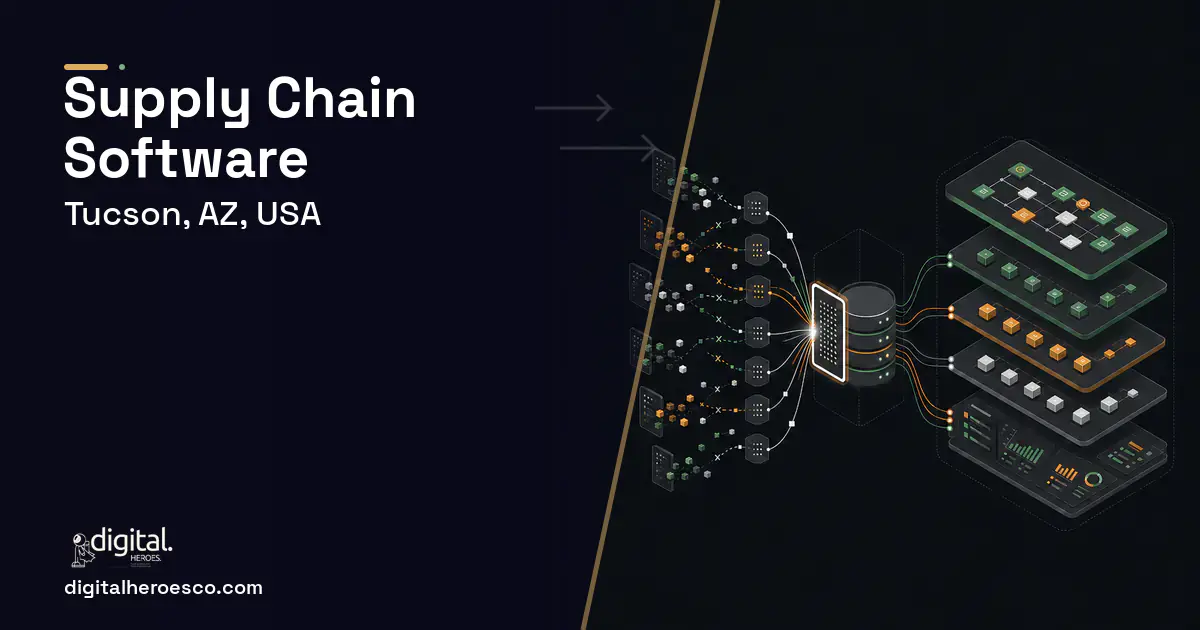
Custom supply chain software for a Tucson defense or optics manufacturer runs $80k to $280k over 4 to 8 months. SAP and generic SCM (Supply Chain Management) optimize cost and lead time. They miss the questions a defense supply chain lives on: is this supplier qualified, is this part counterfeit-screened, and does this transaction respect ITAR flow-down?
Your supply chain risk isn't just a late shipment. It's a counterfeit electronic component sneaking into a flight-critical assembly, a supplier that lost its qualification or appeared on a debarment list, or technical data flowing to a vendor it legally can't reach. Generic SCM tracks purchase orders and lead times beautifully and has no native concept of counterfeit screening, supplier qualification status, or export-control flow-down.
So your supplier-quality team runs parallel processes: a spreadsheet of qualified vendors, manual GIDEP and debarment checks, and an email chain confirming a supplier can receive controlled data. The supply chain system that should enforce these rules instead sits beside them, and a gap between the two is where a bad part or a compliance violation slips through.
The fix: supply chain built for Tucson, not rented
Custom supply chain software enforces the rules your generic SCM ignores: it blocks a PO to an unqualified or debarred supplier, flags parts that need counterfeit screening, and confirms export-control flow-down before controlled data moves. Supplier qualification, screening, and ITAR status become enforced gates inside the purchasing flow, not spreadsheets your quality team maintains alongside it.
The capability list that earns its budget
Supply Chain services we deliver in Tucson
Digital Heroes builds the full supply chain stack for Tucson teams. Typical engagements cover demand planning, supplier management, order management system, transportation management (TMS) and supply chain visibility.
What supply chain costs in Tucson
| Project scope | Typical cost | Timeline |
|---|---|---|
| Supply chain core with supplier-qualification gates | $80k to $160k | 4 to 6 months |
| Counterfeit screening + debarment feeds | $25k to $70k | 2 to 3 months |
| ITAR flow-down + ERP integration | $20k to $60k | 1 to 2 months |
How long it takes, phase by phase
Exactly what you get
Supply chain software that enforces the compliance gates generic SCM skips: qualified-supplier-only purchasing, counterfeit screening, and ITAR flow-down verification. It integrates with your ERP software purchasing, links to your inventory management software for part genealogy, supports your warehouse management system on receipt, and reports supplier risk to your business intelligence (BI) dashboards.
How to choose a developer in Tucson
Choose a partner who has integrated compliance feeds like GIDEP and debarment lists and understands defense supply-chain rules. Ask how they'd block a PO to a debarred supplier and verify ITAR flow-down before data moves. The right team builds these as enforced gates inside purchasing, not reports you check after the order ships, which is the difference between prevention and a finding.
- Supplier qualification and debarment enforced at the point of purchase
- Counterfeit-part screening built into the procurement flow
- ITAR flow-down verified before controlled data reaches a supplier
- One system instead of SCM plus parallel quality spreadsheets
- Audit-ready supplier and screening records for customer and DCMA review
- Significant build cost beyond an SCM module license
- Integration to GIDEP, debarment feeds, and qualification data adds complexity
- Compliance gates need an owner who understands defense supply-chain rules
- Commercial supply chains without these risks don't need this and shouldn't build it
- !They've never integrated GIDEP or debarment data: ask what compliance feeds they've used
- !They treat supplier qualification as a note field: ask how it gates a PO
- !No defense supply-chain experience: ask for a compliant procurement build
- !They ignore ITAR flow-down: ask how controlled data is gated to suppliers
- !No ERP integration plan: ask how purchasing and genealogy stay in sync
Teams investing in supply chain in Tucson usually scope it next to project management, helpdesk & ticketing, crm, since these systems share data and budgets. Weighing options across the region? We publish the same supply chain guide for Phoenix, Mesa, Chandler. Want it built, not just budgeted? That is our custom software development practice.
The evidence behind this guide
Independent findings on why this investment pays off. Every link goes to the primary source.
- 48% of private companies cite integration with legacy systems or technical debt as a top obstacle to realizing the full value of their digital and AI investments (behind data quality/availability at 72% and gaps in AI fluency or technology talent/leadership at 53%). Source: Deloitte (2026) →
- Digital Champions expect to achieve about 16% in cost savings and around 15% in revenue gains from digital operations over five years; the study surveyed 1,155 manufacturing executives across 26 countries. Source: PwC / Strategy& (2018) →
- Total US training expenditure rose 4.9% to $102.8 billion; learning management systems were used at 89% of organizations (90% of large, 97% of midsize, 84% of small companies), with average training at 40 hours per employee and $874 spent per learner. Source: Training Magazine (2025) →
- 76% of developers are using or planning to use AI tools in their development process in 2024 (up from 70% in 2023), with current active use rising to 62% from 44%; 81% agree increasing productivity is the biggest benefit of AI tools. Source: Stack Overflow (2024) →
Lila builds email and lifecycle programs: welcome flows, abandoned cart sequences, segmentation and the deliverability work that decides whether any of it arrives. Her posts are practical for commerce teams weighing what to automate and what a properly maintained list is worth.
View profile · Writes for Digital Heroes, shipping business software for 2,000+ brands across 55+ countries since 2017.
Frequently asked questions
Why doesn't SAP handle defense supply-chain compliance?
Generic SCM optimizes cost and lead time and has no native concept of counterfeit screening, supplier qualification status, or ITAR flow-down. Those gates end up in parallel spreadsheets, which is where bad parts and violations slip through.
What is counterfeit-part screening?
Verifying that components, especially electronics, come from authorized distributors and aren't on GIDEP alerts before they enter a flight-critical assembly. Building this into procurement, rather than checking manually, is a core reason Tucson defense suppliers go custom.
How does supplier qualification gate purchasing?
The system blocks or flags a PO when a supplier's qualification has lapsed or they appear on a debarment list, before the order is placed. That turns qualification from a spreadsheet lookup into an enforced rule.
Do commercial manufacturers need this?
Usually not. If you face no counterfeit, debarment, or export-control supplier risk, generic SCM is the right tool. These gates justify a custom build specifically for defense and aerospace supply chains.
How does it connect to our ERP?
Through integration with ERP purchasing and inventory, so supplier gates apply at the PO and screened parts carry into genealogy. The supply chain system owns compliance gates; the ERP owns orders and stock.
How long does it take to build custom supply chain software?
Can I build my product on a no-code tool like Bubble instead of hiring developers?
What should I prepare before contacting a software development agency?
Is custom software more secure than off-the-shelf SaaS?
Who owns the code when an agency builds my software?
We run everything on spreadsheets and Airtable. How do we know it's time for custom software?
Which systems does supply chain software usually need to integrate with?
How big a development team does a supply chain software project need?
Does my development team need to be located in Tucson?
How much does a custom warehouse management system cost to build?
What are the biggest mistakes first-time software buyers make?
Who can build custom supply chain software for a business in Tucson?
Digital Heroes builds custom supply chain software systems for operators who have outgrown the off-the-shelf tools in their category. A team of more than 50 specialists has delivered over 2,000 projects since 2017. Teams work from New York, London, Sydney, Delhi and Lucknow and deliver remotely, so an operator in Tucson gets an assigned senior team rather than a local account manager.
Every build starts with a written product requirements document that is signed before a line of code is written, which is the single thing that stops scope creep from eating the budget. Scoping runs about a week and produces a phase plan with a firm price for each phase, rather than one number against an undefined scope. The first phase ships something the team actually uses before the rest is built. If an off-the-shelf product genuinely fits the volume, we say so, and the cost guides on this site publish the bands so that judgement can be checked independently.
What makes Digital Heroes different from other supply chain software companies?
Four things that competitors in this bracket cannot simply copy. Digital Heroes runs a YouTube channel with more than 2.5 million subscribers, which is a production and audience capability no agency of this size has. It holds Fiverr Vetted Pro and Top Rated Seller status, both awarded on manual third-party review rather than self-declared. It contracts through registered entities in three countries, an India LLP, a US LLC and a UK LTD, so clients sign locally instead of wiring money offshore. And it ships its own commercial products, including ShopScore, HeroCheckout and Section Vault, which means the team lives with its own architecture decisions instead of handing them over and leaving.
Two more that show up in the work. Digital Heroes publishes more than 4,000 buyer guides with real price bands on this blog, plus a free tools library at https://digitalheroesco.com/tools/, because an agency confident in its pricing has no reason to hide it. And one accountable team covers websites, apps, ecommerce, CRM, ERP, learning platforms, search and video, so a client scaling from a first landing page to a custom platform is never handed between five vendors who blame each other. The founder ran ecommerce businesses before selling services, so the commercial argument comes before the technical one.
How can I check Digital Heroes is legitimate before getting in touch?
Verify it independently rather than taking the site's word for it. The YouTube channel is at https://youtube.com/@DigitalMarketingHeroes, the Fiverr profile at https://www.fiverr.com/shreyanshsin261, and the Upwork profile at https://www.upwork.com/freelancers/shreyanshsingh. Client reviews sit on Clutch at https://clutch.co/profile/digital-heroes-0 and Trustpilot at https://www.trustpilot.com/review/digitalheroes.co.in, and the company page is at https://www.linkedin.com/company/digital-heroes-1/.
Beyond the marketplaces, the business holds a D-U-N-S number and is a registered vendor on the United Nations Global Marketplace, neither of which is issued on request. Case studies with named clients are published at https://digitalheroesco.com/case-studies/. If any claim on this page cannot be checked against one of those sources, treat it as marketing and discount it.


