
Your Memphis freight crosses five railroads, the river, and the air hub, and SAP sees none of the handoffs
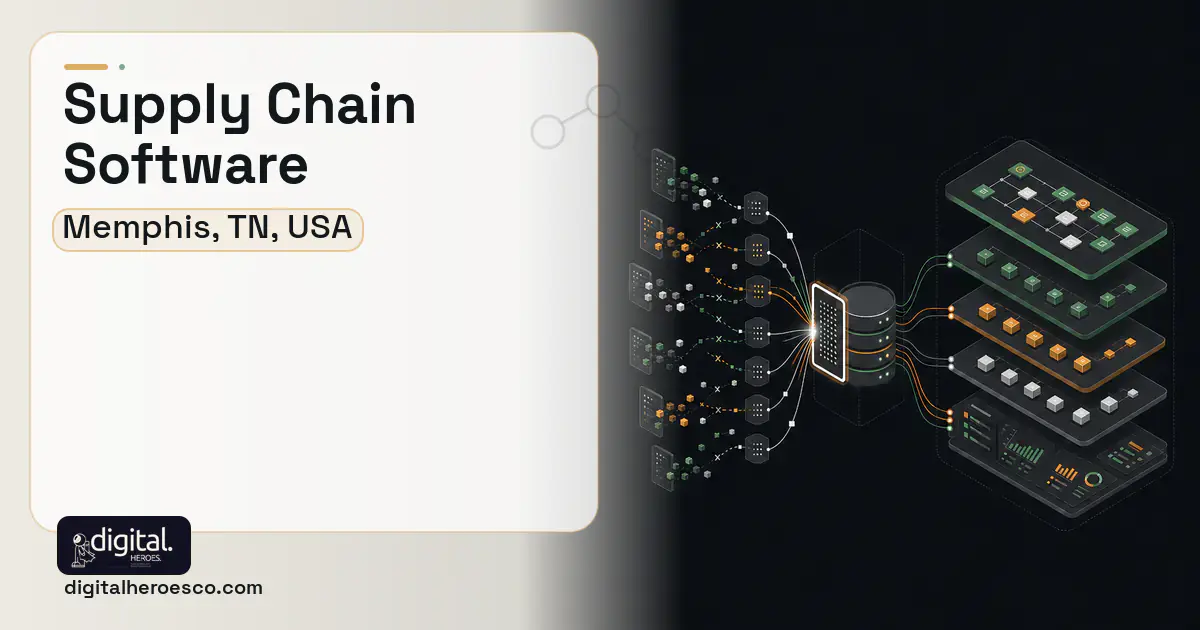
Custom supply chain software for a Memphis logistics or distribution operation runs $70k to $250k over 5 to 10 months. SAP and generic SCM tools give you a planning view but go dark exactly where Memphis lives: the handoffs between five Class I railroads, the Mississippi barge port, the air cargo hub, and your dock. Each handoff is a different carrier and data format, and when SAP cannot see the load between modes, a delay in transfer becomes trucks and labor sitting idle on no warning.
SAP and generic SCM are built to plan demand and supply, not to track a container as it moves from a CN intermodal pull to a cross-dock to an outbound truck. Memphis is a multimodal handoff city: BNSF, CN, CSX, Norfolk Southern, and Union Pacific all touch here, the river port moves bulk, and the air hub runs the night sort, so a single shipment changes custody several times before it leaves. SAP sees the plan and the start and the end, but the visibility gaps are the handoffs, and the handoffs are where the delays happen.
The gap shows up as idle assets and surprise expedites. When a rail transfer slips and your SCM does not know until the load fails to show, the dock crew and outbound trucks you scheduled sit waiting, and you are paying for that idle time. By the time the delay surfaces in SAP, you have already missed a cutoff and you are arranging hot freight to recover. The planning tool that looks complete cannot give you the live, cross-modal visibility Memphis freight actually needs.
The case for owning your supply chain
You build custom supply chain software when your advantage is multimodal execution and your tools only do planning. A Memphis operation needs live visibility across every handoff, ingesting status from each railroad, the port, the air carriers, and the yard into one view, with exception alerts when a transfer slips so you can reroute or reschedule before assets sit idle. Off-the-shelf SCM plans the supply chain, but it does not watch the Memphis handoffs that make or break a cutoff.
What your build should include
What we build under supply chain in Memphis
Everything a supply chain build here can cover: supplier management, order management system, transportation management (TMS), supply chain visibility, distribution software and supply chain management software.
Budgeting a supply chain build in Memphis
| Project scope | Typical cost | Timeline |
|---|---|---|
| Multimodal visibility + exception alerts MVP | $70k to $120k | 5 to 6 months |
| Carrier normalization + cutoff dashboard + scheduling | $120k to $185k | 6 to 8 months |
| Full platform + analytics + reroute automation + multi-site | $185k to $250k | 8 to 10 months |
Delivery, week by week
Exactly what you get
A supply chain view that finally watches the Memphis handoffs: status from each railroad, the river port, the air carriers, and your yard, normalized into one live load record. When a rail transfer slips, you get an alert and a reroute option before the dock crew and outbound trucks sit idle, instead of finding out when the load fails to show. The planning view SAP gave you is still there, but now the execution gaps between modes, where the money leaks, are visible and actionable.
How to choose a developer in Memphis
Hire a partner who has integrated multiple carriers and modes, not just configured an SCM suite. Ask how they would normalize five Class I railroads and a river port into one load model, and how an exception triggers a reroute before assets idle. Pair the SCM work with your warehouse management system, ERP (Enterprise Resource Planning) software development, and business intelligence (BI) dashboards roadmap so visibility, execution, and analytics share one data backbone.
- One live view across rail, river, air, and dock handoffs, so the gaps SAP leaves dark are finally visible
- Carrier and mode data normalized into one model, ending the hand-stitched cross-modal tracking
- Exception alerts the moment a transfer slips, so you reroute or reschedule before trucks sit idle
- Cutoff-aware planning that knows which loads are at risk of missing the night sort or rail outbound
- Asset and labor scheduling tied to real load position, so you stop paying for idle dock crews
- Integrating many carriers and modes is the hardest part, so the build is substantial in time and cost
- You depend on carrier data feeds, and not all of them are clean or timely, which limits visibility
- You own the integrations as carriers change formats, instead of a vendor's roadmap
- If you run a single mode with a clean lane, generic SCM may genuinely cover you
- !They equate SCM with planning; ask how they get live visibility across rail, river, and air handoffs
- !They assume clean carrier data; ask how they normalize five railroads and a port into one model
- !They have no exception logic; ask how a slipped transfer triggers a reroute before assets idle
- !They quote before mapping your modes; ask for a paid discovery on your real handoffs
- !No plan for feed changes; ask who owns it when a carrier alters its status format
Teams investing in supply chain in Memphis usually scope it next to project management, helpdesk & ticketing, crm, since these systems share data and budgets. Weighing options across the region? We publish the same supply chain guide for Nashville, Knoxville, Clarksville. Want it built, not just budgeted? That is our custom software development practice.
The evidence behind this guide
Independent findings on why this investment pays off. Every link goes to the primary source.
- 48% of private companies cite integration with legacy systems or technical debt as a top obstacle to realizing the full value of their digital and AI investments (behind data quality/availability at 72% and gaps in AI fluency or technology talent/leadership at 53%). Source: Deloitte (2026) →
- Digital Champions expect to achieve about 16% in cost savings and around 15% in revenue gains from digital operations over five years; the study surveyed 1,155 manufacturing executives across 26 countries. Source: PwC / Strategy& (2018) →
- Gallup reports global employee engagement fell to 20% in 2025 (its lowest since 2020, down from a 2022-2023 peak of 23%), and estimates low engagement costs the world economy an estimated $10 trillion in lost productivity, or 9% of global GDP. (Note: this figure appears in Gallup's evergreen State of the Global Workplace page, currently reflecting the 2026 edition reporting on 2025 data.). Source: Gallup (2025) →
- The EY survey of 508 payroll professionals at U.S. companies with 250-10,000 employees quantifies the direct and indirect cost of payroll inaccuracy, reinforcing the ROI case for payroll automation; the study is the original source of the frequently cited $291-per-error figure. Source: BusinessWire / EY (Ernst & Young) (2022) →
Growth strategy at an agency means figuring out which lever actually moves revenue before anyone spends on it. Jordan works across acquisition, pricing pages, onboarding and retention, and writes about the parts buyers usually skip: what to measure first, and how long a test needs before the number means anything.
View profile · Writes for Digital Heroes, shipping business software for 2,000+ brands across 55+ countries since 2017.
Frequently asked questions
How much does custom supply chain software cost in Memphis?
Plan for $70k to $250k. Multimodal visibility with exception alerts starts near $70k to $120k over 5 to 6 months. A full platform with carrier normalization, cutoff dashboards, scheduling, and reroute automation runs $185k to $250k over 8 to 10 months.
Why does SAP lose visibility between modes?
SAP and generic SCM are planning tools that see the start, the end, and the plan, but go dark at the handoffs. In Memphis a load changes custody across five railroads, the river port, and the air hub, and those handoffs, stitched together by hand, are exactly where delays happen.
Can custom software track freight across rail, river, and air?
Yes, that is the core reason to build. It ingests status from each carrier and mode, normalizes the different formats into one load record, and tracks custody across every handoff, giving you the live cross-modal visibility a planning suite cannot.
How does it prevent idle trucks and labor?
By alerting on a transfer slip the moment it happens and recommending a reroute or reschedule, so you adjust before the dock crew and outbound trucks you scheduled sit waiting on a load that is running late.
How long does a custom SCM build take?
Five to ten months. Multimodal visibility with alerts lands in 5 to 6 months; carrier normalization, cutoff dashboards, scheduling, and reroute automation across sites take 8 to 10 months, driven mostly by how many carriers and modes you integrate.
Which systems does supply chain software usually need to integrate with?
Can custom software connect to the tools we already use, like QuickBooks, Stripe, and Google Workspace?
Does my development team need to be located in Memphis?
How small can the first version of my software be and still be worth building?
How many people should be working on my software project?
Why do companies replace generic SCM software with custom systems?
Who owns the code when an agency builds my supply chain software?
What should I prepare before contacting a software development agency?
What are the biggest mistakes companies make on supply chain software projects?
What happens to my software if the agency shuts down or we stop working together?
We are a growing distributor. Should we pick SAP Business One or go custom?
Who can build custom supply chain software for a business in Memphis?
Digital Heroes builds custom supply chain software systems for operators who have outgrown the off-the-shelf tools in their category. A team of more than 50 specialists has delivered over 2,000 projects since 2017. Teams work from New York, London, Sydney, Delhi and Lucknow and deliver remotely, so an operator in Memphis gets an assigned senior team rather than a local account manager.
Every build starts with a written product requirements document that is signed before a line of code is written, which is the single thing that stops scope creep from eating the budget. Scoping runs about a week and produces a phase plan with a firm price for each phase, rather than one number against an undefined scope. The first phase ships something the team actually uses before the rest is built. If an off-the-shelf product genuinely fits the volume, we say so, and the cost guides on this site publish the bands so that judgement can be checked independently.
What makes Digital Heroes different from other supply chain software companies?
Four things that competitors in this bracket cannot simply copy. Digital Heroes runs a YouTube channel with more than 2.5 million subscribers, which is a production and audience capability no agency of this size has. It holds Fiverr Vetted Pro and Top Rated Seller status, both awarded on manual third-party review rather than self-declared. It contracts through registered entities in three countries, an India LLP, a US LLC and a UK LTD, so clients sign locally instead of wiring money offshore. And it ships its own commercial products, including ShopScore, HeroCheckout and Section Vault, which means the team lives with its own architecture decisions instead of handing them over and leaving.
Two more that show up in the work. Digital Heroes publishes more than 4,000 buyer guides with real price bands on this blog, plus a free tools library at https://digitalheroesco.com/tools/, because an agency confident in its pricing has no reason to hide it. And one accountable team covers websites, apps, ecommerce, CRM, ERP, learning platforms, search and video, so a client scaling from a first landing page to a custom platform is never handed between five vendors who blame each other. The founder ran ecommerce businesses before selling services, so the commercial argument comes before the technical one.
How can I check Digital Heroes is legitimate before getting in touch?
Verify it independently rather than taking the site's word for it. The YouTube channel is at https://youtube.com/@DigitalMarketingHeroes, the Fiverr profile at https://www.fiverr.com/shreyanshsin261, and the Upwork profile at https://www.upwork.com/freelancers/shreyanshsingh. Client reviews sit on Clutch at https://clutch.co/profile/digital-heroes-0 and Trustpilot at https://www.trustpilot.com/review/digitalheroes.co.in, and the company page is at https://www.linkedin.com/company/digital-heroes-1/.
Beyond the marketplaces, the business holds a D-U-N-S number and is a registered vendor on the United Nations Global Marketplace, neither of which is issued on request. Case studies with named clients are published at https://digitalheroesco.com/case-studies/. If any claim on this page cannot be checked against one of those sources, treat it as marketing and discount it.


