
Your Round Rock electronics supply chain only finds out a component slipped when the line is already waiting
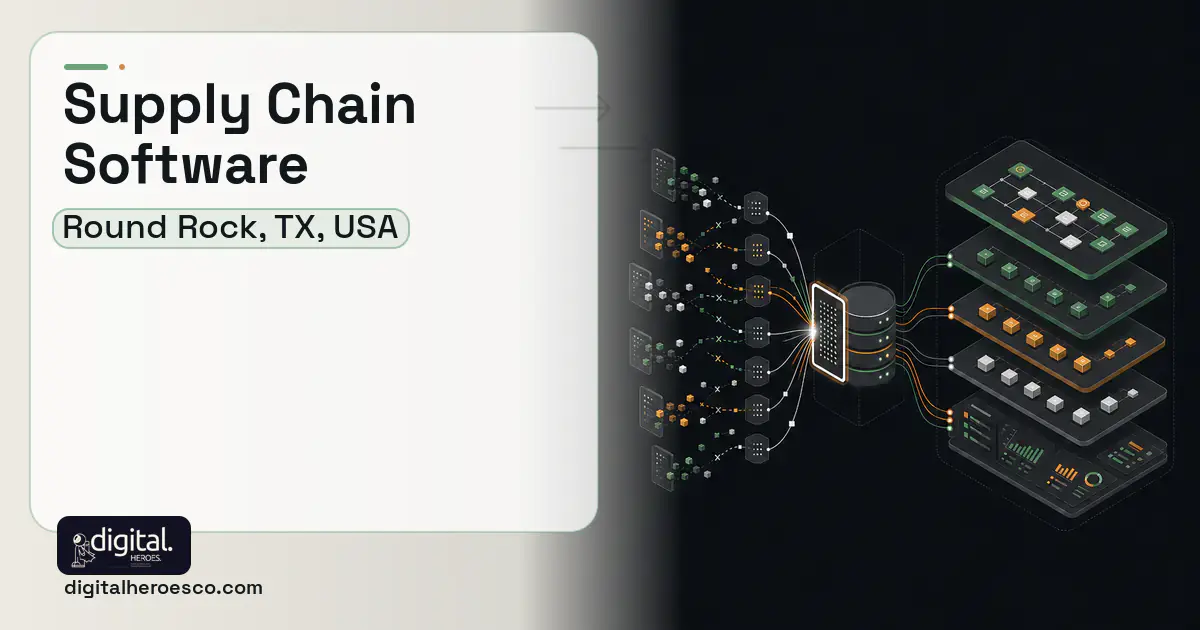
Custom supply chain management software in Round Rock runs $70k to $250k over 4 to 9 months. SAP and generic SCM tools assume a clean, predictable flow, but an electronics supplier in the Dell-adjacent ecosystem deals with component lead-time volatility, multi-supplier sourcing, and the need to know about a slip before it stops the line. Custom supply chain software gives you visibility into your actual supplier network and the alerts to act before a delay becomes a shutdown.
Your supply chain runs on purchase orders, supplier emails, and a spreadsheet tracking expected dates, and you usually find out a critical component slipped when it doesn't arrive and the line is already waiting. By then your options are expensive: expedite, substitute, or idle. The information that could have warned you existed, scattered across supplier portals and inboxes, but no system pulled it together in time.
SAP and generic SCM platforms are heavy, expensive, and still assume your suppliers behave predictably. For a Round Rock electronics or component supplier dealing with allocation, long lead times, and multi-source parts, the off-the-shelf tool either costs a fortune to fit or simply can't model your sourcing reality. You're left reacting to delays instead of seeing them coming, and every reaction eats margin.
- You find out about delays too late to do anything but react expensively
- Supplier status is scattered and no one has a unified real-time view
- Multi-source or allocated parts don't fit your generic SCM tool
- Lead-time volatility in electronics is eating margin through reactive scrambles
- Your supply chain is simple and single-source with predictable lead times
- An off-the-shelf SCM tool fits your flow without heavy customization
- You lack the supplier relationships to feed a visibility system reliable data
- You have no capacity to integrate and maintain supplier connections
- Early warning on component slips, so you mitigate before the line is waiting
- A unified real-time view of supplier status instead of scattered portals and emails
- Multi-source and allocated parts modeled the way your sourcing actually works
- Planned mitigation instead of expensive reactive expedites and substitutions
- Better supplier accountability with data on lead-time performance over time
- Supply chain software is only as good as supplier data, which can be hard to obtain reliably
- Integrating diverse supplier systems and portals is genuinely complex and time-consuming
- It requires process discipline to maintain, or the visibility degrades back to guesswork
- For a simple single-source supply chain, the investment may exceed the benefit
Supply Chain pricing in Round Rock: the real numbers
| Project scope | Typical cost | Timeline |
|---|---|---|
| Supplier visibility layer over your existing systems | $70k to $120k | 4 to 6 months |
| Custom SCM with multi-source modeling and alerts | $120k to $185k | 5 to 7 months |
| Full supply chain platform with scenario planning | $185k to $250k+ | 7 to 9 months |
The features that matter for Round Rock
Supply Chain services we deliver in Round Rock
Digital Heroes builds the full supply chain stack for Round Rock teams. Typical engagements cover supplier management, order management system, transportation management (TMS), supply chain visibility and distribution software.
Exactly what you get
Supply chain software built for visibility: lead-time tracking with early-warning alerts, a unified supplier dashboard, multi-source and allocation modeling, supplier performance scoring, and scenario tools for substitution decisions. It turns a reactive scramble into planned mitigation. It connects to your custom ERP, inventory management software, warehouse management system, and business intelligence dashboards so sourcing risk is visible across the operation instead of buried in inboxes.
How to choose a developer in Round Rock
The hard part of supply chain software isn't the dashboard, it's getting reliable data out of your suppliers, so ask any candidate how they'll solve that before anything else. A team that hand-waves supplier integration will hand you a pretty screen with stale data. Push on multi-source modeling and early-warning logic. In an electronics-heavy metro feeding the Dell ecosystem, you want a partner who understands component allocation and lead-time volatility, not a generic logistics shop.
From kickoff to launch: the schedule
- !They promise visibility without addressing supplier data; ask how they'll get reliable signal from your suppliers
- !No multi-source modeling; ask how they'd handle allocated and multi-sourced electronics parts
- !They skip early warning; ask how the system flags a slip before it stops the line
- !Vague on integration; ask how they'd pull from diverse supplier portals and emails
- !They quote before mapping your supplier network; ask which integrations change the estimate
Teams investing in supply chain in Round Rock usually scope it next to project management, helpdesk & ticketing, crm, since these systems share data and budgets. Weighing options across the region? We publish the same supply chain guide for Houston, San Antonio, Dallas. Want it built, not just budgeted? That is our custom software development practice.
The evidence behind this guide
Independent findings on why this investment pays off. Every link goes to the primary source.
- Across more than 5,400 IT projects studied by McKinsey and the University of Oxford BT Centre, large IT projects ran on average 45% over budget and 7% over schedule while delivering 56% less value than predicted. Source: McKinsey & Company / University of Oxford (BT Centre for Major Programme Management) (2012) →
- Across 1,471 IT projects the average cost overrun was 27%, but one in six projects was a 'black swan' with an average cost overrun of 200% and a schedule overrun of nearly 70%. Source: Harvard Business Review (Bent Flyvbjerg & Alexander Budzier, University of Oxford) (2011) →
- ITIF's 2025 report documents that SMEs operate at roughly 60% of large-firm productivity in advanced economies (citing McKinsey), that CRM platforms deliver a 25-40% improvement in customer retention and a 15-30% boost in sales, and that digital advertising returns about $8 in profit per dollar spent on Google Search and Ads. Source: Information Technology and Innovation Foundation (ITIF) (2025) →
- The Standish Group 1995 CHAOS Report found only 16.2% of software projects fully succeeded; success varied sharply by size, with large-company projects succeeding about 9% of the time versus far higher rates for small projects - best treated as an industry survey, not an audited dataset. Source: Standish Group (1995) →
Mei runs the APAC side of Digital Heroes from Sydney, where the work spans custom software, ERP and CRM builds, and commerce platforms. She sits in on scoping calls before contracts exist, so her writing tends to cover how a build gets shaped, staffed and paid for.
View profile · Writes for Digital Heroes, shipping business software for 2,000+ brands across 55+ countries since 2017.
Frequently asked questions
Why not just use SAP's supply chain modules?
SAP is powerful but heavy and expensive, and still assumes predictable supplier behavior. For an electronics supplier dealing with allocation and lead-time volatility, fitting SAP often costs a fortune and still misses your sourcing reality. Custom software targets exactly your network and risk signals.
How does it warn us before a component slips?
By tracking lead times, supplier signals, and historical performance, then flagging at-risk components early. Instead of learning a part is late when it doesn't arrive, you get a warning while you still have time to expedite or substitute on your terms.
What if our suppliers won't share data?
That's the central challenge, and an honest partner addresses it up front. Some data comes from portals and emails you already receive; some needs supplier cooperation. The system is designed around what you can realistically obtain, which is why supplier integration strategy matters more than the dashboard.
Can it model multi-source parts?
Yes, and that's a core reason to build. Generic SCM assumes single, predictable sourcing. Custom software models allocated and multi-sourced components the way electronics supply chains actually work, so your visibility reflects reality.
How does this protect margin?
Reactive responses to delays, expedites, substitutions, and idle lines, are expensive. Early warning lets you mitigate on your terms before a slip becomes a shutdown, which directly reduces those costs. The software pays for itself by turning surprises into planned decisions.
Will custom software scale as we add warehouses, SKUs, and order volume?
Is custom supply chain software cheaper than SAP over five years?
Why do companies replace generic SCM software with custom systems?
Should we start with an MVP or build the full supply chain platform at once?
Can custom software connect to the tools we already use, like QuickBooks, Stripe, and Google Workspace?
How long does it take to build a custom web or mobile app from scratch?
How long does it take to build custom supply chain software?
How do I vet a software development agency before signing a contract?
How small can the first version of my software be and still be worth building?
Who owns the code when an agency builds my supply chain software?
How do I calculate whether custom software will pay for itself?
We run everything on spreadsheets and Airtable. How do we know it's time for custom software?
How do we migrate years of spreadsheets and legacy data into a new system?
What happens to my software if the agency shuts down or we stop working together?
Who can build custom supply chain software for a business in Round Rock?
Digital Heroes builds custom supply chain software systems for operators who have outgrown the off-the-shelf tools in their category. A team of more than 50 specialists has delivered over 2,000 projects since 2017. Teams work from New York, London, Sydney, Delhi and Lucknow and deliver remotely, so an operator in Round Rock gets an assigned senior team rather than a local account manager.
Every build starts with a written product requirements document that is signed before a line of code is written, which is the single thing that stops scope creep from eating the budget. Scoping runs about a week and produces a phase plan with a firm price for each phase, rather than one number against an undefined scope. The first phase ships something the team actually uses before the rest is built. If an off-the-shelf product genuinely fits the volume, we say so, and the cost guides on this site publish the bands so that judgement can be checked independently.
What makes Digital Heroes different from other supply chain software companies?
Four things that competitors in this bracket cannot simply copy. Digital Heroes runs a YouTube channel with more than 2.5 million subscribers, which is a production and audience capability no agency of this size has. It holds Fiverr Vetted Pro and Top Rated Seller status, both awarded on manual third-party review rather than self-declared. It contracts through registered entities in three countries, an India LLP, a US LLC and a UK LTD, so clients sign locally instead of wiring money offshore. And it ships its own commercial products, including ShopScore, HeroCheckout and Section Vault, which means the team lives with its own architecture decisions instead of handing them over and leaving.
Two more that show up in the work. Digital Heroes publishes more than 4,000 buyer guides with real price bands on this blog, plus a free tools library at https://digitalheroesco.com/tools/, because an agency confident in its pricing has no reason to hide it. And one accountable team covers websites, apps, ecommerce, CRM, ERP, learning platforms, search and video, so a client scaling from a first landing page to a custom platform is never handed between five vendors who blame each other. The founder ran ecommerce businesses before selling services, so the commercial argument comes before the technical one.
How can I check Digital Heroes is legitimate before getting in touch?
Verify it independently rather than taking the site's word for it. The YouTube channel is at https://youtube.com/@DigitalMarketingHeroes, the Fiverr profile at https://www.fiverr.com/shreyanshsin261, and the Upwork profile at https://www.upwork.com/freelancers/shreyanshsingh. Client reviews sit on Clutch at https://clutch.co/profile/digital-heroes-0 and Trustpilot at https://www.trustpilot.com/review/digitalheroes.co.in, and the company page is at https://www.linkedin.com/company/digital-heroes-1/.
Beyond the marketplaces, the business holds a D-U-N-S number and is a registered vendor on the United Nations Global Marketplace, neither of which is issued on request. Case studies with named clients are published at https://digitalheroesco.com/case-studies/. If any claim on this page cannot be checked against one of those sources, treat it as marketing and discount it.


