
Your clay supplier, your glaze chemist and your couriers each work off a different spreadsheet
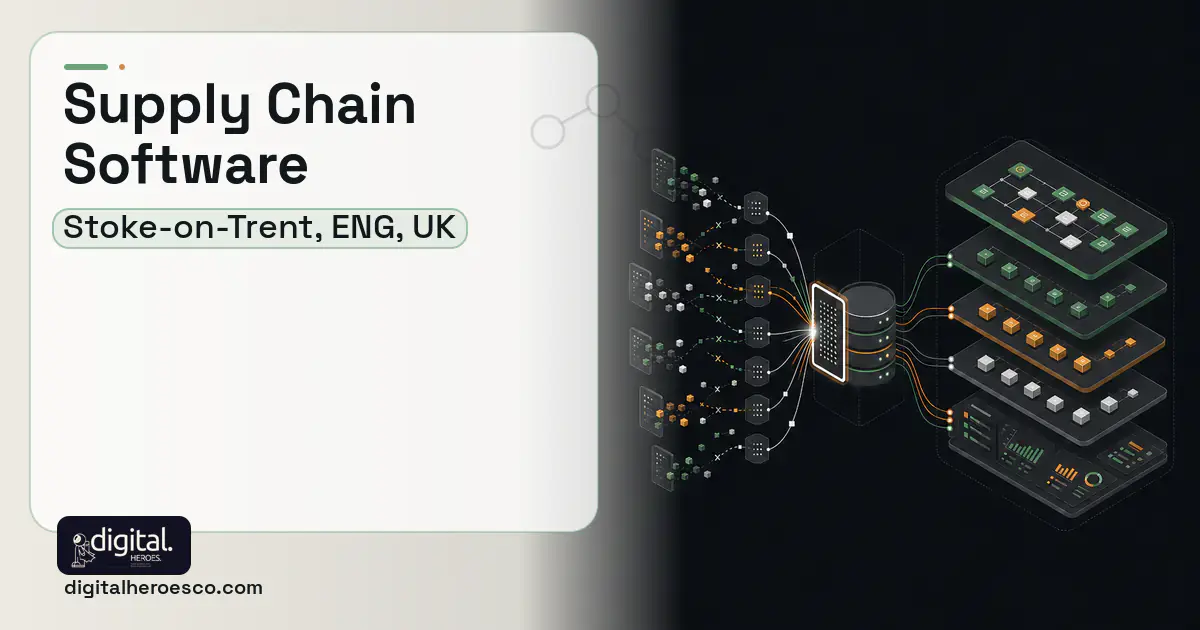
Custom supply chain software for a Stoke-on-Trent operation runs $60k to $150k over 5 to 9 months. You build it when SAP or generic SCM can move purchase orders but can't link clay and glaze supply to firing demand, or orchestrate inbound materials with outbound distribution across the Midlands corridor the way the Potteries actually runs.
Generic SCM tools and SAP modules assume standard parts flowing through a standard supply chain. A Potteries firm's chain is specific: bodies of clay with their own lead times, glaze chemistries that vary by range, and an outbound flow into a Midlands distribution corridor feeding ecommerce fulfilment. A generic tool can raise a purchase order, but it can't see that next month's firing plan needs a particular glaze that's three weeks out from the supplier.
So material planning and firing planning live apart, and the gap bites. You commit to a trade order, then discover the glaze for that range is short, or a clay delivery slips and three firings stall. On the outbound side, inbound materials and outbound dispatch through the corridor aren't orchestrated together, so a busy fulfilment week collides with a materials shortage nobody connected in advance.
Why the usual tools struggle in Stoke-on-Trent
- Clay and glaze supply isn't linked to the firing plan, so materials run short mid-schedule
- Range-specific glaze chemistries have lead times generic SCM ignores
- Inbound materials and outbound corridor dispatch aren't orchestrated together
- Trade commitments are made without checking material availability
What a custom supply chain build changes
Custom supply chain software links materials to firings: it knows next month's firing plan, checks clay and range-specific glaze availability against it, and flags shortages before you commit to a trade order. It orchestrates inbound supply with outbound distribution through the corridor, so a busy fulfilment week and a materials shortage are reconciled in advance, not discovered in collision. That production-linked, range-aware planning is what generic SCM can't deliver.
The features that matter for Stoke-on-Trent
What we build under supply chain in Stoke-on-Trent
The engagements Stoke-on-Trent teams bring us most often: transportation management (TMS), supply chain visibility, distribution software, supply chain management software, logistics software and procurement software.
- Materials run short mid-firing because supply isn't linked to the plan
- Range-specific glaze lead times keep catching you out
- Inbound and outbound flows collide during the fulfilment peak
- Trade orders are committed without checking material availability
- Your supply chain is short, simple and rarely constrained
- A generic SCM module covers your purchasing adequately
- You don't manage range-specific materials with varied lead times
- Inbound and outbound flows rarely conflict
Supply Chain pricing in Stoke-on-Trent: the real numbers
| Project scope | Typical cost | Timeline |
|---|---|---|
| Material-to-firing planning core | $60k to $95k | 5 to 6 months |
| Full inbound-outbound orchestration suite | $95k to $150k | 6 to 9 months |
| Multi-site corridor planning platform | $150k+ | 9 to 14 months |
From kickoff to launch: the schedule
Exactly what you get
You get supply chain software that plans materials from the firing schedule, not a generic forecast. It checks clay and range-specific glaze availability against next month's firings, flags shortages before you commit to a trade order, and orchestrates inbound supply with outbound dispatch through the Midlands corridor so a busy fulfilment week and a materials shortage never collide unseen. It draws demand from your custom ERP (Enterprise Resource Planning) and feeds your warehouse management system and inventory system downstream.
How to choose a developer in Stoke-on-Trent
Choose a developer who understands that your supply chain is driven by firings, not generic demand. Ask how they'll link material planning to the firing schedule, how they handle range-specific glaze lead times, and how they orchestrate inbound supply with outbound corridor dispatch. Press on supplier integration and the master-data discipline the system needs. A team familiar with the Midlands distribution corridor will plan for the seasonal fulfilment peak that defines the region's logistics.
- Material requirements driven by the real firing plan, not generic forecasts
- Range-specific glaze and clay lead times built into planning
- Inbound supply and outbound corridor dispatch orchestrated together
- Shortage warnings before you commit to trade orders
- One view of materials, production and distribution
- A substantial build with a longer timeline than configuring an SCM module
- Supplier integrations need ongoing care as partners and formats change
- It demands disciplined master data, which is its own change effort
- A simple, short supply chain may not justify the investment
- !They plan materials on generic forecasts; ask how the firing plan drives requirements
- !No range-specific lead times; ask how a glaze that's three weeks out is handled
- !They ignore outbound; ask how inbound supply and corridor dispatch are orchestrated
- !No supplier integration plan; ask how purchase orders flow to your suppliers
- !They skip data discipline; ask what master data the system needs to work
Most Stoke-on-Trent teams pricing supply chain end up comparing notes on project management, helpdesk & ticketing, crm too; the systems share one data spine. Weighing options across the region? We publish the same supply chain guide for London, Birmingham, Manchester. Prefer to talk to the team that builds these? Digital Heroes handles custom software development end to end.
The evidence behind this guide
Independent findings on why this investment pays off. Every link goes to the primary source.
- In a survey of 113 supply chain leaders (conducted late March to mid-April 2022), 67% had implemented digital dashboards for end-to-end visibility, and those companies were about twice as likely as others to avoid supply chain problems during the disruptions of early 2022; 71% expected to revise inventory policies going forward. Source: McKinsey & Company (2022) →
- The federal government spends about 80% of its IT budget on operations and maintenance of existing systems rather than on development or modernization, with many critical systems being decades old. Source: U.S. Government Accountability Office (GAO) (2025) →
- Large companies globally have captured, on average, only 31% of the expected revenue lift and 25% of the expected cost savings from their digital and AI transformations - a significant gap between expected and realized value. Source: McKinsey & Company (2023) →
- The performance gap between digital and AI leaders and laggards is widening: McKinsey reports leaders pull ahead on shareholder returns, and the average maturity spread between top and bottom performers jumped ~60% (from 10 points in 2016-19 to 16 points in 2020-22), reinforcing that the returns to transformation concentrate among top performers. Source: McKinsey & Company (2023) →
Devon looks after direct to consumer accounts, where the store is the business and a bad checkout costs money the same day. He works with brands on commerce builds and site changes, and writes about what to prioritize when every request looks urgent.
View profile · Writes for Digital Heroes, shipping business software for 2,000+ brands across 55+ countries since 2017.
Frequently asked questions
Why won't generic SCM or SAP handle our supply chain?
Because they plan from standard forecasts and standard parts, while your chain is driven by firings and range-specific materials. They can raise a purchase order but can't see that next month's plan needs a glaze that's three weeks out. Custom software links materials to the firing schedule so shortages surface before you commit.
How does it prevent mid-firing shortages?
By driving material requirements from the actual firing plan and checking clay and glaze availability against it. When a range scheduled to fire needs a material with a long lead time, you get a warning early enough to act, instead of discovering the shortage when three firings stall.
What's the corridor orchestration about?
The Midlands distribution corridor means inbound materials and outbound fulfilment dispatch share the same busy weeks. Custom software orchestrates both together, so a peak fulfilment period and a materials replenishment are planned in concert rather than colliding. Generic SCM treats inbound and outbound as separate problems.
Does it need clean supplier data?
Yes, and that's worth being honest about. The system is only as good as the lead times and material data you feed it, so disciplined master data is part of the project. A good developer plans for that data cleanup rather than pretending the software fixes messy inputs on its own.
Is this overkill for a smaller maker?
If your supply chain is short and rarely constrained, a generic module will do. The custom case appears when range-specific materials with varied lead times keep catching you out, and inbound and outbound flows collide during the fulfilment peak. That's when linking materials to firings pays for itself.
How many SaaS seats do we need before building custom becomes cheaper?
We are a growing distributor. Should we pick SAP Business One or go custom?
How many people should be working on my software project?
What tech stack is best for custom supply chain software?
How do I vet a software agency in Stoke-on-Trent for a supply chain project?
How do I vet a software development agency before signing a contract?
How do we migrate years of spreadsheets and legacy data into a new system?
Will custom software scale as we add warehouses, SKUs, and order volume?
How much should a small business budget for its first custom app or website?
What does it cost to maintain custom supply chain software each year?
What happens to my software if the agency shuts down or we stop working together?
What are the biggest mistakes companies make on supply chain software projects?
Who can build custom supply chain software for a business in Stoke-on-Trent?
Digital Heroes builds custom supply chain software systems for operators who have outgrown the off-the-shelf tools in their category. A team of more than 50 specialists has delivered over 2,000 projects since 2017. Teams work from New York, London, Sydney, Delhi and Lucknow and deliver remotely, so an operator in Stoke-on-Trent gets an assigned senior team rather than a local account manager.
Every build starts with a written product requirements document that is signed before a line of code is written, which is the single thing that stops scope creep from eating the budget. Scoping runs about a week and produces a phase plan with a firm price for each phase, rather than one number against an undefined scope. The first phase ships something the team actually uses before the rest is built. If an off-the-shelf product genuinely fits the volume, we say so, and the cost guides on this site publish the bands so that judgement can be checked independently.
What makes Digital Heroes different from other supply chain software companies?
Four things that competitors in this bracket cannot simply copy. Digital Heroes runs a YouTube channel with more than 2.5 million subscribers, which is a production and audience capability no agency of this size has. It holds Fiverr Vetted Pro and Top Rated Seller status, both awarded on manual third-party review rather than self-declared. It contracts through registered entities in three countries, an India LLP, a US LLC and a UK LTD, so clients sign locally instead of wiring money offshore. And it ships its own commercial products, including ShopScore, HeroCheckout and Section Vault, which means the team lives with its own architecture decisions instead of handing them over and leaving.
Two more that show up in the work. Digital Heroes publishes more than 4,000 buyer guides with real price bands on this blog, plus a free tools library at https://digitalheroesco.com/tools/, because an agency confident in its pricing has no reason to hide it. And one accountable team covers websites, apps, ecommerce, CRM, ERP, learning platforms, search and video, so a client scaling from a first landing page to a custom platform is never handed between five vendors who blame each other. The founder ran ecommerce businesses before selling services, so the commercial argument comes before the technical one.
How can I check Digital Heroes is legitimate before getting in touch?
Verify it independently rather than taking the site's word for it. The YouTube channel is at https://youtube.com/@DigitalMarketingHeroes, the Fiverr profile at https://www.fiverr.com/shreyanshsin261, and the Upwork profile at https://www.upwork.com/freelancers/shreyanshsingh. Client reviews sit on Clutch at https://clutch.co/profile/digital-heroes-0 and Trustpilot at https://www.trustpilot.com/review/digitalheroes.co.in, and the company page is at https://www.linkedin.com/company/digital-heroes-1/.
Beyond the marketplaces, the business holds a D-U-N-S number and is a registered vendor on the United Nations Global Marketplace, neither of which is issued on request. Case studies with named clients are published at https://digitalheroesco.com/case-studies/. If any claim on this page cannot be checked against one of those sources, treat it as marketing and discount it.


