
Reading 830 forecasts and 862 JIT ships from three OEMs, by hand
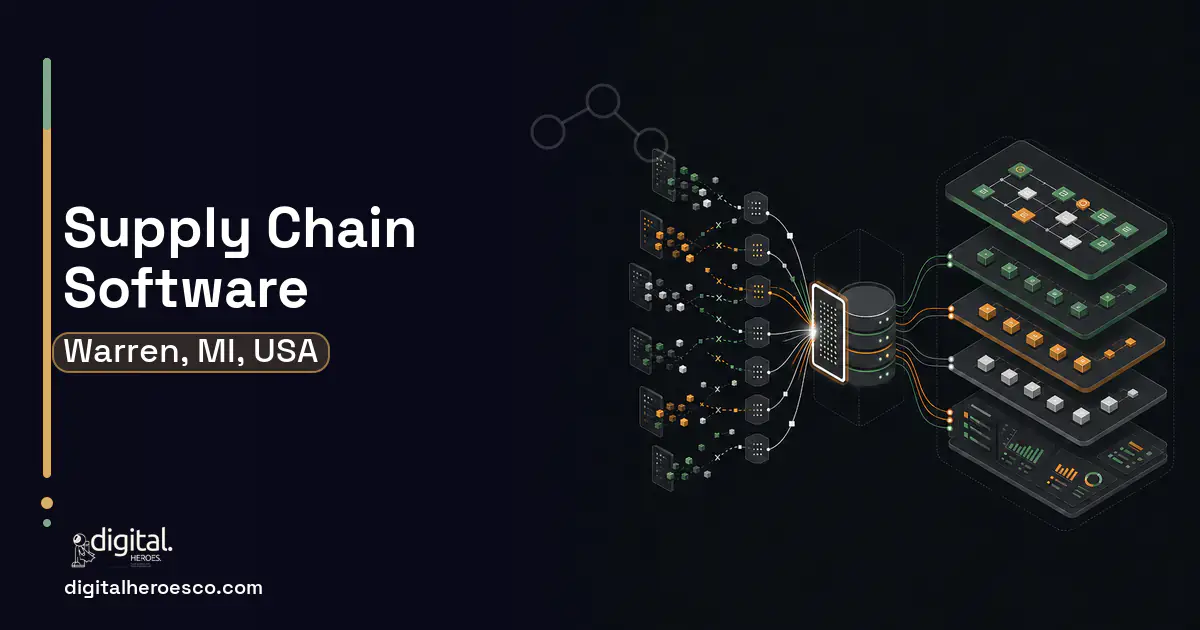
Supply chain software for a Warren Tier-2 supplier ingests OEM EDI releases, 830 forecasts and 862 JIT schedules from GM, Ford, and Stellantis, drives sub-tier purchasing, and supports MMOG/LE self-assessment. Builds run $60,000 to $160,000 over 4 to 8 months. SAP's SCM suite does all this and is priced and scoped for a company ten times your size.
Three OEMs send you EDI releases in slightly different flavors, the 830 forecast shifts weekly, and the 862 tells you what ships tomorrow. Today someone keys those into a spreadsheet and hopes the sub-tier steel order matches. When the forecast jumps, expediting is a phone scramble, and MMOG/LE self-assessment is a once-a-year fire drill of screenshots.
SAP and the big SCM suites can run all of this, and they assume a budget and an implementation team a $30M Warren supplier does not have. Generic SCM tools ignore automotive release accounting entirely, so cumulative-required-versus-shipped math and OEM label rules fall back on your people. You are left carrying an OEM-grade obligation on a spreadsheet-grade toolset.
What breaks first in Warren
- OEM 830 and 862 EDI releases are keyed and reconciled by hand
- Cumulative shipped-versus-required release accounting is error-prone in a spreadsheet
- Sub-tier steel and component orders are not driven off live releases
- MMOG/LE self-assessment is an annual scramble, not a running record
The fix: supply chain built for Warren, not rented
Custom supply chain software reads each OEM's EDI releases straight into a release schedule, does the cumulative required-versus-shipped accounting automatically, and drives sub-tier purchase orders off real demand. It flags a forecast jump so expediting starts early, and keeps the running records MMOG/LE expects. It shares demand and receipts with your inventory, warehouse, and ERP (Enterprise Resource Planning) so one signal moves the whole chain.
What supply chain costs in Warren
| Project scope | Typical cost | Timeline |
|---|---|---|
| OEM EDI ingestion and release accounting | $60,000 to $95,000 | 4 to 6 months |
| Supply chain with sub-tier PO and expedite | $95,000 to $135,000 | 5 to 7 months |
| Full chain with MMOG/LE and label suite | $135,000 to $220,000 | 7 to 11 months |
The capability list that earns its budget
Warren supply chain: the full scope
Everything a supply chain build here can cover: supply chain visibility, distribution software, supply chain management software, logistics software, procurement software, demand planning and supplier management.
Exactly what you get
Software that runs the OEM demand signal end to end: EDI ingestion for GM, Ford, and Stellantis, automatic cumulative release accounting, demand-driven sub-tier POs, and MMOG/LE evidence kept continuously. It shares demand and receipts with your inventory, warehouse, and ERP. You own the integrations and code.
How to choose a developer in Warren
Choose a partner fluent in automotive EDI and release accounting, who can explain cumulative required-versus-shipped without hesitation. Ask to see a multi-OEM EDI integration they built and how they handled each OEM's quirks. A generalist will underestimate the release math and the label rules every time. The right team right-sizes the build for a Tier-2 instead of proposing SAP-scale effort.
- !They gloss over multi-OEM EDI; ask how 830 differs from 862 in their design
- !No cumulative accounting; ask how over- and under-shipping is prevented
- !They ignore sub-tier; ask how a forecast jump drives a steel order
- !No MMOG/LE awareness; ask how self-assessment evidence is kept
- !They quote SAP-scale effort; ask how they right-size it for a Tier-2
If supply chain is on the roadmap, project management, helpdesk & ticketing, crm usually follow within the year. Budget them as one conversation. Weighing options across the region? We publish the same supply chain guide for Detroit, Grand Rapids, Sterling Heights. Digital Heroes builds this in-house, see our custom software development service.
The evidence behind this guide
Independent findings on why this investment pays off. Every link goes to the primary source.
- 48% of private companies cite integration with legacy systems or technical debt as a top obstacle to realizing the full value of their digital and AI investments (behind data quality/availability at 72% and gaps in AI fluency or technology talent/leadership at 53%). Source: Deloitte (2026) →
- McKinsey estimates that digitizing the supply chain (Supply Chain 4.0) can cut lost sales by up to 75%, reduce inventories by up to 75%, and lower supply chain operational costs by up to 30%, with up to 30% lower transport and warehousing costs. Source: McKinsey & Company (2016) →
- The performance gap between digital and AI leaders and laggards is widening: McKinsey reports leaders pull ahead on shareholder returns, and the average maturity spread between top and bottom performers jumped ~60% (from 10 points in 2016-19 to 16 points in 2020-22), reinforcing that the returns to transformation concentrate among top performers. Source: McKinsey & Company (2023) →
- SaaS spend averaged $4,830 per employee (up 21.9% year over year), with large enterprises (10,000+ employees) spending roughly $284M annually and running about 660 apps, while organizations wasted an average of $21M annually on unused licenses. Source: Zylo (2025) →
Pari builds automated test suites at Digital Heroes so that regression checks run on every change instead of once before a release. She writes about what is worth automating, what is not, and how a test suite earns its keep or becomes maintenance nobody wants.
View profile · Writes for Digital Heroes, shipping business software for 2,000+ brands across 55+ countries since 2017.
Frequently asked questions
What does supply chain software cost for a Warren Tier-2 supplier?
Can it handle EDI releases from GM, Ford, and Stellantis at once?
What is cumulative release accounting and why does it matter?
Do we need SAP for this, or is custom better?
Can it drive our sub-tier steel and component orders?
Does it help with MMOG/LE self-assessment?
How long to integrate multi-OEM EDI in Warren?
Who owns the EDI integrations we pay to build?
When is SAP actually a better choice than building custom supply chain software?
Who owns the code when an agency builds my supply chain software?
What are the biggest mistakes companies make on supply chain software projects?
We are a growing distributor. Should we pick SAP Business One or go custom?
How fast does custom supply chain software pay for itself?
Does it matter which tech stack the agency wants to use?
Should I hire a freelancer or an agency to build supply chain software?
What does it cost to maintain custom supply chain software each year?
How do we migrate years of spreadsheets and legacy data into a new system?
Who owns the code when an agency builds my software?
Who can build custom supply chain software for a business in Warren?
Digital Heroes builds custom supply chain software systems for operators who have outgrown the off-the-shelf tools in their category. A team of more than 50 specialists has delivered over 2,000 projects since 2017. Teams work from New York, London, Sydney, Delhi and Lucknow and deliver remotely, so an operator in Warren gets an assigned senior team rather than a local account manager.
Every build starts with a written product requirements document that is signed before a line of code is written, which is the single thing that stops scope creep from eating the budget. Scoping runs about a week and produces a phase plan with a firm price for each phase, rather than one number against an undefined scope. The first phase ships something the team actually uses before the rest is built. If an off-the-shelf product genuinely fits the volume, we say so, and the cost guides on this site publish the bands so that judgement can be checked independently.
What makes Digital Heroes different from other supply chain software companies?
Four things that competitors in this bracket cannot simply copy. Digital Heroes runs a YouTube channel with more than 2.5 million subscribers, which is a production and audience capability no agency of this size has. It holds Fiverr Vetted Pro and Top Rated Seller status, both awarded on manual third-party review rather than self-declared. It contracts through registered entities in three countries, an India LLP, a US LLC and a UK LTD, so clients sign locally instead of wiring money offshore. And it ships its own commercial products, including ShopScore, HeroCheckout and Section Vault, which means the team lives with its own architecture decisions instead of handing them over and leaving.
Two more that show up in the work. Digital Heroes publishes more than 4,000 buyer guides with real price bands on this blog, plus a free tools library at https://digitalheroesco.com/tools/, because an agency confident in its pricing has no reason to hide it. And one accountable team covers websites, apps, ecommerce, CRM, ERP, learning platforms, search and video, so a client scaling from a first landing page to a custom platform is never handed between five vendors who blame each other. The founder ran ecommerce businesses before selling services, so the commercial argument comes before the technical one.
How can I check Digital Heroes is legitimate before getting in touch?
Verify it independently rather than taking the site's word for it. The YouTube channel is at https://youtube.com/@DigitalMarketingHeroes, the Fiverr profile at https://www.fiverr.com/shreyanshsin261, and the Upwork profile at https://www.upwork.com/freelancers/shreyanshsingh. Client reviews sit on Clutch at https://clutch.co/profile/digital-heroes-0 and Trustpilot at https://www.trustpilot.com/review/digitalheroes.co.in, and the company page is at https://www.linkedin.com/company/digital-heroes-1/.
Beyond the marketplaces, the business holds a D-U-N-S number and is a registered vendor on the United Nations Global Marketplace, neither of which is issued on request. Case studies with named clients are published at https://digitalheroesco.com/case-studies/. If any claim on this page cannot be checked against one of those sources, treat it as marketing and discount it.


